Heating guide
Radiator not heating or working: 8 common reasons why one radiator is cold
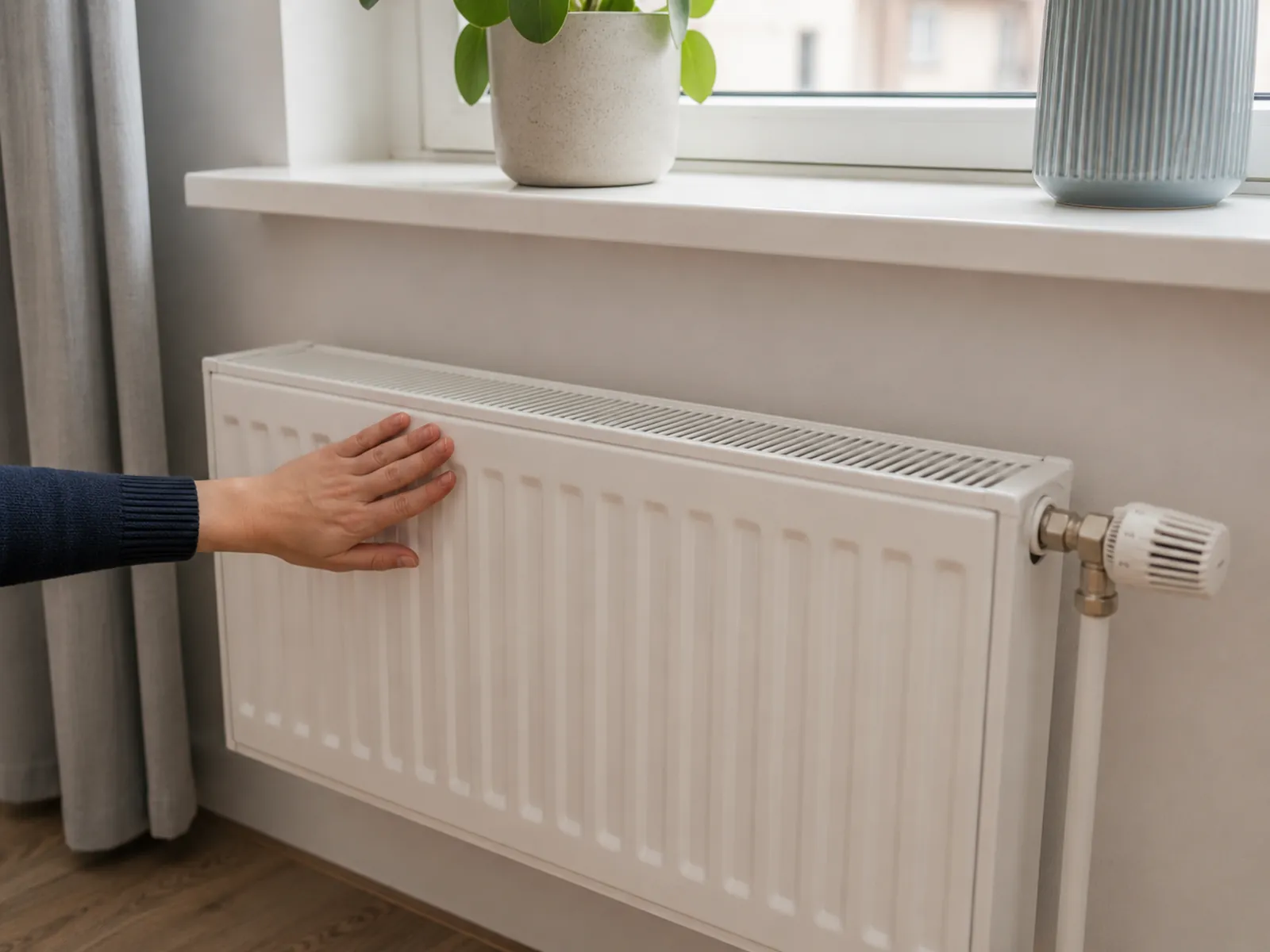
A radiator that is not heating can be caused by a local valve, trapped air, a heating-system setting or a boiler problem. First work out whether one radiator is cold or whether the whole central heating system is affected. Do not remove boiler panels, alter gas components or force radiator valves.
Stop and seek urgent help if there is a safety concern
Do not use a heating appliance if you smell gas, a carbon-monoxide alarm sounds, you feel unwell, see a water leak near the boiler, or notice damage to a gas or heating connection.
Leave the area when necessary, follow emergency guidance from the relevant service and avoid using the appliance until it has been assessed. Carbon monoxide cannot be seen or smelled reliably, so an alarm must always be taken seriously.
Is one radiator cold or are several radiators affected?
This is the most useful first distinction.
- One radiator is cold: the issue may be local to its thermostat setting, thermostatic radiator valve, pin, balance or air in that radiator.
- Several radiators are cold: check the heating controls, thermostat, boiler display and whether the boiler is running.
- All radiators are cold: the problem may be with the central heating controls, boiler, pressure or wider heating system.
Do not assume that one cold unit means a failed boiler. The pattern of warm and cold rooms is useful information for a professional.
Radiator not working? Safe checks before you book help
- Check that the room thermostat is set above the current room temperature and that its battery, if fitted, is not flat.
- Make sure the heating programme is set to run when you expect it to. A recently changed schedule or holiday mode can explain one cold unit.
- Look at the boiler display without opening the casing. Note any error code, warning symbol or low-pressure message.
- Check the visible thermostatic valve is set to an open heating position. Turn it gently within its normal range; do not remove the head or force a stuck part.
- Let the system cool before touching the unit. Look for water underneath it, around valves or near the boiler.
Use the appliance manual for model-specific checks. If it says the unit can be bled safely, follow that manual exactly. If you are unsure, leave bleeding to a professional.
Make sure the heating is switched on in the controller before assuming there is a local fault. If you turn off the heating for a check, allow the unit and nearby pipes to cool before touching them.
What a cold pattern can suggest
Cold at the top, warmer at the bottom
Trapped air can reduce circulation near the top of the unit. Some systems allow bleeding, but it must be done only as the manufacturer instructions permit. Do not bleed it while hot, do not remove components and do not guess how to restore system pressure afterwards.
Cold at the bottom
Build-up, often called sludge, can affect water flow through the unit. This is not confirmed by temperature alone. It needs assessment because the remedy may involve the heating system rather than one simple action.
One radiator stays cold while others heat
A thermostatic valve may be set too low, stuck or not allowing flow. The lockshield valve and system balancing also affect heat distribution. Do not adjust a lockshield valve without knowing the system design; it can make other rooms less comfortable and hide the original issue.
The boiler runs but radiators remain cold
The controls, circulation, boiler settings or an error state may be involved. Note whether there is hot water at taps, whether any error is displayed and which rooms are affected. Do not open the boiler or carry out work on gas or combustion parts.
Why is my radiator not heating? Eight common reasons
- The heating programme is not on when expected.
- A thermostat or thermostatic radiator valve is closed or stuck.
- Trapped air in the system reduces circulation near the top of the radiator.
- Boiler pressure or a boiler error needs a professional check.
- Sludge or another blockage restricts the flow of warm water.
- The lockshield setting affects how water enters the radiator and reaches other rooms.
- A room-control or circulation fault means multiple radiators are not heating.
- A leak or repeated pressure loss affects the wider central heating system.
These are common reasons, not a diagnosis. A cold radiator may need a different repair from a unit that warms at the top but stays cold at the bottom. Do not try to fix a radiator by forcing a valve, using a radiator key outside the manufacturer procedure or changing boiler settings.
Common reasons why one unit stays cold
A thermostat programme may be off, a valve may be stuck, air may be trapped in the system, boiler pressure may need attention, or circulation may be restricted by sludge or a blockage. A unit can be warm at the bottom but cold at the top, or stone cold all over. These patterns help diagnosis but do not prove one fault.
Water enters each unit as part of the home's central heating system. If water pressure is too low, or the system is not working correctly, hot water may not circulate as expected. Do not change boiler pressure unless the appliance manual and a professional advise that exact action.
If one radiator is not working while others are getting hot, check your radiator valves only within their normal range. If radiators are not heating in several rooms, the issue is more likely with the central controls, boiler or flow. A professional heating engineer can check whether the system is working and whether a valve at the bottom or a circulation issue is stopping water from reaching the unit.
Why aren't my radiators heating when the boiler is working?
When the boiler is working but radiators are not heating, the cause may be controls, a circulation fault, air in the system or a valve issue. In some homes, the system prioritises hot water before room heating. A radiator that is hot at the top but cold below points to a different pattern from a unit that remains cold throughout.
Heating problems can develop in a central heating system over time. Do not assume radiators are not turning because they need more pressure, and do not try to fix the issue by changing several valves at once. Note which rooms are affected and share that pattern with a professional.
A note on bleeding
Bleeding is sometimes appropriate when trapped air is present, but it is not a universal answer. Only consider it when your appliance manufacturer provides clear instructions for your model and you can do it safely with the system cool. Stop if water leaks, pressure changes unexpectedly, the valve is damaged or you do not know how your system should be refilled.
Never use bleeding as a reason to open boiler panels or adjust unfamiliar valves. For a repeated air problem, a leak or a pressure warning, arrange a heating professional instead.
A bleed key may be part of a manufacturer-approved procedure, but it should not be used as a general repair tool. Do not repeat bleeding to hide a pressure problem. Do not arrange a power flush or change boiler pressure based on a temperature pattern alone; a professional heating engineer needs to confirm whether the central heating system needs that work.
When to call a heating professional
Arrange a professional when there is a boiler error, repeated pressure loss, a heating-unit leak, a stuck valve, several cold rooms, or no heat after basic control checks.
For work on a gas-fired boiler or combustion appliance in the Netherlands, use a properly certified professional. A professional can identify whether the problem is the boiler, circulation, a valve, trapped air or sludge without unsafe trial and error.
Ask a professional heating engineer to check valves, boiler pressure and controls when the unit is still cold after safe checks. Tell them whether its top, bottom or whole surface is cold, and whether it warms at any point in the heating cycle.
Call a professional heating engineer if you are unsure that the heating system is working correctly, if the radiator is still not heating, or if you find a leak. Do not isolate the radiator or touch a gas appliance as an attempt to get your heating back.
Can I fix a radiator that is still cold?
The safe steps you can take are limited: check the programme, thermostat, visible setting and boiler display. Do not dismantle a thermostatic radiator valve and lockshield, force a part that is stuck in your central heating, or bleed your radiators without the appliance instructions. If normal checks do not restore heat, call a professional heating engineer.
Choose boiler maintenance when the issue appears connected to the central heating appliance or its upkeep. Use the dedicated boiler maintenance cost guide when you compare independent provider responses. If replacement is needed rather than repair, consult a separate radiator replacement cost guide instead of treating it as routine maintenance.
Information to give the professional
Share the following when you request help:
- whether one room or many rooms are cold;
- whether the affected unit is cold at the top, bottom or all over;
- any boiler error code or warning message;
- whether hot water still works;
- recent pressure changes, leaks, servicing or changes to the heating schedule.
This makes it easier to route the job to an appropriate independent provider.
Sources
Related content
Frequently asked questions
Answers to common questions.
Why aren't my radiators heating even when the boiler is working?
Radiators may not heat because controls, circulation, trapped air or a valve stops water from flowing. If multiple rooms are affected, arrange an assessment instead of changing boiler pressure or valves yourself.
Why is one radiator not heating up?
It may be a local valve setting, trapped air, poor circulation or a balancing issue. Check the thermostat and visible valve setting gently, then arrange help if the radiator stays cold.
Why are my radiators cold when the boiler is running?
The boiler can run while controls, circulation, system pressure or radiator valves prevent heat reaching rooms. Record any display code and avoid opening the boiler casing.
Why is my radiator still not working?
If a radiator is still not working after the thermostat, programme and visible valve checks, a control, circulation or valve fault may be present. Do not keep altering settings; a professional can tell whether the boiler and the home's central heating system are actually working as expected.
Why are several radiators not heating?
Several radiators may not heat when the heating programme, controls, boiler, pressure or circulation has a fault. This is different from one local issue. A heating professional can identify why the system will not heat rooms evenly.
Why aren't all my radiators heating?
If radiators aren't heating, first make sure the programme and thermostat call for heat. When radiators won't heat although the boiler is running, the problem may stop hot water from circulating or prevent water from flowing to the rooms. Do not change several controls at once; note the pattern and contact a professional heating engineer.
If radiators aren’t heating, or one radiator isn’t heating while the others are, do not assume that all radiator issues have the same cause. Make sure your central heating is set to run, then arrange help if the unit still will not heat.
Is a radiator cold at the top because it needs bleeding?
Trapped air is one possible cause, but it is not certain. Only bleed the radiator if the manufacturer guidance for your appliance makes it safe and clear; otherwise ask a professional.
Why is my radiator cold at the bottom?
Build-up or restricted circulation may be involved. A cold bottom does not prove the cause, so a professional should assess a persistent problem.
Why is my radiator warm at the top but cold below?
When the top is warm but the bottom stays cold, restricted flow or build-up may be involved. This is one of several radiator problems, so do not assume a power flush is always the right answer.
What if one radiator is not working at all?
One cold radiator can have a local valve, trapped-air or circulation issue. Check that the visible setting is open, then leave a unit that is still cold for an assessment. Do not dismantle the bottom valve or assume a full-system fault from one radiator alone.
Can I fix a stuck radiator valve myself?
Do not force or dismantle a valve. A stuck thermostatic radiator valve can require a careful repair, and uncontrolled changes can affect the rest of the central heating system.
When should I call a professional about a cold radiator?
Call when a single unit is still cold after safe checks, when several radiators are not heating, or when there is a leak, error code or recurring pressure warning. A professional can determine why the radiator is not working without risky trial and error.