Bathroom renovation cost in the Netherlands
A complete bathroom renovation in the Netherlands often costs €7,000–€17,000 in published market guidance. A limited update can cost less; layout changes and premium fittings can cost more. This is a planning range, not a SkilledContractors tariff. Check whether a quote covers demolition, plumbing, waterproofing, tiling, fittings and VAT.
This guide compares partial and complete renovation. For a full replacement bathroom with supply and fitting, see new bathroom cost.
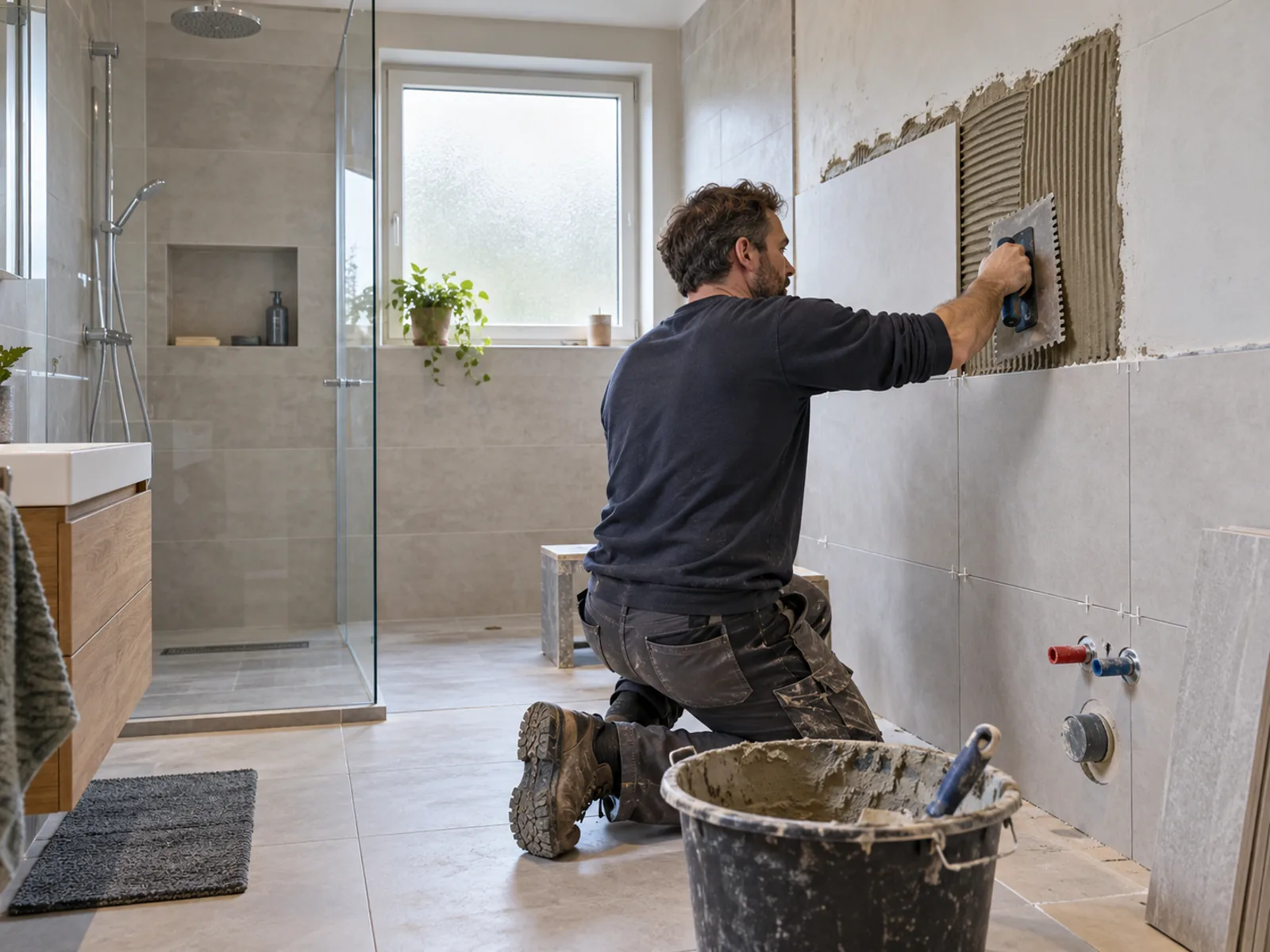

By Arek
Updated October 6, 2026 · 10 min read
Average bathroom renovation cost in the Netherlands
Start with the scope: changing a vanity is a partial update; replacing a room from old finishes through new fittings is a full renovation. The costs below apply to different scopes. Do not treat them as interchangeable quotes.
| Project level | Typical 2026 cost | Typical scope |
|---|---|---|
| Cosmetic update | €3,500–€7,000 | New fittings or surfaces, with most systems kept |
| Complete renovation | €7,000–€17,000 | Strip-out, standard fittings, tiling and fitting |
| Premium or complex project | €18,000–€30,000+ | Plan changes, premium products or custom work |
The wide range reflects real changes in scope. A €7,000 price may keep the plumbing plan. A €17,000 price may include more tile work and better fittings. Premium stone, custom units and building changes cost more.
Before you renovate, ask whether the total includes labour, materials, waste and VAT. A low figure can exclude fittings or tiles.
Cost by size and finish
Floor area affects the total cost. Yet it does not tell the whole story. Each space still needs setup, plumbing, a water seal and final work.
| Bathroom size | Guide cost for a whole project | Main cost issue |
|---|---|---|
| Small, 2–4 m² | €6,500–€12,000 | Fixed costs create a higher rate per m² |
| Medium, 5–8 m² | €8,000–€17,000 | Finish and plan drive the range |
| Large, 9–12 m² | €14,000–€22,000 | More walls, floors and fittings |
| Large premium project | €22,000–€35,000+ | Custom items and complex technical work |
A small bathroom can still need several trades. Tight access may also slow the work. This is why a simple rate per square metre can mislead.
As a broad check, Dutch guides show about €800–€2,000 per m². This covers many basic and mid-range projects. Average costs rise with the finish. Yet comparing euros per square meter can hide fixed work. This matters when the space has only a few square meters. Dutch proposals use square metres, not a price per square foot. All figures are in euro. An average bathroom still needs a full breakdown.
What a contractor proposal can include
A complete renovation can cover the space from strip-out to final seal. Each builder may define a different scope. Check every line before you compare costs.
The scope may include:
- removing tiles, fittings and wall units;
- carrying and disposing of demolition waste;
- checking water pipes and drainage;
- moving or swapping water and drain lines;
- safe wiring for lights and air flow;
- preparing walls and the floor;
- sealing direct wet zones;
- installing wall and floor tiles;
- fitting the shower, bathtub, toilet and washbasin;
- grouting, sealant, trim and final adjustments.
The price may include products. Or the client may buy them. The quote should state this. It should also name the contractor who leads the trades.
For a broader view of project scope, see the bathroom renovation service page. Larger multi-room work may fit the renovation service instead.
Cost breakdown for labour, materials and each trade
The table shows common Dutch ranges. Some items can overlap. Do not add each top figure to make an “average” total.
| Cost item | Indicative range | What to check |
|---|---|---|
| Labour (labor) and installation | €40–€70 per hour, or €4,000–€7,500 for many medium projects | Trades, job lead and VAT |
| Strip-out and waste | €600–€900 | Access, container and waste fees |
| Plumbing and drainage | €1,500–€2,500 | Current plan or moved points |
| Moving one water or drain point | €500–€2,000 extra | Distance, drain fall and access |
| Electrical work | €500–€800 | Earthing, bathroom zones and outlets |
| Basic waterproofing and plaster prep | €400–€700 | Chosen seal, wet zones and base repairs |
| Tiling walls and floor | €2,000–€4,500 | Tiles, adhesive, grout and preparation |
| Bathroom fittings and fixtures | €2,000–€4,000 | Item grade and fitting |
| Lighting and final accessories | €300–€600 | Products, wiring and fitting |
Split materials and labour. One quote may include products and another may not. Item costs vary a lot. A basic vanity costs far less than a custom unit.
Plumbing costs rise when you reroute pipes or drains. The plumber cost guide explains Dutch rates and common plumbing jobs. It covers that trade in depth. This page keeps the whole-project view.
Wall prep also varies. Standard plaster does not always work inside a shower. See the bathroom plastering cost guide for dry areas and wet-room finishes. The main plasterer cost guide covers normal walls and ceilings.
For the tiling stage, compare bathroom tiling labour, preparation and material costs and ask how this part of the quote is separated from plumbing and other trades.
Other cost drivers include:
- hidden damp, rotten boards or damaged substrates;
- old water pipes or drains found after strip-out;
- large-format, mosaic or natural stone tiles;
- a walk-in enclosure, concealed cistern or freestanding tub;
- floor heat, extra lights or an air flow upgrade;
- narrow stairs, parking limits and difficult access;
- VvE approval for work affecting shared systems;
- structural issues, major changes or work in a protected building.
A main or master ensuite may need more fittings. This can raise the cost of a bathroom. One upgrade can also affect another. A heavy worktop may need a strong vanity, for example.
Agree how to deal with hidden faults. A contractor should show the issue. They should cost the change before work goes on. This keeps extra work outside the first scope.
Paint is often a minor final item. If other rooms need work, use the painter cost guide for that cost.
VAT, permits and wet-room rules in the Netherlands
Most bathroom installation work uses 21% VAT. This covers pipes, fittings, tiles and floors.
Some work can use 9% VAT. The Dutch Tax Administration limits it to named work. In homes older than two years, plastering and painting may use 9%. A mixed job should split 9% and 21% work on the quote and bill. Check the Dutch VAT rules.
Do not assume that the work needs no permit. The answer depends on the job and site. Building changes, listed homes and shared property can change it. Use the Omgevingsloket permit check before work starts. Plan drawings and design fees vary by job. Ask for them as their own lines.
Dutch building rules also cover damp and ventilation. Wet areas need the right seal. A “water-resistant” finish is not always a full waterproof system. The IPLO ventilation guidance sets out the rules for old homes.
How to renovate within your budget
Good planning can reduce total costs without weakening wet-room safety. It can also save time and money.
Keep the current plan. Fewer moved connections mean less plumbing and floor work.
Consider a surface makeover. It can refurbish sound walls and units. A cosmetic reno or revamp can make your bathroom feel fresh. A simple redo can be affordable when pipes and wet zones are sound. It does not replace needed repairs.
Choose upgrades with care. Installing new standard fittings can control costs. High-end finishes and custom work raise the total. Pick items that make your bathroom easy to use.
Choose standard tile sizes. Complex patterns and very large tiles need more handling.
Match products before ordering. The drain, tap, frame and unit must fit the plan.
Put key work first. The wet seal and air flow come before premium trim.
Agree who buys the goods. The fitter should check sizes and dates first.
Take care with strip-out. DIY work can hit pipes, wires or the base. Set the limit in writing. If you rent a container, confirm the type of container and waste fee.
Keep a reserve for hidden defects. Old floors and walls can conceal water damage. Your scope should explain the change process.
A clear scope is more useful than a cheap opening figure. It also makes later quotes easier to compare. This is a cost-effective way to keep a renovation within budget.
Plan bathroom renovations by work stage
Use the new bathroom guide for full supply and fitting, demolition for strip-out, and shower installation for a single fitting. This parent guide compares total renovation scope without pricing each specialist task twice.
Installing a new bathroom in another space is a larger construction task. It may need drains, air flow and electrical work. Replacing the shower alone is a smaller job. Each intent needs its own guide.
| Work stage | What this parent covers | Best guide |
|---|---|---|
| New bathroom | One total planning range | Future cost guide |
| Demolition | Budget allowance and scope | Future cost guide |
| Installation | Place within the complete project | Future cost guide |
| Bath-to-shower conversion | Main impact on the plan | Future cost guide |
| Toilet renovation | Short budget context only | Future cost guide |
| Shower installation | Short budget context only | Future cost guide |
| Bathroom tiling | Main part of the total | Future cost guide |
| Bathroom plastering | Link only, to avoid overlap | Existing plastering guide |
Add each link only after its guide is live. This parent stays the main answer for the cost of renovating the whole bathroom. A child guide should not repeat that answer.
Frequently asked questions
Answers to common questions.
What is a realistic renovation budget in the Netherlands?
A sound budget is often €7,000 to €17,000. A high-end or complex renovation can exceed €22,000. Compare the same goods and scope.
How much does a small bathroom cost to renovate?
A 2–4 m² bathroom often costs €6,500 to €12,000 to renovate. Fixed pipe and setup costs keep the rate per m² high.
What does a 6 m² bathroom cost to renovate?
A 6 m² bathroom often sits in the €8,000 to €17,000 range. The plan, tile area and fittings set the final cost.
Is labour included in the renovation calculation?
Not always. Some quotes cover labour only. Others include tiles, fittings and waste. Ask for split labour and goods lines.
What is the most expensive part of the work?
Tiles, bathroom items and pipe work often form the largest groups. Plan changes and hidden base repairs can raise the total.
Does 9% VAT apply when you renovate a bathroom?
Most bathroom work uses 21% VAT. Plastering or paint work in a home older than two years may use 9%. Mixed work should be split.
Do I need a permit to renovate a bathroom?
It depends on the work and home. Check building work, listed status and shared systems. Use the Omgevingsloket check.
How can I get an accurate renovation quote?
Prepare one scope, room sizes and a product list. Then compare written quotes line by line. Post the renovation job when you are ready to compare replies.
How to compare contractor quotes
Compare the work, not only the final number. Start with the same plan and product list. Then check which team has each trade. Use this checklist: Is the price fixed, hourly or an estimate?, Are VAT and materials in the total?, Are brand, model, colour and tile size named?, Does strip-out include waste removal?, Are pipe and wiring changes listed?, Is the waterproofing system specified?, Who repairs hidden damage?, How will changes be approved and priced?, Are payment stages linked to clear work stages?, Who coordinates the plumber, tiler and electrician? Dutch law treats fixed, hourly and estimated prices in different ways. A tradesperson must warn about higher costs from client changes. Read the ACM guide on extra work. A reasonable plan links each payment to a clear work stage. It should say how changes affect time and cost. Compare costs for renovation only after the scopes match. You can compare national profiles on the bathroom service page. Local options also exist for Amsterdam, Rotterdam, Den Haag and Utrecht.