Shower Installation Cost in the Netherlands: 2026 Prices
A complete shower installation usually costs €600–€1,900 in the Netherlands. This range suits a standard shower tray, enclosure and fittings in an existing location. A walk-in shower often costs €1,500–€5,000. Moving pipes, changing the drain or repairing hidden damage can raise the total.

By Arek
Updated September 29, 2026 · 12 min read
Average shower installation costs
The average cost depends first on the project type. The table compares common shower installations in an existing bathroom. The cost to install a shower is lowest when the current connections remain usable. Reusing the current water and drain points usually keeps the job near the lower end. A level-access floor, custom glass or concealed fittings need more work.
| Shower project | Typical 2026 cost | Main scope |
|---|---|---|
| Standard complete shower | €600–€1,900 | Tray or base, standard enclosure, fittings and normal connections. |
| Standard shower cabin replacement | €800–€1,800 | New cabin in the same position, with straightforward assembly and connections. |
| Shower tray installation | €250–€1,000 | Tray, waste connection and fitting. The exact product may be separate. |
| Walk-in shower | €1,500–€5,000 | Glass screen, drain, waterproofing and local tiling or floor work. |
| Bespoke or complex walk-in shower | €2,200–€4,500+ | Custom glass, a shower channel, premium materials or extra base work. |
| Shower tap or exposed shower set only | €150–€450 | A smaller plumbing job, not a complete shower replacement. |
The figures overlap. Do not add the highest amount from every row. A contractor may include the tray, glass, plumbing and labour in one project price.
A shower alone is much narrower than a full bathroom renovation. Replacing the whole room belongs in the new bathroom cost guide.
What is included in a complete shower installation?
A complete installation should leave the wet area connected, sealed and ready for use. The exact scope can differ between shower installers.
A clear quote may include:
- The installer checks the size, water points and drain position.
- The old shower enclosure or tray is removed when agreed.
- The base and nearby wall are checked for damage.
- A new tray, shower floor or prefabricated shower base is fitted.
- The waste and plumbing connections are made and tested.
- A mixer shower, thermostatic set or other agreed fixture is installed.
- The glass screen, shower doors or cabin are fitted.
- Direct wet zones receive the agreed waterproofing.
- Local tile work and grout repairs are completed.
- Joints are sealed with sanitary silicone.
- Packaging and agreed waste are removed.
- The final price includes the stated VAT.
Ask whether the products are inside the price. Some shower installation costs cover labour only. Others include the new shower unit, small materials and disposal.
The bathroom demolition cost guide explains larger strip-out work. It is not needed for every replacement.
Shower replacement costs by type
Like-for-like shower replacement
A same-position replacement is usually the most cost-effective option. The installer can often reuse the existing plumbing connections for hot water, cold water and waste. A standard cabin or tray also needs less floor work than a tiled walk-in design.
The price rises when the replacement shower has unusual dimensions. Matching the current tile can also be difficult. The installer may need to open part of the wall or floor.
Shower tray and enclosure
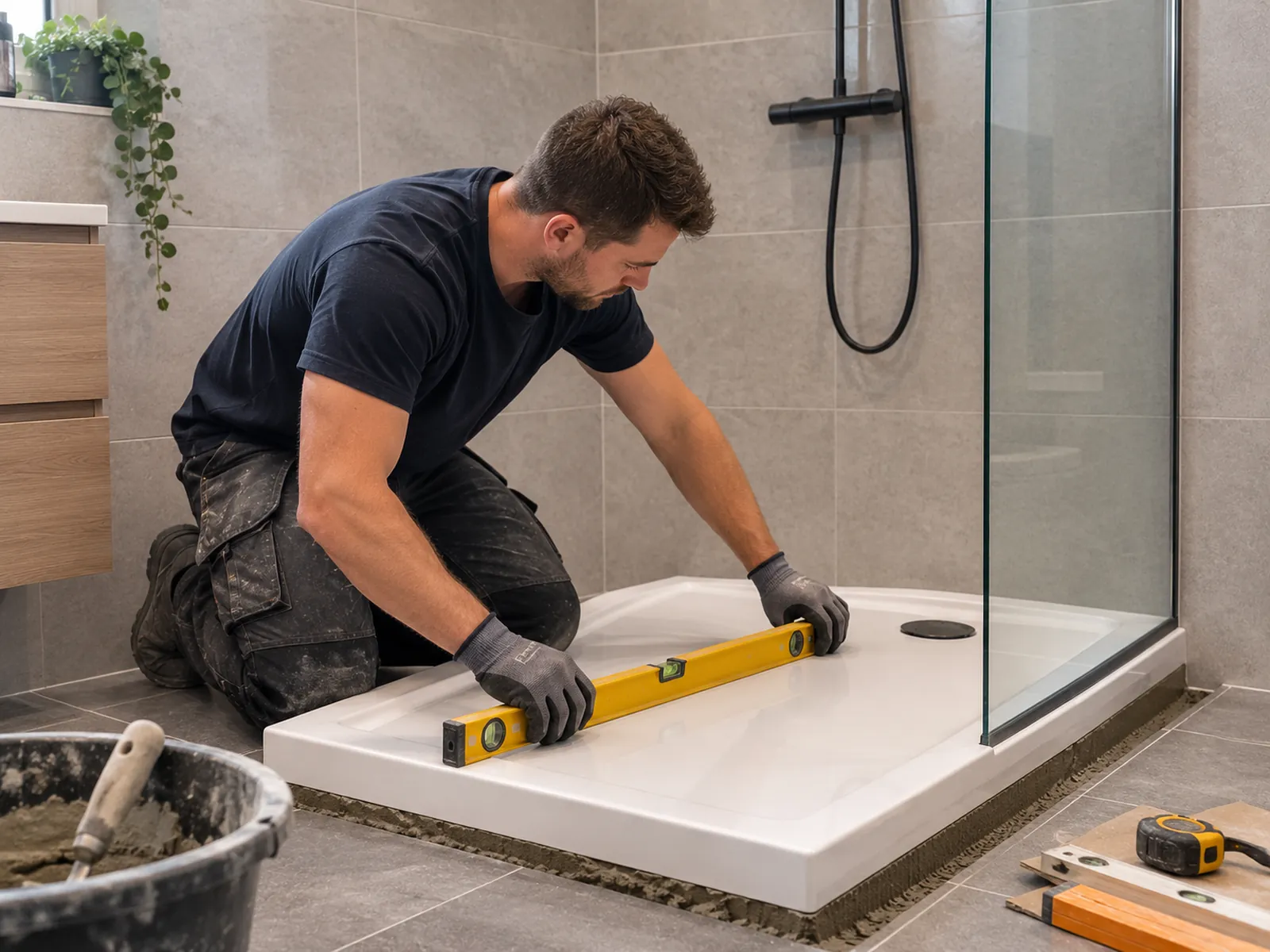
Different types of showers need different products and fitting work. The type of shower changes both product and fitting costs. A tray creates a defined waterproof base. Standard sizes are often easier to fit. A prefab shower cabin can also reduce on-site assembly. A very low tray may need more floor depth for the trap and drain fall.
The cost of shower glass depends on its size, door type and finish. Framed shower doors are often simpler than large frameless glass panels. Bespoke glass needs accurate measuring after the base is ready.
Walk-in shower installation
A walk-in shower costs more when the floor must be rebuilt. The waste needs enough fall. The wet area also needs a suitable waterproofing system. A glass screen then controls splash.
A high-end custom-built shower may add seating, niches or larger glass panels. These luxury features need extra support and waterproofing.
A walk-in shower is not always a full wet room. A wet room normally treats a larger floor and wall area as one waterproof zone. It can therefore need more preparation and drainage work.
Removing a bath first is another intent. See the bathtub-to-shower conversion cost guide for that project.
Concealed, rainfall and digital fittings
An exposed mixer is usually easier to replace. Concealed valves sit inside the wall. They need access, exact product depth and later surface repair.
A rainfall shower can also need enough water pressure and flow. Digital showers and electric shower terms often appear in UK search results. Those prices use a different market, currency and installation system. Use a Dutch quote for the chosen product.
Installation budget: labour, products and extra work
Labour costs are only one part of the final cost. A planned Dutch plumber often charges about €55–€100 per hour including 21% VAT. A fixed project price is often easier to compare for a defined installation.
| Cost item | Dutch planning range | What changes the amount |
|---|---|---|
| Planned plumbing labour | €55–€100 per hour incl. VAT | Region, access, tools and job size. |
| Shower tray, supplied and fitted | €250–€1,000 | Material, size, height and drain access. |
| Standard shower tap, supplied and fitted | €150–€450 | Exposed or concealed fitting and product grade. |
| Moving water or waste connections | About €300–€800 extra | Distance, concrete work and access below the floor. |
| Drain or shower channel work | About €300–€600 extra | Floor depth, channel length and route to the waste pipe. |
| Waterproofing a small wet zone | About €240–€450 | Surface area, corners, penetrations and base repairs. |
| Local bathroom tiling | About €50–€150 per m² | Tile choice, cuts, pattern and substrate. |
| Removal and waste | Quote separately | Weight, stairs, parking and disposal method. |
| Hidden repairs | Quote after inspection | Damp, rotten boards, cracked screed or old pipework. |
Some items overlap inside a complete quote. For example, a walk-in shower price may already include the channel, waterproofing and local tiles.
Use the bathroom tiling cost guide for a larger tile area. The plumber cost guide explains hourly rates and call-out charges. New pipe runs belong in the pipe installation cost guide.
Shower installation cost factors
The visible products do not always cause the largest change. The base, drainage and wall condition can have more impact.
Common cost factors include:
- The new tray or enclosure does not match the old footprint.
- The drain needs moving or lacks enough fall.
- Water pipes need changing for a new mixer shower.
- The floor is uneven, weak or too shallow for the chosen drain.
- The wet zone needs new waterproofing.
- Old tiles cannot be matched.
- Frameless glass needs custom sizing or stronger fixings.
- A concealed valve needs the wall to be opened.
- Damp or leaks appear after the old shower is removed.
- Narrow stairs, parking or apartment rules slow access.
- Extra electrical work is needed for lighting or controls.
A hidden leak is a separate repair problem. The leak repair cost guide explains detection, pipe repair and surface restoration.
Shower replacement: same position or a new location?
Keeping the shower in the same position usually controls the installation budget. The current supply and waste points may remain useful. Local repairs can then stay within the old footprint.
A new installation in another part of the bathroom is more complex. This is closer to installing a new shower than a like-for-like swap. It may need a new waste route, water pipes, floor work and ventilation checks. The contractor should confirm that the drain can maintain the required fall.
Adding one to a room without bathroom services is not a normal shower replacement. Treat it as a wider building and plumbing project. Ask for a site-specific design and quote.
How long does it take to install a shower?
The time to install depends on the shower type and surface condition. A simple shower set or straightforward cabin can be a short job. A complete shower replacement usually takes longer because removal, drying, sealing and testing happen in stages.
Complex installations, such as tiled walk-in designs, may need several trades. Waterproofing, adhesive, grout and silicone also need their stated curing time. The shower should not be used before the installer confirms it is ready.
Ask for a programme that shows:
- When the old shower will be removed.
- When plumbing and drainage will be tested.
- When waterproofing and tiles will be installed.
- How long each material must cure.
- When glass will be measured and fitted.
- When the shower can be used again.
Do not choose only by the shortest promised time. Correct drainage and waterproofing matter more than speed.
Professional shower installation: plumber or bathroom fitter?
A plumber should handle water and drainage changes. A bathroom fitter may coordinate the tray, enclosure, wall finish and other trades. A tiler may be needed for a tiled shower.
Professional installation is especially important when the work affects:
- Hidden plumbing connections.
- A recessed drain or shower channel.
- Waterproofing below tiles.
- Large or heavy glass panels.
- Concealed fittings.
- Electrical work in bathroom zones.
- A level-access floor.
A skilled DIY user may remove loose accessories or prepare a clear work area. Opening the wet zone without knowing the pipe and cable routes creates risk. An incorrect base or seal can cause damage outside the shower.
The plumbing service page helps you compare the service scope. It does not replace a detailed cost quote.
VAT, permits and Dutch wet-area rules
Most shower installation work uses the general 21% VAT rate. The Dutch Tax Administration only allows 9% for named categories. Shower fitting, tiles and normal plumbing do not fall into the reduced home painting or plastering rule. Check the current Dutch VAT guidance.
Do not assume that every job is permit-free. A normal same-position replacement may be limited internal work. Structural changes, a protected building, major demolition or changes to shared systems can alter the answer. Use the Omgevingsloket permit check for the property and full scope.
Dutch building rules also cover moisture and ventilation. IPLO explains the requirements for moisture protection in existing buildings and bathroom ventilation.
Tiles, grout and silicone are visible finishes. They do not replace the specified water barrier below the surface.
How to compare quotes from shower installers
Compare the scope before the total price. Give each local professional the same drawing, product list and photos.
Check whether the quote states:
- The shower type, brand, model and dimensions.
- Who supplies the tray, glass, tap and drain.
- Whether removal and waste are included.
- Which water and waste connections will be reused.
- Which pipes or drains will move.
- The waterproofing system and covered area.
- The tile area and responsibility for matching old tiles.
- The glass thickness, coating, fittings and measuring visit.
- Labour, travel, parking and small materials.
- The VAT rate and whether VAT is inside the total.
- The process for hidden damage and other extra work.
- Payment stages and the expected completion point.
A low opening figure may exclude products or surface repair. Ask for a warning and written price before extra work starts. The Dutch ACM advises comparing several offers and checking how price changes will be handled.
How to reduce shower installation costs safely
Keep the shower in its current position when the layout works. This can reduce pipe and floor changes.
Choose standard dimensions. Stock trays, cabins and glass are easier to replace than custom designs.
Use an exposed thermostatic mixer when concealed fittings add no clear benefit. It is easier to access later.
Let the installer check products before ordering. The tray, waste, valve and glass must fit together.
Combine connected work. One planned project can reduce repeated travel and opening costs.
Do not remove waterproofing, drain tests or correct curing time from the scope. These items protect the room.
Keep a reserve for hidden damage. Older wet zones can hide damp, weak boards or corroded plumbing.
Frequently asked questions
Answers to common questions.
How much does it cost to install a shower?
A standard complete shower usually costs €600–€1,900 in the Netherlands. A walk-in shower often costs €1,500–€5,000. The final cost depends on drainage, waterproofing, glass and surface repairs.
How much is labour for shower installation?
Planned plumbing labour is often about €55–€100 per hour including 21% VAT. A complete installation may also need a tiler, fitter or electrician. Compare a fixed scope rather than only the hourly rate.
Do I need a plumber to fit a shower?
Use a plumber when water pipes, valves, traps or waste connections change. A bathroom fitter can coordinate the tray, enclosure and finishes. Tiled or level-access showers may need several trades.
Why is replacing a shower expensive?
The work is not only fitting a visible product. The installer may need to remove the old unit, repair the base, change drainage, waterproof the wet zone, replace tiles and fit glass.
Can I install a shower myself?
Simple accessories may be suitable for experienced DIY work. A complete installation carries leak, drainage and glass risks. Professional help is sensible for hidden plumbing, waterproofing, large panels and electrical work.
Is a walk-in shower the same as a wet room?
No. A walk-in shower may use a tray or a limited tiled wet zone with a screen. A wet room usually waterproofs a larger area and may need more floor and drainage work.
Does shower installation need a permit?
A basic internal replacement may not need one, but the answer depends on the property and scope. Check structural work, protected status, demolition and shared systems through Omgevingsloket.
What is the cheapest way to replace a shower?
Keep the current position and choose standard-size products. Reuse sound connections. Use an exposed mixer and avoid unnecessary custom glass. Do not reduce waterproofing or drainage quality.
Ready to compare quotes?
Post your job for free and compare suitable professionals.