Toilet renovation cost for a separate WC room
A separate WC room renovation in the Netherlands often costs €1,300–€4,500 in the market guidance used here. Cosmetic work may be less, while a full redo with tiling, a wall-hung toilet and extra plumbing may exceed the range. This is a guide figure, not a SkilledContractors price. A toilet replacement on its own is a smaller job: see toilet installation cost.

By Arek
Updated September 29, 2026 · 12 min read
Average toilet renovation cost
This page prices work on a separate WC room: old finishes, surfaces, fitting and possible plumbing. It does not price one toilet swap or a complete bathroom. Ask whether the quote includes demolition, disposal, tiles, the cistern, ventilation and VAT. For the smaller fitting task, see toilet installation cost.
| Project level | Typical 2026 cost | Typical scope |
|---|---|---|
| Basic refresh | €1,300–€2,000 | Keep the layout, standard floor-standing WC, limited wall finish and simple basin. |
| Standard room renovation | €2,100–€4,000 | Strip-out, new sanitary ware, basin, wall and floor finish, minor plumbing and finishing. |
| Complete or premium project | €4,000–€6,500+ | Wall-hung WC, more tiling, moved connections, premium products or extra technical work. |
| Fixture replacement only | €300–€1,500 | Replace one WC fixture in the same room. This is not a full room renovation. |
Published Dutch guides use different inclusions. One quote may include demolition and waste. Another may price them separately. Do not add every upper figure to create an average.
For the wider project, see the bathroom renovation cost guide. If only the WC fixture is changing, use the toilet installation cost guide.
Toilet renovation cost versus a small bathroom renovation
A separate WC room has a different cost structure from a small bathroom. It normally has no shower or bathtub. This removes much of the waterproofing and drainage work found in full bathroom renovations.
A small bathroom renovation can still need a shower, larger tile areas, extra plumbing and more ventilation work. Its total is therefore usually much higher than the price for a separate WC project.
This guide keeps four scopes apart:
- WC-room renovation: sanitary ware, basin, walls, floor, lighting and ventilation.
- Fixture replacement: one WC unit, normally a plumbing job.
- Full bathroom renovation: shower or bath, WC, vanity, wet-zone work and larger surfaces.
- New bathroom: a complete replacement or a bathroom created in another space.
Some English searches use toilet remodel cost for the same room-level intent. Here, renovation and remodel mean work on the room, not only fitting one fixture.
What does a complete WC-room renovation include?
A full project replaces more than the pan and cistern. The work can include:
- Protecting the route through the home.
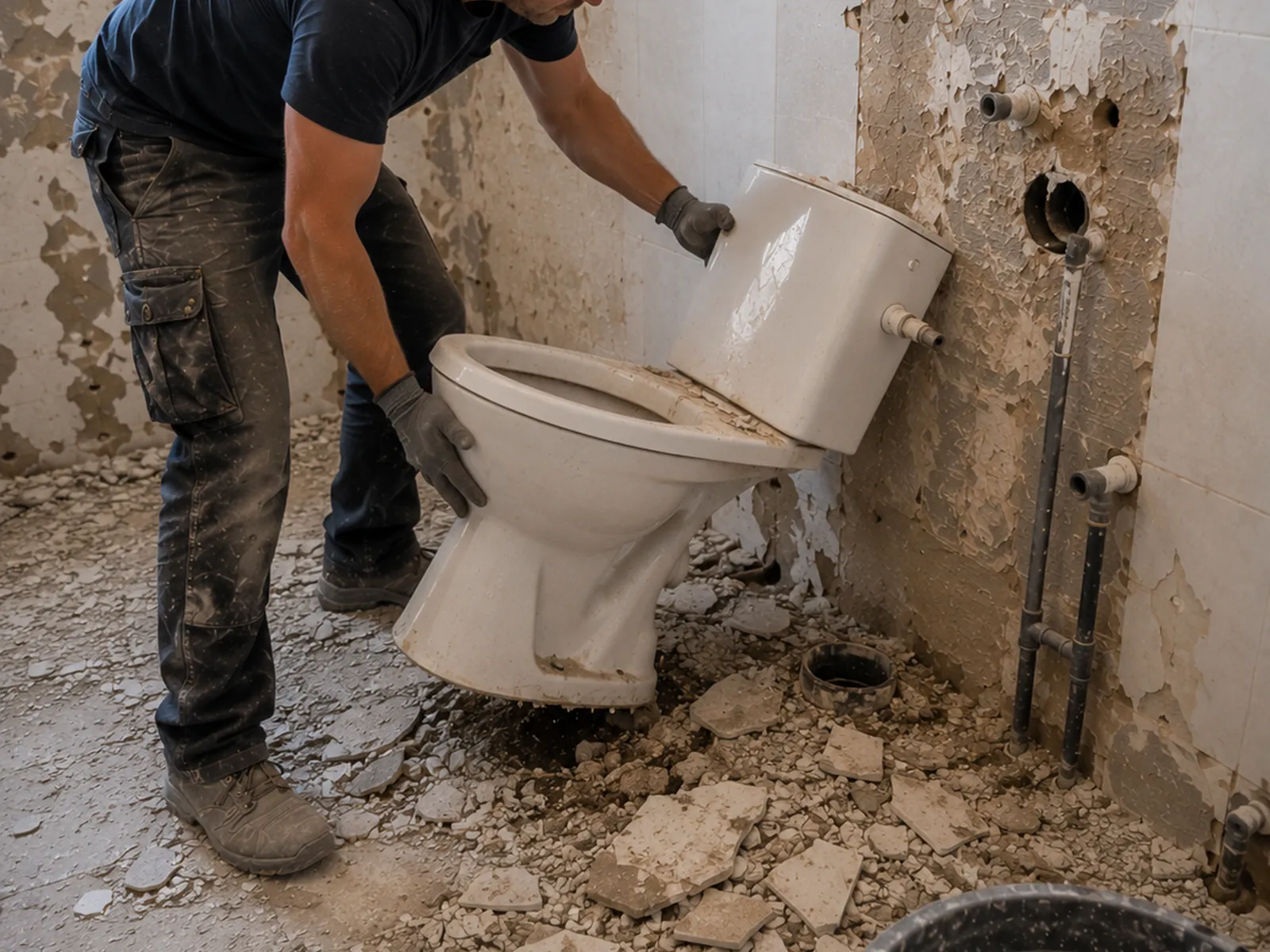
- Disconnecting and removing the old WC and basin.
- Removing agreed wall and floor finishes.
- Carrying and disposing of renovation waste.
- Checking water and waste connections.
- Making small pipe or drain changes.
- Repairing and levelling walls and the floor.
- Installing new wall and floor finishes.
- Fitting the WC, basin, tap and waste.
- Updating agreed lighting or ventilation.
- Grouting, sealing and painting dry areas.
- Completing final tests and cleaning.
A low quote may cover sanitary installation only. Ask whether preparation and waste are included. Larger strip-out work is explained in the bathroom demolition cost guide.
Cost of toilet renovation: cost breakdown
A breakdown makes offers easier to compare. The toilet renovation price can bundle several items, so some figures below may already sit inside a fixed project price.
| Cost item | Planning range | Main driver |
|---|---|---|
| Remove old sanitary ware and finishes | €300–€700 | Tile area, layers, access and carrying distance. |
| Waste handling | €100–€250 | Volume, weight, parking and disposal method. |
| Small plumbing changes | €300–€600 | Access and distance to existing pipes. |
| Move WC or waste connection | €700–€1,500 | Floor opening, drain route and reinstatement. |
| Floor-standing WC installed | €300–€700 | Product, connection and access. |
| Wall-hung WC installed | €700–€1,500 | Frame, concealed cistern and wall finish. |
| Small basin and tap | €150–€400 | Product grade and pipe changes. |
| Lighting work | €100–€300 | New point, fitting and wiring access. |
| Local wall or floor tiling | About €50–€150 per m² | Tile type, cuts and surface condition. |
| Hidden repairs | Quote after inspection | Damp, loose plaster, cracked floor or old pipes. |
A compact room with moved drainage can cost more than a larger room with an unchanged layout. Layout often matters more than floor area.
Plumbing rates and common charges are covered in the plumber cost guide. Larger new pipe runs belong in the pipe installation cost guide.
Toilet renovation versus toilet replacement
These jobs have different intent and budgets.
A toilet replacement changes the sanitary fixture. The walls, floor and room layout stay mostly intact. A plumber can often price it as a defined installation.
A room renovation changes the surrounding space as well. It may include demolition, tiles, a basin, plumbing, lighting and ventilation. Several trades can be involved.
A repair is narrower again. A running cistern or failed seal may only need a part. Keep these scopes separate when requesting prices.
Materials and finishes: how they affect the renovation budget
Product choices can change the overall cost even when the layout stays the same.
Ceramic tiles are often a practical budget choice. Porcelain can cost more. Natural stone and detailed mosaic work can increase both material and labour costs.
Full-height wall tile uses more product than a splash zone. Suitable paint can finish dry wall areas and keep costs lower.
A wall-hung toilet usually costs more than a floor-standing toilet. Premium flush plates, taps and basins can also raise the total.
Optional underfloor heating is possible in some projects. It adds electrical or heating work and must be planned before the floor finish.
Choose products that match the existing connections and dimensions. This can prevent rework and extra labour.
Does WC-room size determine the price?
Not by itself. Fixed work is often more important than floor area.
A 1.5 m² room can still need demolition, plumbing, tiling, sanitary installation and ventilation. A larger room with sound surfaces and the same layout may be easier.
For useful quotes, provide:
- Room width, length and ceiling height.
- Photos of each wall and the floor.
- The current WC and basin type.
- Tile area to remove or install.
- Planned layout changes.
- Floor level and access details.
- Parking or apartment restrictions.
Do not rely on a square metre rate alone. It can hide fixed work and technical changes.
How long does a toilet renovation take?
A complete WC-room renovation often takes about three to five working days. A basic refresh can be shorter. Extra plumbing, repairs or drying time can extend the schedule.
A typical renovation process is:
- Protect access and remove old fixtures.
- Strip agreed wall and floor finishes.
- Check pipes, drainage and the exposed base.
- Complete plumbing and electrical changes.
- Repair and prepare walls and floor.
- Install tiles or other finishes.
- Fit sanitary ware and accessories.
- Seal, test and complete final adjustments.
One-day packages exist, but they rely on a narrow scope and suitable existing connections. Do not assume moved drainage and a full strip-out will fit into one day.
Ask when the room can be used again. Adhesive, grout, paint and sealant may need curing time.
Toilet ventilation requirements in the Netherlands
Ventilation matters even when the room has no shower. Dutch rules for an existing toilet room require a ventilation capacity of at least 7 dm³/s.
Do not block the current ventilation route with a new ceiling, cabinet or finish. If the project changes the duct or fan, include that work in the quote.
Check the official IPLO guidance for ventilation in existing buildings. The rule is about ventilation capacity. It does not mean every project automatically needs a new standalone fan.
VAT and permits for a toilet renovation
Most sanitary, plumbing and tiling work uses the standard 21% VAT rate in the Netherlands.
Some work can use 9% VAT. The reduced rate applies to named services, including qualifying painting and plastering in homes older than two years. A mixed project should separate work that uses different rates. Check the current Belastingdienst rules for work on homes.
A simple internal refresh may not need an environmental permit. Structural changes, protected buildings, larger demolition or other activities can change the answer.
Use the official Omgevingsloket permit check for the address and full scope. In an apartment, also check VvE rules before changing shared drains, shafts or building elements.
DIY or professional work?
DIY can reduce some labour costs when the risks are clear. Clearing the room, removing loose accessories or painting suitable dry surfaces may be manageable.
Professional help is sensible for:
- Moving a WC or waste pipe.
- Changing water connections.
- Installing a concealed cistern.
- Electrical work.
- Damaged or uneven surfaces.
- Complex wall or floor tiles.
- Ventilation changes.
- Damp or unknown hidden materials.
Poor plumbing or surface work can create leaks and extra repair costs. For dry-wall preparation, compare the plasterer cost guide.
How to reduce toilet renovation costs
Keep the existing layout. Reusing water and waste positions can avoid expensive floor and pipe changes.
Choose standard sanitary products. Common sizes are easier to fit and replace later.
Limit full-height tiling. Use tiles where they add practical value. Finish suitable dry areas with paint.
Match products before ordering. The frame, flush plate, basin, tap and waste must work together.
Compare the same written scope. Send each contractor the same dimensions, photos and product list.
Approve hidden work before it starts. Set a written process for repairs found after demolition.
If the WC is part of a larger home project, compare the wider scope on the renovation service page.
What should a toilet renovation quote include?
A useful quote should show the main costs involved, not only one total. Ask for:
- Exact demolition and room scope.
- Sanitary products by brand or model.
- Tile allowance and measured tile area.
- Surface preparation and repair.
- Plumbing changes.
- Electrical and ventilation work.
- Waste removal.
- Labour, travel and parking.
- VAT and whether it is included.
- Start date and expected duration.
- Payment stages.
- Exclusions and provisional amounts.
- The process for extra work.
A low headline price is not useful when key work is excluded. Compare the result each provider is pricing.
A full bathroom has a much larger scope. Use the new bathroom cost guide when the project includes the shower, bath, vanity and wider wet-room work.
Frequently asked questions
Answers to common questions.
How much does it cost to renovate a toilet in the Netherlands?
A separate WC-room project often costs €1,300–€4,500. A basic refresh can cost less. A complete or premium project with moved services, more tiles or premium products can reach €4,000–€6,500+.
Is replacing a toilet the same as renovating the room?
No. Replacement changes one sanitary fixture. Room-level work can also include demolition, walls, floor, basin, plumbing, lighting and ventilation.
How much does a wall-hung toilet cost to install?
A wall-hung WC with a concealed cistern often costs about €700–€1,500 installed. Wall closure, extra tiling or moved drainage can add more.
How long does a WC renovation take?
Many complete projects take about three to five working days. The schedule changes with demolition, plumbing, repairs, drying time and product availability.
Can I renovate a WC room for €2,000?
It can be possible for a basic project with an unchanged layout and standard products. Moved drainage, extensive tiles or premium sanitary ware usually need a larger budget.
Does a toilet room need mechanical ventilation?
An existing toilet room needs adequate ventilation capacity. IPLO states at least 7 dm³/s. The rules do not automatically require a new standalone fan for every project.
Do I need a permit?
A simple internal refresh may not require one. Structural changes, protected status, demolition or other work can change the answer. Check the complete project in Omgevingsloket.
Is this work charged at 9% or 21% VAT?
Most sanitary, plumbing and tiling work uses 21% VAT. Qualifying painting or plastering in a home older than two years may use 9%. Mixed work should show the applicable rates separately.
Ready to compare quotes?
Post your job for free and compare suitable professionals.