Cleaning guide
How to get your rental deposit back in the Netherlands
Within 14 days of the end of your tenancy, your landlord must pay back your rental deposit. If the landlord deducts costs, you get the rest within 30 days, with a written explanation. A clean home, a signed inspection report and dated photos are the best way to get your full deposit back. The rules below apply to every rental deposit in the Netherlands, whether your contract calls it a deposit or a security deposit.
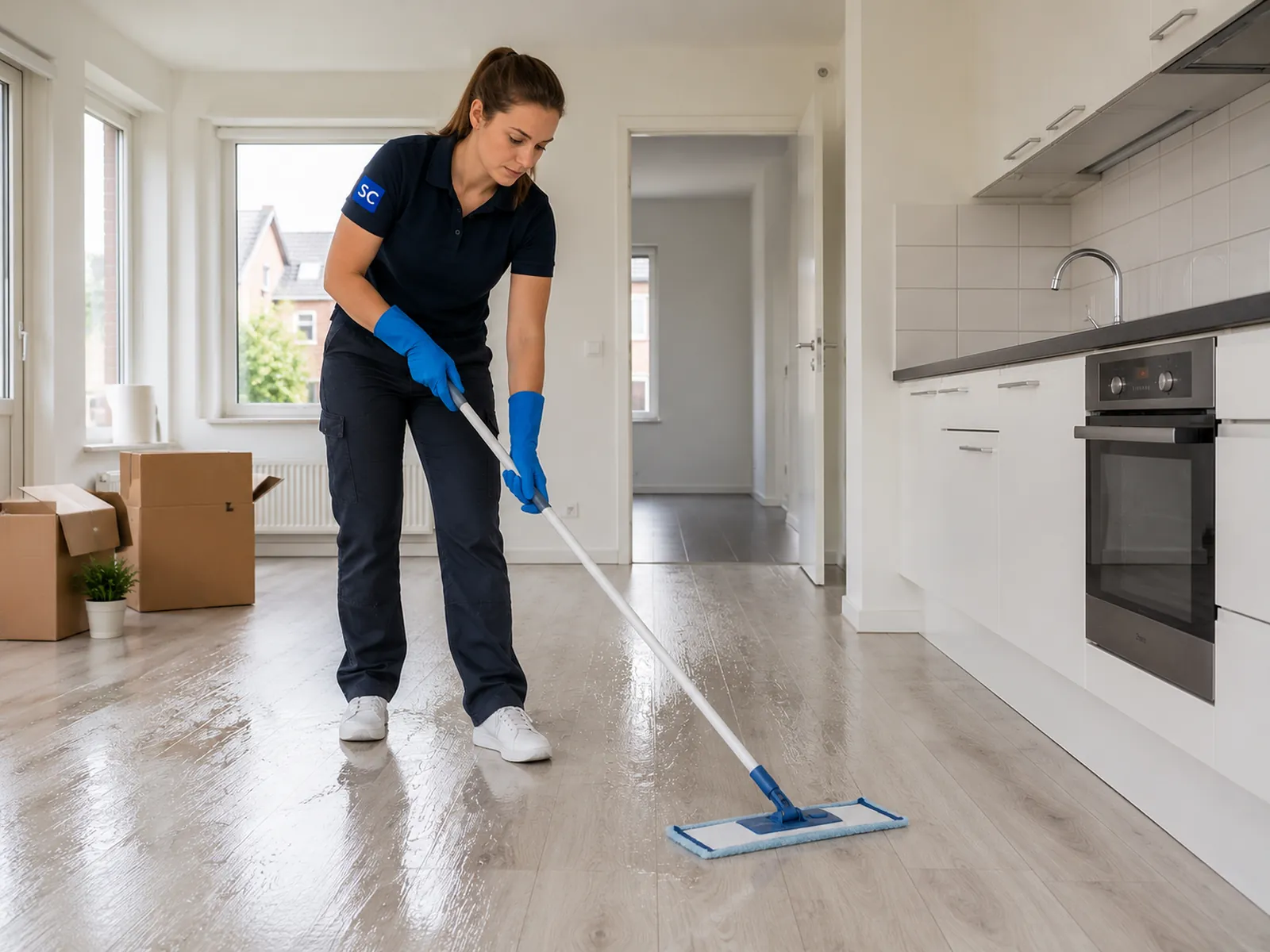
How long does a landlord have to return your deposit?
Your landlord must return the deposit in full within 14 days after the end of the rental agreement. This deadline is set in Dutch law (article 7:261b of the Civil Code). The landlord does not have to pay interest on the deposit.
If the landlord keeps part of the deposit, you must get a written overview of the costs. The rest of the deposit must be paid back within 30 days. Write down the date your tenancy ends, because both deadlines start on that day.
How much rental deposit can a Dutch landlord ask?
For a rental contract signed on or after 1 July 2023, the security deposit can be at most two months' basic rent. Basic rent (kale huur) is the rent without service costs, gas, water and electricity. For older contracts, the courts have set the maximum at three months' basic rent.
Did you pay more? You can report it to the municipality, or ask the court to lower the deposit. The landlord then has to pay back what you paid too much. Landlords must also tell tenants the deposit amount, when they will return the deposit and how.
What can a landlord deduct from your deposit?
A landlord may deduct only four types of costs, or offset them against the deposit:
- unpaid rent;
- unpaid service costs;
- an unpaid energy performance fee (energieprestatievergoeding);
- damage to the home that you are responsible for.
Other costs, such as administration fees, cannot be taken from the deposit. Normal wear and tear is not damage either. If an inspection report was made when you moved in, you return the home in that same condition, apart from wear and ageing (article 7:224 of the Civil Code). If no report was made, the law assumes you received the home in the state you leave it in.
How do you prepare for the final inspection?
Start a few weeks before the end of the rental period. Read your rental agreement first: it often says how clean the home must be and what you must remove or repair.
- Ask for a pre-inspection. You and the landlord or housing agency walk through the home together. You hear what still needs to be done and have time to fix it.
- Fix small damage. Fill plug holes, replace broken bulbs and remove everything you added yourself, unless the landlord agrees in writing that it can stay.
- Clean the home. Pay extra attention to the kitchen, bathroom, windows, window sills, frames and floors.
- Take dated photos and videos. Record every room on the day you hand over the keys. Keep your emails and messages with the landlord.
- Only sign a report you agree with. Check that the inspection report has a date, names and signatures, and ask for a copy.
How clean must you leave a rental home?
Clean enough for the next tenant to move straight in, unless your contract says something else. At the final inspection, landlords mostly check grease and limescale in the kitchen and bathroom, dust on skirting boards and frames, and stains on floors.
If you leave the home dirty, the landlord can treat it as damage and deduct cleaning costs from your deposit. Short on time during your move? A professional end of tenancy cleaning starts from €180 for a studio or small flat. See also what end of tenancy cleaning costs.
What can you do if your landlord does not return your deposit?
First, send the landlord a written demand for your deposit. Mention the amount, the end date of your tenancy and your bank details, and give a clear deadline, for example 14 days. Het Juridisch Loket, the Dutch legal aid desk, has a free sample letter.
If the landlord still does not pay, or deducts more than allowed, ask for the costs in writing and send a formal notice of default (ingebrekestelling). Keep every message. If the landlord keeps refusing, you can claim your deposit at the subdistrict court (kantonrechter). Het Juridisch Loket gives free legal advice about deposits and moving out.
Can you get your deposit back if you have already left the Netherlands?
Yes. Leaving the country does not change your right to the deposit or the 14-day deadline. Give the landlord a bank account that works from abroad, an email address you will keep using, and your new postal address. Do the final inspection before you leave, or ask someone you trust to attend it for you.
Checklist: get your full deposit back
- Read your rental agreement for rules on cleaning and handover.
- Plan a pre-inspection with your landlord or rental agency.
- Fix small damage and remove all your belongings.
- Clean the whole home, including the kitchen and bathroom.
- Take dated photos of every room on handover day.
- Sign only an inspection report that is correct, and keep a copy.
- Give your bank details and note the end date of the tenancy.
- No deposit after 14 days? Ask for it in writing.
Sources
Related content
Frequently asked questions
Answers to common questions.
How quickly will I get my rental deposit back?
Within 14 days after your tenancy ends. If the landlord deducts costs, you get the rest within 30 days, with a written list of the costs.
Can my landlord deduct cleaning costs from my deposit?
Only if you did not leave the home as clean as agreed, so that it counts as damage you are responsible for. If you clean the home well and record it with dated photos, you are in a strong position if the landlord still charges you.
Can my landlord deduct normal wear and tear?
No. Wear from normal use and ageing, such as a slightly worn floor, is not damage you have to pay for.
Can I use my deposit to pay the last month's rent?
Only if your landlord agrees in writing. Otherwise the unpaid month counts as rent arrears. The landlord may offset that against your deposit and then has 30 days to pay back the rest.
What evidence do I need to get my deposit back?
The inspection reports from move-in and move-out, dated photos or videos, your rental agreement and your messages with the landlord. Ask for receipts or quotes if the landlord deducts costs.
Where can I get help with a deposit dispute?
Het Juridisch Loket gives free legal advice. If you and your landlord cannot agree, the subdistrict court (kantonrechter) decides.