Drain odour guide
Smelly bathroom sink drain: causes of a bad smell, safe checks and plumber help
A smelly drain is usually caused by residue close to the opening, a dry water seal or a developing blockage. Start with simple, visible checks. If the odour is strong, keeps returning, affects more than one drain or comes with slow drainage, a plumber should assess the pipework.
When a smelly drain needs prompt help
Stop trying home fixes and arrange help if you notice any of the following:
- Wastewater comes back into the sink, shower or floor drain.
- More than one drain smells or drains slowly at the same time.
- The smell is strong throughout the bathroom, kitchen or home.
- Water appears around a fixed pipe, wall or floor connection.
- The odour started after building work, a drain repair or changes to the plumbing.
Do not use a chemical cleaner to deal with a persistent sewer-like smell. It may not reach the cause and can make later work less safe.
Why does a smelly bathroom sink drain smell bad?
A drain can smell even when water still flows away. Food residue, soap, hair and grease can collect in the visible part of a sink or shower drain. When they break down, the smell can travel back into the room.
Most fixtures also have a water seal, often called a P-trap. Water in this bend helps keep odours from the drainage pipe out of the room. If a rarely used shower, basin or utility sink dries out, the smell may return without a blockage.
The location matters. A smell from one shower drain points to a different check from a smell that appears at several sinks and in the bathroom.
When a bathroom drain or sink drain smells, the bad smell may be residue near the opening, organic material trapped in a pipe or a water seal that has evaporated. A smelly sink drain is not automatically a sewage problem, but a sewer-like odour from several fixtures needs assessment.
The terms drain odours and unpleasant odour describe the same symptom: an indoor smell coming from the drainage system. If it smells like sewage, do not assume room fragrance or repeated drain cleaning will solve the pipe issue.
Common causes of a smelly drain
Build-up close to the opening
In a kitchen sink, food and grease can stick to the drain and pipe. In a bathroom, soap, hair and skin products are common sources. A removable filter, plug or cover may hold the material that is causing the smell.
A dry water seal
An unused drain may have little or no water left in its P-trap. This can allow odour from the drainage system to enter the room. It is often noticed in guest bathrooms, utility rooms or after a holiday.
A partial blockage
A partial blockage can leave dirty water and residue in a pipe for longer. You may also hear a gurgling sound, see water drain slowly or notice the smell after using a nearby fixture.
A problem beyond the visible drain
If several drains smell, a vent, shared drainage pipe or fixed connection may need inspection. These parts are not a DIY check. Do not access a roof vent, loosen concealed pipework or pour aggressive products into the system.
Is sewer gas coming from your drain?
Drain odours can occur when the water seal is low or when a drainage problem lets unpleasant odour travel back through the fixture. If you suspect sewer gas, focus on the pattern: is the smell coming from one drain, does the smell return after water is put down the drain, and do sink drain smells appear in more than one room?
Do not try to mask the smell with repeated products. A professional plumber can inspect the accessible drainage route, water seal and pipe connections. If needed, a CCTV drain inspection can check a hidden drain problem without guessing at a fixed pipe.
Safe checks you can make first
- Identify the exact drain that smells. Check whether the issue is limited to one sink, shower or floor drain.
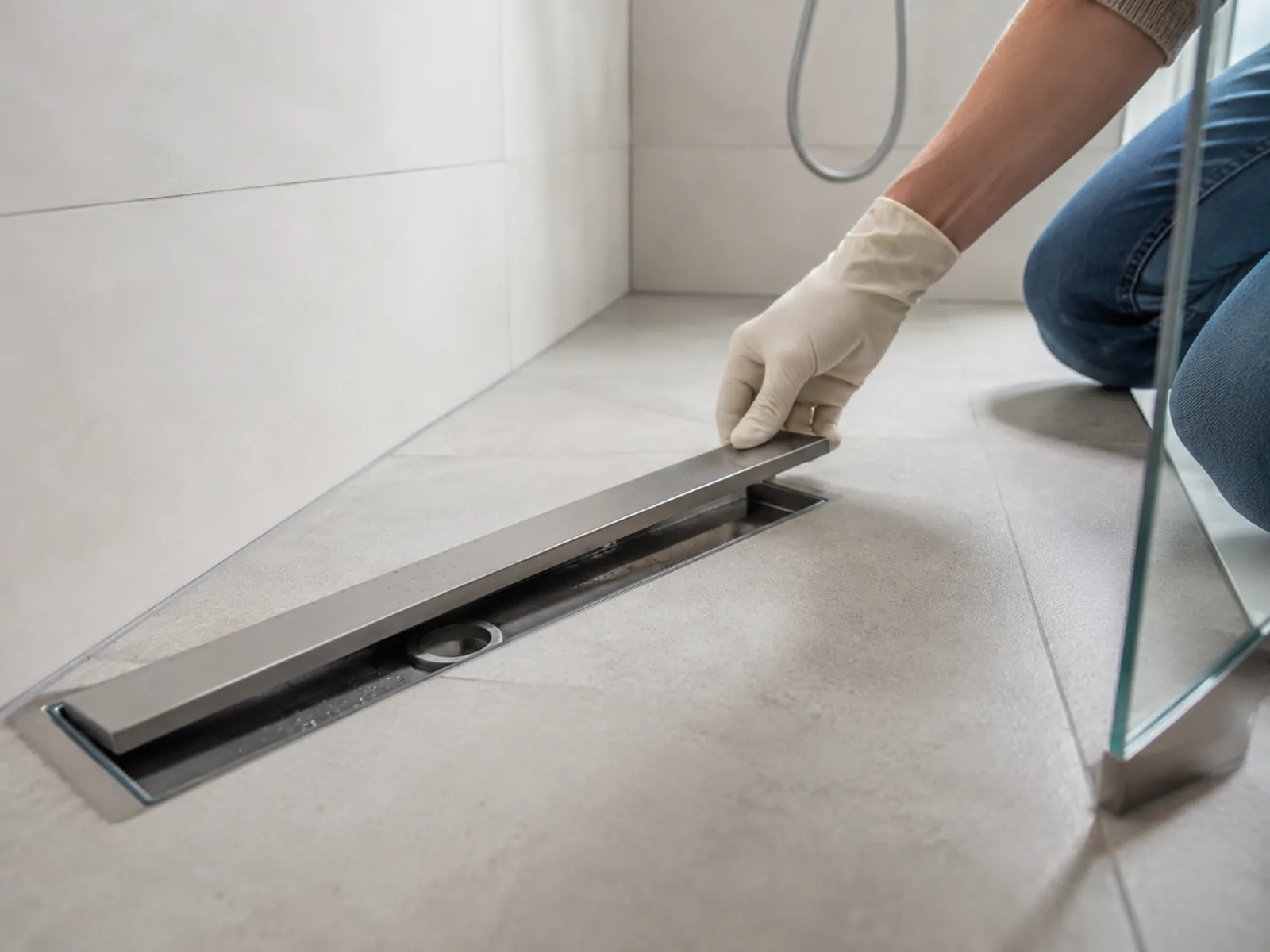
- Remove a loose, accessible filter or cover. Put on gloves and remove visible hair, food or soap residue. Dispose of it in the bin.
- Rinse the cleaned part with water. For a rarely used fixture, run water long enough to refill the water seal.
- Look for slow draining, gurgling, standing water or a leak around accessible connections. Do not take apart a fixed pipe.
- Use the room normally and note whether the smell returns, when it returns and whether another drain is affected.
These checks can help a plumber diagnose the problem faster. They do not confirm the cause inside the pipe.
Products and methods to avoid
Avoid using a chemical drain cleaner as a routine answer to a smelly drain. Never mix cleaners, bleach, vinegar, baking soda or other products in a drain. A mixture can create splashes, fumes or a reaction that makes the drain unsafe to work on.
An enzyme-based drain cleaner or enzyme cleaner is sometimes marketed for food particles and other organic material. It is not a diagnosis for a recurring odour, a slow drain or a drainage defect. Follow the label exactly and never add it to a drain that contains another cleaner. Baking soda and vinegar can also create fizz, but a reaction in the sink does not repair a pipe, water seal or vent.
Do not pour boiling water into a drain unless the fixture manufacturer specifically permits it. It can damage some plastic components or seals. Do not push tools deep into the pipe, force a blockage or open an inspection point you are not familiar with.
Smelly shower drain or kitchen sink: what changes?
A shower drain often smells because hair and soap collect below the cover or because the shower has not been used. A kitchen sink is more likely to have food and grease residue. The safe first actions are still the same: remove visible debris, rinse with water and watch for slow drainage or a recurring odour.
Soap scum in a bathroom sink and food residue in a kitchen sink drain are common, reachable sources. If the sink smell comes back soon after cleaning, stop escalating the products and record the timing for a plumber.
When the smell is shared by the shower, sink and toilet area, it is less likely to be just a surface-cleaning issue. A plumber can assess the drainage line and its venting safely.
When to call a plumber
Call a plumber when the smell persists after visible cleaning and refilling an unused drain, when water drains slowly, when several fixtures are involved, or when you find a leak around fixed pipework.
For a likely blockage, choose a provider for drain unblocking. A qualified professional can inspect the affected pipe without adding products that may complicate the job. Before booking, describe which drain smells, when it started, whether water drains slowly and whether any cleaner has already been used.
Keep price research separate from diagnosis. See the dedicated drain unblocking cost guide before you compare independent provider responses.
How to prevent drain odours
- Empty sink strainers and shower filters regularly.
- Keep food, grease, wipes and other unsuitable waste out of the drain.
- Run water in rarely used sinks, showers and floor drains from time to time.
- Deal with slow drainage before it becomes a full blockage.
- Use cleaning products only as their label instructs, and never combine them.
Sources
Related content
Frequently asked questions
Answers to common questions.
How do I get rid of a smelly drain?
First remove visible residue, rinse the accessible area and run water in the fixture to restore the water seal. If the smell returns or the drain is slow, ask a plumber to diagnose the pipe instead of adding stronger products.
Why does my shower drain smell like a sewer?
A dry P-trap, hair and soap build-up, a partial blockage or a problem further along the drainage pipe can cause a sewer-like smell. The pattern across other fixtures helps narrow it down.
Is a smelly drain dangerous?
A recurring, strong odour deserves attention, especially if it affects several drains or comes with wastewater backing up. Avoid chemical mixtures and arrange a professional inspection when simple visible checks do not solve it.
Can I use vinegar and baking soda in a smelly drain?
Do not combine products in a drain. The mixture may not solve the underlying pipe problem and can make the area less safe if stronger products were used before.
Why does the smell come back after I clean the sink?
The source may be inside the pipe, in a dry water seal or in shared drainage rather than on the visible surface. Note when it returns and whether another drain is affected, then share that information with a plumber.
Should I keep putting water down the drain?
Running water into the drain can restore a dry water seal in a rarely used fixture. If the odour returns, water down the drain is not a lasting repair; it is a useful clue that the drain needs a closer inspection.