Electrical switch and socket installation
Replace a damaged point or add an outlet where you need one. You can also update light switches and dimmers. Describe the job once and compare electricians. Each point should be secure, earthed and tested.
Latest jobs
8 cities
Compare quotes
Recent outlets & switches jobs
No recent outlets & switches jobs yet. Be the first to post!
Post your outlets & switches jobOutlets & Switches providers in the Netherlands

When to replace a wall socket or switch
Replace a wall socket if it is loose or cracked. Heat, sparks and dark marks are also warning signs. A plug socket should hold a plug firmly.
A light switch can show similar faults. It may crackle, stick or feel warm. Flickering lights can also point to a wiring issue.
An electrician checks more than the faceplate. They inspect the back box, terminals and insulation. The ground wire and other connections are tested too. Stop using the point after melting or a burning smell. Repeated breaker trips also need prompt inspection.
New socket installation or moving an outlet
A new socket can sometimes use a nearby circuit. The electrician first checks the load and cable. Some jobs need a new circuit or power supply.
Recessed socket installation gives a clean finish. It may require wall chasing and a new back box. Surface trunking can reduce damage. Moving one socket also means closing the old point safely.
Mark the preferred place for the new electrical wall socket. Then let the electrician confirm the route and height. Tell them what the electrical outlet will power. Also say if plastering or painting is part of the job.
Types of switches and sockets
Choose the fitting for the room and its use. Options include an earthed socket outlet and double socket. You can also choose a child-safe or USB electrical socket.
Kitchens, bathrooms and outdoor spaces need extra care. Moisture, load and placement affect the choice. A qualified electrician can select a suitable product.
For a replacement, note the brand and faceplate size. A new mechanism may not fit the old back box. Using one range across sockets in your home can help interior design. It also makes later replacement easier.
Safe switch and socket installation
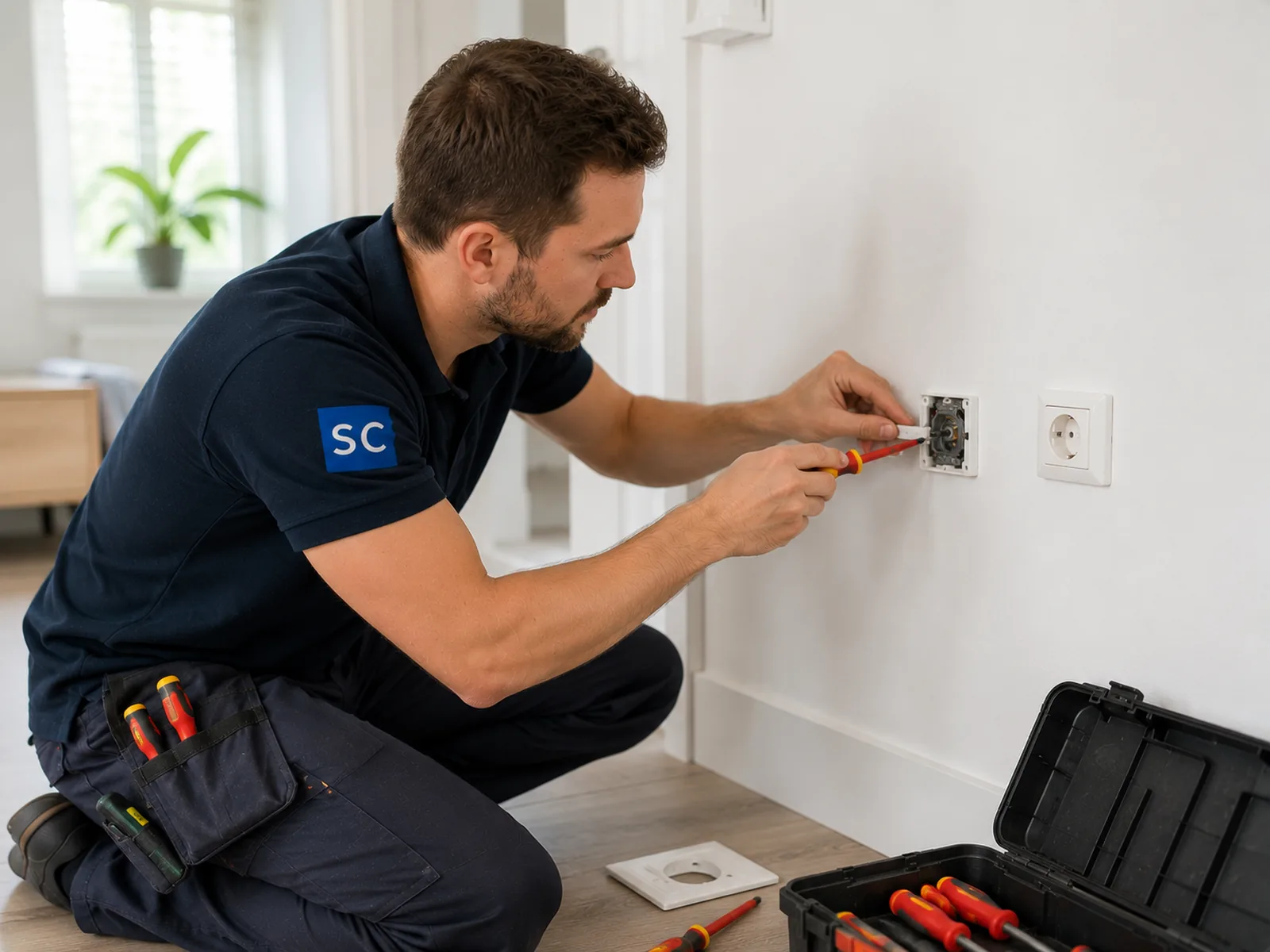
A professional electrician starts at the consumer unit. They identify the circuit and turn off the power. Next, they use a voltage tester to ensure the wires are not live.
The electrician inspects cable, wiring and insulation. They also check the earth and terminals. The old fitting is removed only after safe isolation.
The new electrical switch or socket is then connected and secured. After installation, they turn the power back on and test the point. This step-by-step guide explains professional work. It is not step-by-step instructions for DIY wiring. Working with electricity needs skill and proper test equipment.
Wiring, earthing and circuit capacity
Correct installation depends on the whole circuit. Loose terminals can cause heat and power loss. Damaged insulation can create an electric shock risk.
The electrician checks the cable and circuit breaker. They also test voltage and earthing. A screwdriver alone cannot prove that the point is safe. The right tester is needed before and after electrical work.
Older homes may have brittle or unusual wiring. Some switch positions lack a neutral wire. That matters for certain dimmers and smart controls. Share any past faults or fuse changes. This helps the professional assess the specific installation.
Kitchen, bathroom and work areas
A kitchen often needs several sockets and switches. High-power appliances may need their own circuit. One socket is not suitable for every appliance. List what will run at the same time.
A bathroom needs special safety precautions. Water limits safe positions and products. The electrician checks the zone before installation.
Home offices and workshops may need an extra double socket. This can reduce the use of extension leads. Circuit capacity still needs a check. Safety first: practical placement must also be electrically safe.
Light switch, dimmer and smart controls
An electrician can replace or move a light switch. They can also install a new dimmer or smart switch. The electrical switch must match the lamp and load.
Smart controls may need a neutral wire or hub. The app system also matters. Share the product make and model before the visit.
Tell the electrician if one light has several control points. Mention buzzing, heat or flicker. These details help them bring compatible parts. The finished switch should work correctly and safely.
Compare quotes and prepare the job
List every room and point. Mark each as install, move or replace. Add photos of the wall socket, switch and consumer unit. For a new socket, state its planned use.
Compare quotes on the same scope. Check fittings, cable, back boxes and testing. Include chasing, waste and wall repair where needed. Ask what happens if hidden wiring faults appear.
A price per point only helps when the scope matches. Exact ranges belong in the separate cost guide. Bundling several points can make planning easier. It also gives the electrician a clearer installation guide.
What's typically included with Outlets & Switches?
- Inspection of the agreed socket and switch points
- Installation or replacement of specified fittings
- Checks of wiring, earthing, fixing and operation
- Standard small connection and fixing materials
- Clear handover after testing
- New circuits or consumer-unit work without a quote
- Plastering, tiling or painting outside the scope
- Smart-home hub setup unless requested
- Moving furniture or fitted kitchen units
- Repair of hidden faults outside the agreed work
How it works
Get matched with the right professional in simple steps
List every point
Share rooms, quantities, photos, faults and preferred fittings.
Compare full scopes
Check products, cable, wall finish, testing and circuit changes.
Install and test
The electrician isolates the circuit and verifies every point.
Why SkilledContractors?
Compare professionals, quotes and job details before you choose.
One complete request
Bundle installation, replacement and moving across rooms.
Quotes you can compare
Make products, cable routes, testing and finish clear.
A tested result
Choose a professional who checks earthing and operation.
Related electrician services
- Fuse Box Installation
- Lighting Installation
- Outlets & Switches
- Perilex / Cooking Group
- EV Charger Installation
- Wiring & Cabling
- Solar Inverter
Frequently asked questions
Answers to common questions.
Do you need an electrician to install a socket?
Use a qualified electrician if you lack proven skill. Professional testing is vital for new cable, damaged wiring, kitchens, bathrooms and older homes.
When should I replace a wall socket?
Replace it when loose, cracked, hot, sparking or unreliable. Stop using it after melting or a burning smell. Have the wiring checked.
Can an electrician move an electrical outlet?
Yes. They check the new place, cable route and circuit load. They also close the old point safely. Wall repair may be separate.
Can I add an extra socket to an existing circuit?
Sometimes. The circuit, cable and protection must support the expected load. High-power appliances may need a dedicated circuit.
Which type of socket should I choose?
That depends on room and use. Options include earthed, double, child-safe, USB and moisture-resistant fittings. Ask the electrician to confirm.
Can the same electrician replace a light switch?
Yes. Share the lamp and switch type. Dimmers and smart switches must match the lights and available wiring.
How long does socket installation take?
A direct replacement is usually faster than new cable work. Quantity, access, wall type and hidden faults affect the time.
What affects socket installation cost?
Quantity, product type, cable route and wall finish are key. Compare equal scopes. Use the separate cost guide for detailed ranges.
Need sockets or switches installed?
Share the rooms, photos and fittings. Compare electricians by scope, schedule and approach.
Post your electrical job