Plastering guide
Cracks in plaster walls: hairline cracks, new plaster cracking and when to worry
Cracks in plaster are often small surface defects, but they should not all be treated in the same way. A fine hairline crack in a stable, dry wall can be cosmetic. A new, widening or diagonal crack — especially one with damp, loose plaster or changes around doors and windows — needs a professional assessment before it is filled.
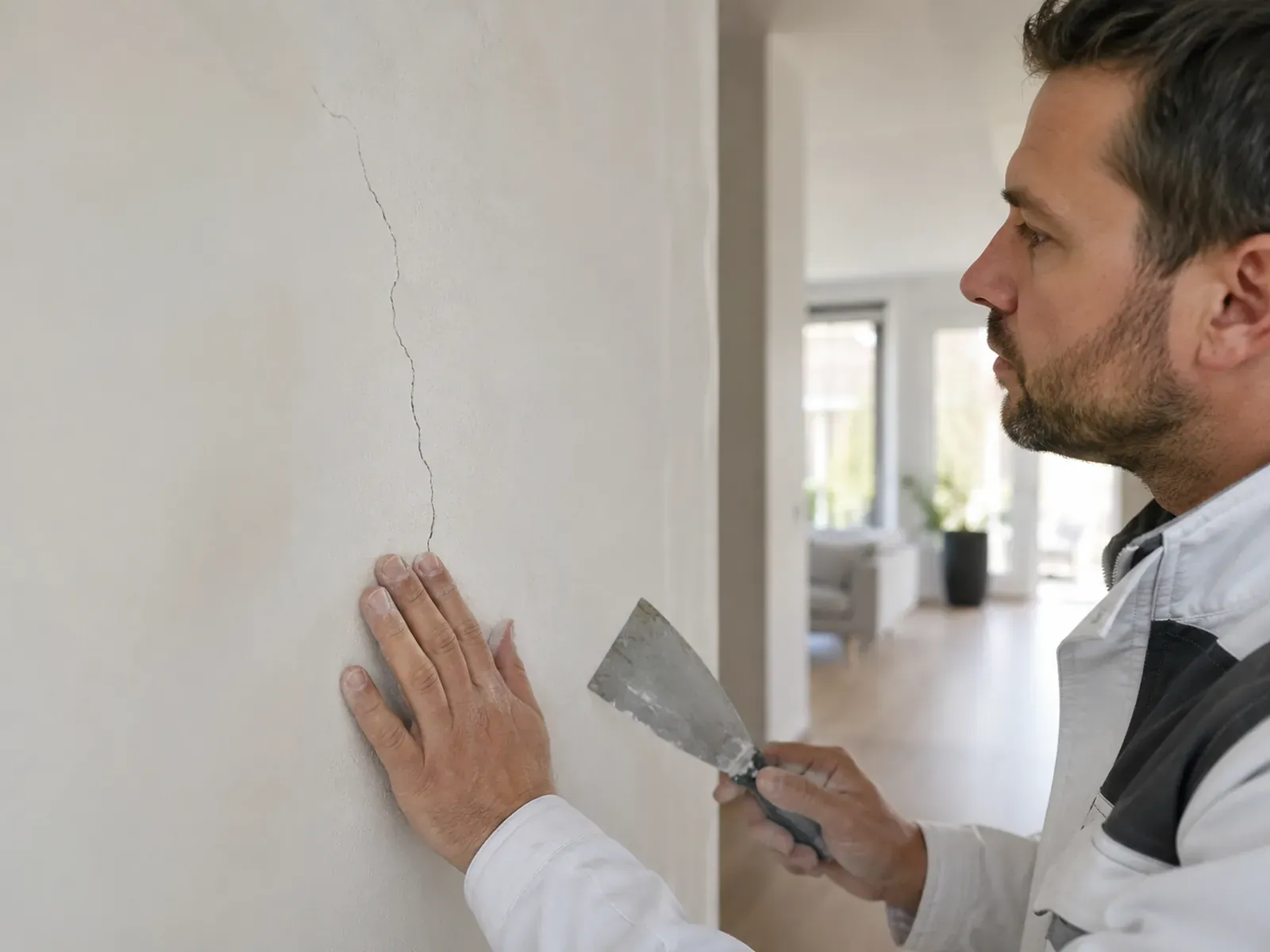
The safest first step is to look for change, moisture and movement. Do not cover a crack simply to make it disappear if you do not know why it appeared.
When should I worry about cracks in plaster?
Treat the crack as a priority and arrange an assessment when it is new and growing, wide enough to show a gap, diagonal, or joined by other signs of movement. Examples include doors or windows that suddenly stick, gaps appearing around frames, a sloping floor, crumbling brickwork, a wet wall, or plaster that sounds hollow or feels loose.
Keep clear of a wall or ceiling where plaster is bulging, falling, or could fall. If there is active water damage, first stop using the nearby fitting if it is safe to do so and deal with the leak. A plaster repair should happen only after the root cause is understood.
A crack is not a structural diagnosis. If the pattern is changing or there are signs of movement, do not rely on filler alone.
Are hairline cracks in plaster a serious problem?
Fine hairline cracks in plaster are often cosmetic, particularly when they are old, short, stable and not linked to damp or movement. Plaster can expand and contract as temperature and humidity change. New plaster can also develop fine shrinkage cracks while it dries.
That does not mean every hairline crack is nothing to worry about. Take a dated photo and check it again after a short period. Record whether the crack becomes longer or wider, whether new cracks appear, and whether it crosses from the plaster into brickwork or a door frame. This gives a plasterer or building professional useful evidence without needing to open up the wall yourself.
Common causes of plaster cracks
The same visible crack can have different causes. Common reasons include:
- Drying or shrinkage. Fresh plaster can contract as moisture leaves the material. This may show as fine cracks after plaster application, especially where drying conditions were uneven.
- Minor movement. Older homes and new homes can both move slightly over time. Seasonal variations in temperature and humidity can make materials expand and contract at different rates.
- A weak or damaged surface. Old plaster, a previous patch, a poor bond to the background, or a damaged plasterboard joint can leave a local weak point.
- Moisture. A leak, penetrating damp or long-term condensation can weaken plaster and make cracking or detachment more likely.
- Structural movement. A larger crack pattern, a diagonal crack, a horizontal crack with other signs, or cracks that widen over time may need a different type of professional assessment.
The direction alone does not prove the cause. A diagonal crack can be minor, and a small surface crack can have an underlying issue. Look at the whole area rather than trying to diagnose the structure from one line.
Safe checks before any plaster repair
You can make a simple record without scraping, drilling or dismantling anything.
- Photograph the crack with the date, from close up and from further back.
- Check whether the wall or ceiling is dry. Look for staining, peeling paint, mould or a musty smell.
- Notice whether the crack is fine and stable, or whether its edges have separated from the wall.
- Look nearby for changes around doors, windows, skirting boards and other walls.
- Note recent work: a leak, plastering project, building work, a new opening or a room that has stayed cold and damp.
Do not chase out a crack, remove surrounding plaster or tap hard on a ceiling to test it. Avoid sanding if you do not know what previous coatings or materials are present. If the surface is loose or the area is high up, leave it alone and keep people away from the drop zone.
Can you fill hairline cracks in plaster?
You may be able to fill a confirmed, dry, stable hairline crack as a cosmetic finish task. Use a filler and method that suit the existing surface and follow the product instructions. Some systems use scrim or a flexible filler for a small repair, while others need a different approach. A product intended for small holes and cracks is not evidence that every crack is safe to patch.
Do not use filler to hide a recurring crack, a crack with damp, or a crack in plaster that is separating away from the wall. Do not paint over a wet wall. Covering the symptom can trap the moisture issue and make the later repair harder to assess.
For a repair that will last, the surface needs to be solid, dry and properly prepared. A professional plaster repair may include removing only the unsafe or detached area, preparing the background and matching the finish. The correct scope depends on the plaster type, the wall or ceiling, and the cause.
New plaster cracking: what should you do?
New plaster cracking can happen when plaster drying is uneven, the background has moved, or the finish has not bonded as expected. Do not rush straight to paint. Let the plaster dry completely in line with the product or installer guidance, keep normal ventilation, and avoid trying to force the process with intense direct heat.
If fine cracks appear, photograph them and ask the installer or a plasterer to inspect them before you sand or fill. If the cracks recur after repair, become wider, or are accompanied by loose plaster or damp, ask for a professional assessment of the root cause rather than repeated cosmetic work.
How a plasterer assesses different types of plaster cracks
A plasterer starts with the crack pattern and the condition of the wall, not with a promise to fill every line. Fine hairline cracks are usually cosmetic when the plaster is dry, firm and stable. Wider cracks, a diagonal crack, a horizontal crack, recurring cracks or new cracks around doors and windows need closer attention. The same is true when cracks in plaster walls continue into masonry walls or brickwork.
The assessment can distinguish traditional plaster from plasterboard, identify whether old plaster is detached, and decide whether a simple crack repair is appropriate. It can also separate a finish issue from possible subsidence or another structural movement. Plaster can expand and contract with small changes, but a wall should not be assumed safe simply because a crack is fine. Addressing the root cause comes before filling, sanding and decorating.
Different types of cracks and crack types need different responses. Larger cracks, or cracks accompanied by other signs, are a cause for concern and may point to structural issues. Thermal movement and expansion and contraction are common reasons a plaster surface changes: temperature and humidity cause plaster to expand and contract, while indoor humidity levels can make a fine crack become more noticeable. Settling can cause a crack too. This is a common issue in older homes, but it still needs evidence rather than guesswork. Get a professional assessment before you fill with flexible filler if the pattern is changing. A decorator should only work on a confirmed cosmetic defect.
When to call a plasterer — and when another professional may be needed
Choose a plastering professional when the main issue is a local, dry and stable plaster failure or a wall finish that needs to be restored. Describe the crack pattern, its age, the room, any previous repair and whether there has been moisture.
Ask for a broader building or structural assessment first if you see repeated movement, large gaps, cracks through brickwork, or changes to doors and windows. If damp or a leak is present, deal with that cause before booking decorative plaster work. Tenants should report water damage or other maintenance defects to their landlord in writing and keep a record of the issue.
For likely repair scope and price factors, see the separate plaster repair cost guide. To compare the right type of help, visit plastering services.
Sources
Related content
Frequently asked questions
Answers to common questions.
What types of cracks can you not ignore?
Do not ignore cracks that are new, wider, growing, diagonal with other signs of movement, linked to damp, or found next to loose plaster. A crack in a ceiling that may shed material also needs prompt attention.
Why do plaster walls crack in older homes?
Older homes can have traditional plaster, lath and plaster, brickwork and materials that respond differently to moisture and seasonal movement. Age alone does not explain the crack. A professional can assess the wall and the condition of the existing plaster.
Can water damage cause plaster cracks?
Yes. Moisture can weaken the bond between the plaster and the wall, cause staining or peeling, and lead to loose or damaged plaster. Find and resolve the moisture source before cosmetic repair.
Is it normal for cracks to appear in new plaster?
Fine shrinkage cracks can occur, but they should still be checked if they are widespread, recurring, widening or accompanied by damp, poor adhesion or movement in the wall.
How can I prevent cracks in plaster walls?
Keep the home properly ventilated, resolve leaks and damp promptly, and let new plaster dry under the product or installer conditions. Prevention also means repairing the root cause rather than repeatedly filling a recurring crack.