Plastering guide
How long does plaster take to dry before painting?
How long plaster takes to dry depends on the plaster type, layer thickness, room temperature, ventilation and moisture in the air. There is no safe universal number of days. A thin, product-specific repair filler can be ready in about a day, while a freshly plastered wall or a thicker coat can take much longer. Follow the installer’s advice and the exact product data sheet before you paint, sand, tile or add another finish.
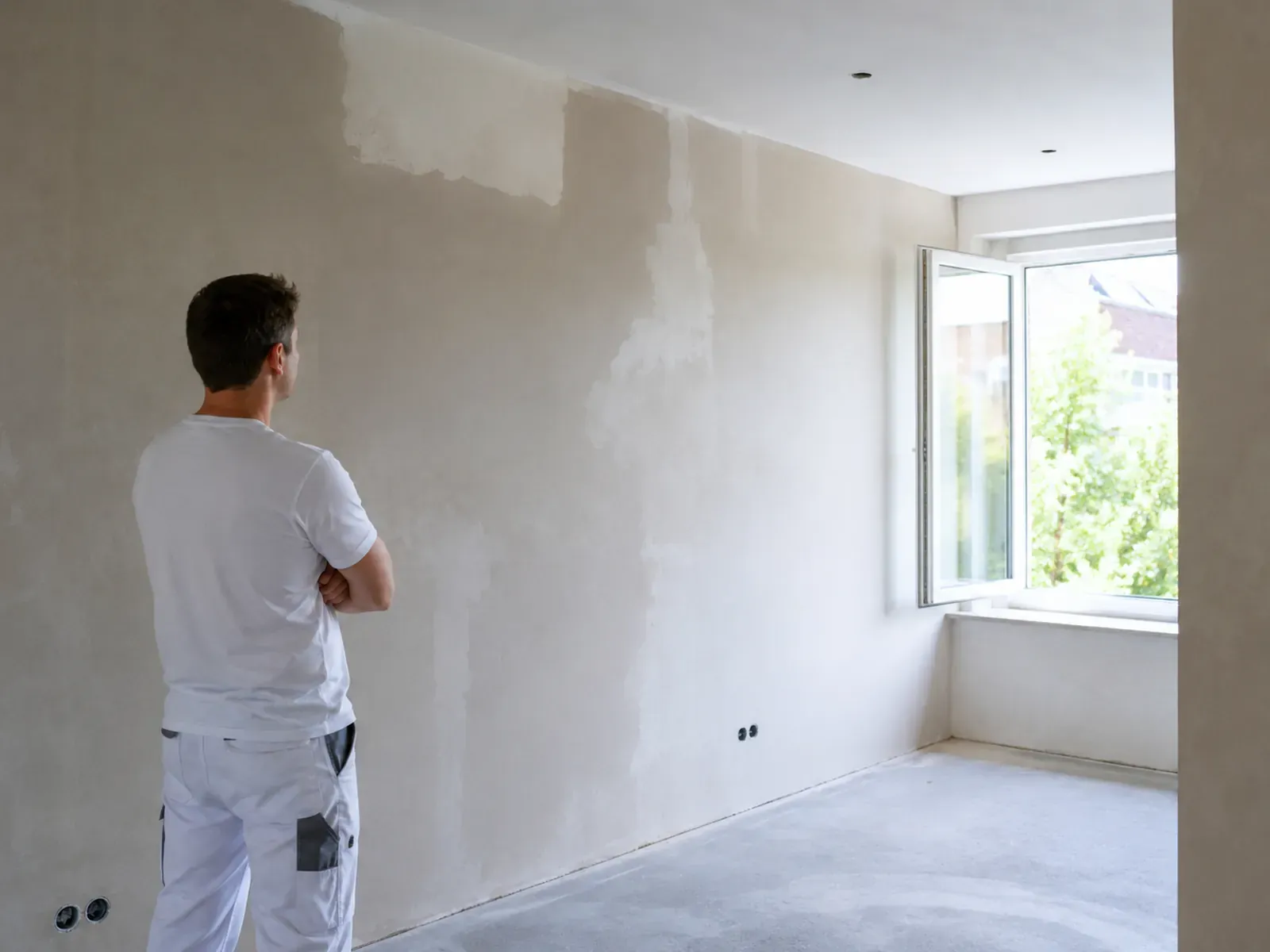
The important distinction is between setting, drying and curing. Plaster may feel firm or dry to the touch before moisture has left the full layer. It is not necessarily ready for painting just because it feels hard.
How long does plaster typically take to dry?
The honest answer is: check the specific plaster. A manufacturer may give a drying time for one product at a stated thickness and under stated room conditions. That timing is not a rule for every gypsum plaster, skim coat, lime plaster, wall or ceiling.
For example, Knauf lists around 24 hours for one ready-mixed patching plaster and for a thin spray-applied finish before decorating. Those are product-specific examples, not a promise that all new plaster will dry in 24 hours. A 10 mm gypsum-plaster product may state about 7 days to dry at 20°C and 60% humidity. In a cold or damp room, the same work needs more time.
Ask the plasterer for the product name, application thickness and the point at which the plaster is ready for the next finish. That is more useful than applying a generic "7 days" or "two weeks" rule to every plastering project.
What affects plaster drying time?
Several factors affect how long it takes for plaster to dry:
- Type of plaster. Gypsum plaster, lime plaster, a skim coat, repair filler and plasterboard jointing compound do not dry in the same way.
- Layer thickness. More material holds more water, so a thicker wall patch or several coats generally take longer than a thin finish.
- The background. A dry, absorbent surface behaves differently from a sealed or damp background. The wall behind the plaster also needs to be sound.
- Room conditions. Cold air, high indoor humidity and limited ventilation slow the drying process.
- The area being plastered. A bathroom, basement, ceiling or a large newly plastered room can have different drying conditions from a small repair.
Do not assume that the palest colour means the plaster is fully dry. Colour can be a useful clue, but the product instructions and the installer’s assessment take priority.
How can you tell if plaster is fully dry?
Look for an even appearance without clearly darker damp areas, then check the manufacturer guidance. The best way to check is not to poke or sand the surface. If the plasterer has supplied a drying or decorating time, follow that. If the finish will be expensive or difficult to replace, ask the plasterer to confirm it is ready for painting.
Wait until the plaster is dry before painting, papering, tiling or applying a sealer unless the exact product system says otherwise. Rushing the process can lead to poor adhesion, bubbling paint, peeling, or a finish that needs to be redone.
How soon can I paint after plastering?
Paint only once the new plaster is ready for painting under its own instructions. Some paint systems call for a mist coat on fully dry fresh plaster; others have different requirements. Use the paint manufacturer’s instructions as well as the plaster instructions, because paint and plaster are a system.
Once the surface is ready, use the guide to budgeting for painting after the plaster has dried to plan the interior painting stage.
Do not use a thick paint coat to hide dampness or a slightly dark patch. Do not sand a wall just to make it feel dry. If the wall stays damp, has a musty smell, shows a water mark or begins to peel, pause the decorating work and find the cause.
What about a mist coat?
A mist coat is a paint step, not a way to make plaster dry faster. Start with a mist coat only when the plaster is dry before painting and when both the plaster and paint instructions call for it. Do not use a mist coat to seal wet plaster, skip the drying time, or cover a wall that is still changing colour. The right order is: let the plaster dry properly, confirm it is ready for painting, then use the specified first coat.
How can I make plaster dry faster?
Use normal, steady conditions rather than trying to force dry plaster. Keep the room at a suitable, stable temperature, allow gentle ventilation where this is safe, and follow the product data sheet. Good air flow helps moisture leave a room; extreme direct heat or a sudden temperature change can make drying uneven.
Do not put a heater directly against the wall, seal up the room, or use a dehumidifier as a substitute for the installer’s instructions. Whether heating or a dehumidifier is suitable depends on the product, ventilation and the condition of the building. A professional can advise for a large area, a thick coat, or a cold or damp property.
British Gypsum notes that gypsum products need suitable minimum temperatures until dry and that low temperatures mean longer drying and setting times. That is another reason to avoid a one-size-fits-all schedule.
A practical drying-time check before the next step
If you are wondering how long it takes for plaster to dry, ask these questions: What type of plaster is it? How much plaster was applied? Is it a skim coat, a wall repair or a full plastered wall? Is the room cold or damp? Does the product say 7 days to dry, longer, or a different time under ideal conditions?
The answer to how long plaster takes to dry can be very different for a thin repair and a thick new coat. Wait until the plaster is fully dry, not merely dry to the touch. Rushing the drying process can lead to cracks, poor adhesion and peeling, especially when a fresh coat of paint is applied too soon.
If you’re wondering how long for plaster to dry, avoid treating one guide as a guarantee. Depending on several factors, a product might say it can take up to 2 weeks or take up to 4 weeks. Another thin finish may be ready to decorate much sooner. The time it takes for plaster to dry before painting depends on the plaster type, old walls or new backgrounds, and whether the room can dry under ideal conditions.
Proper drying is essential. It might be tempting to speed things up, but plaster needs a steady drying process and full drying before the next coat. Do not assume it’s dry because it feels dry to the touch. Different types of plaster cure differently; fully cured before painting is not a phrase that replaces product guidance. Everything you need to know is on the plaster and paint data sheets: follow the stated time to dry so the finish can give results that last, rather than lead to peeling or cause cracks.
Is it okay to sleep in a room with drying plaster?
If the work has been completed, the room is safe, clean and properly ventilated, drying plaster itself is not normally a reason to leave the home. However, follow the installer’s advice, the product safety data, and any instruction about ventilation. Do not sleep in a room with active dust, an unresolved damp or mould problem, wet electrical areas, or work that is still in progress.
Open ventilation systems as intended and keep normal airflow through the home. If the room feels unusually damp or smells musty, check whether there is a water or ventilation problem instead of simply adding more heat.
Drying plaster in a bathroom, on a wall or ceiling
Bathrooms need special care because showers and baths add moisture to the air. Keep the room ventilated as the system is designed to be used, and avoid heavy moisture exposure until the plasterer confirms the plaster and later finish are ready. Do not treat a bathroom plastering job as the same as a small dry repair in a bedroom.
A ceiling can dry differently from a wall because of its thickness, position and room airflow. For a wall, ceiling or bathroom project, ask for the proposed plaster system, the drying conditions and the decorating sequence before the job begins. This helps you plan the work and compare the right scope:
For a broader overview of plastering work and price factors, use the plasterer cost guide. If you are arranging the work, compare plastering services only after you know the affected area and finish you need.
Sources
Related content
Frequently asked questions
Answers to common questions.
Can plaster dry in 2 days?
Some thin, product-specific finishes may dry within that time under suitable conditions. A thicker or different type of plaster may not. Check the exact product guidance rather than judging by the calendar alone.
Can plaster dry too quickly?
Uneven or forced drying can cause problems. Keep conditions steady and follow the plaster product guidance instead of applying intense heat directly to the surface.
Should I use a dehumidifier to dry plaster?
Only if the installer or product guidance says it is suitable for that situation. A dehumidifier can change the room conditions, but it does not solve a leak, damp wall or unsuitable plaster system.
Why is my plaster still dark after several days?
The plaster may need more time because of thickness, low temperature, humidity, limited ventilation or a damp background. If a patch remains wet-looking, has a water mark, or is linked to peeling or mould, investigate moisture before painting.
What is the difference between drying and curing?
Drying is moisture leaving the plaster. Curing and setting describe other parts of the material’s development. A surface may set or feel firm before it is dry enough for the next coat, so follow the product and installer advice.