Ceiling Plastering Cost: 2026 Price Guide for the Netherlands
The ceiling plastering cost in the Netherlands is usually €14 to €35 per m² for standard indoor work. A light skim over a sound ceiling may cost €12 to €20 per m². A smooth, paint-ready finish often costs €15 to €30 per m². Small projects often start at €290 to €350 because travel, setup and floor protection still apply.

By Arek
Updated August 5, 2026 · 24 min read
How much does ceiling plastering cost in the Netherlands?
Most plasterers price a clear ceiling by square metre. An hourly rate or project minimum is more common for one small ceiling or uncertain repair work. The first table gives a quick Dutch cost guide.
If you ask how much does plastering cost for one room, start with the room size and ceiling area. Then choose the finish and check the base.
| Ceiling plastering work | Indicative Dutch price |
|---|---|
| Light skim over a sound ceiling | €12–€20 per m² |
| Standard ceiling plastering | €14–€35 per m² |
| Smooth paint-ready ceiling | €15–€30 per m² |
| Decorative plaster or schuurwerk | €20–€35 per m² |
| Spray plaster or spack comparison | €8–€16 per m² |
| Plasterer hourly rate | €40–€65 per hour |
| Typical small-job minimum | €290–€350 total |
| Basic primer when separate | About €3–€5 per m² |
| Removing loose old plaster | About €10–€22 per m² |
These price ranges usually cover normal indoor work. A written quote should say what is included. Check labour, plaster, primer, mesh, masking, cleanup and VAT.
The type of plaster and the number of layers must also be clear. That detail helps show why plastering prices vary.
Quick answer by project type
A stable ceiling with a thin finish sits near the low end. Full levelling or many cracks cost more. A very smooth finish costs more too. High ceilings and occupied rooms also raise labour.
You can expect to pay more when a ceiling needs to be replastered. The overall cost then includes more prep, material and labour.
The small-job minimum often matters more than the m² calculation. For example, 10 m² at €18 would equal €180. The final quote may still start near €290 to €350.
Ask a local plasterer whether this start fee covers travel. A plasterer near the home may still charge for parking or access.
What is normally included?
A normal ceiling plastering quote may include:
- a basic substrate check;
- dust removal and standard preparation;
- primer when stated;
- mixing and applying plaster;
- smoothing to the agreed finish;
- normal floor and wall protection;
- routine cleanup.
The finish must be named. “Plastered” does not confirm whether the ceiling is ready for paint. Ask for a sample description or a written quality level.
What often costs extra?
Loose old plaster, deep cracks and water stains can add work. Movement joints and heavy texture also take time. Lights, ceiling roses, beams and corners slow the job. Access gear, parking and waste may appear as separate lines.
Installing a new plasterboard ceiling is not part of a normal plaster finish quote. Painting is also a separate stage. Use the ceiling painting cost guide for that later budget.
If the main task is to plaster a wall, use the wall guide instead. Plastering your walls uses another work rate and access method.
Why does overhead work cost more?
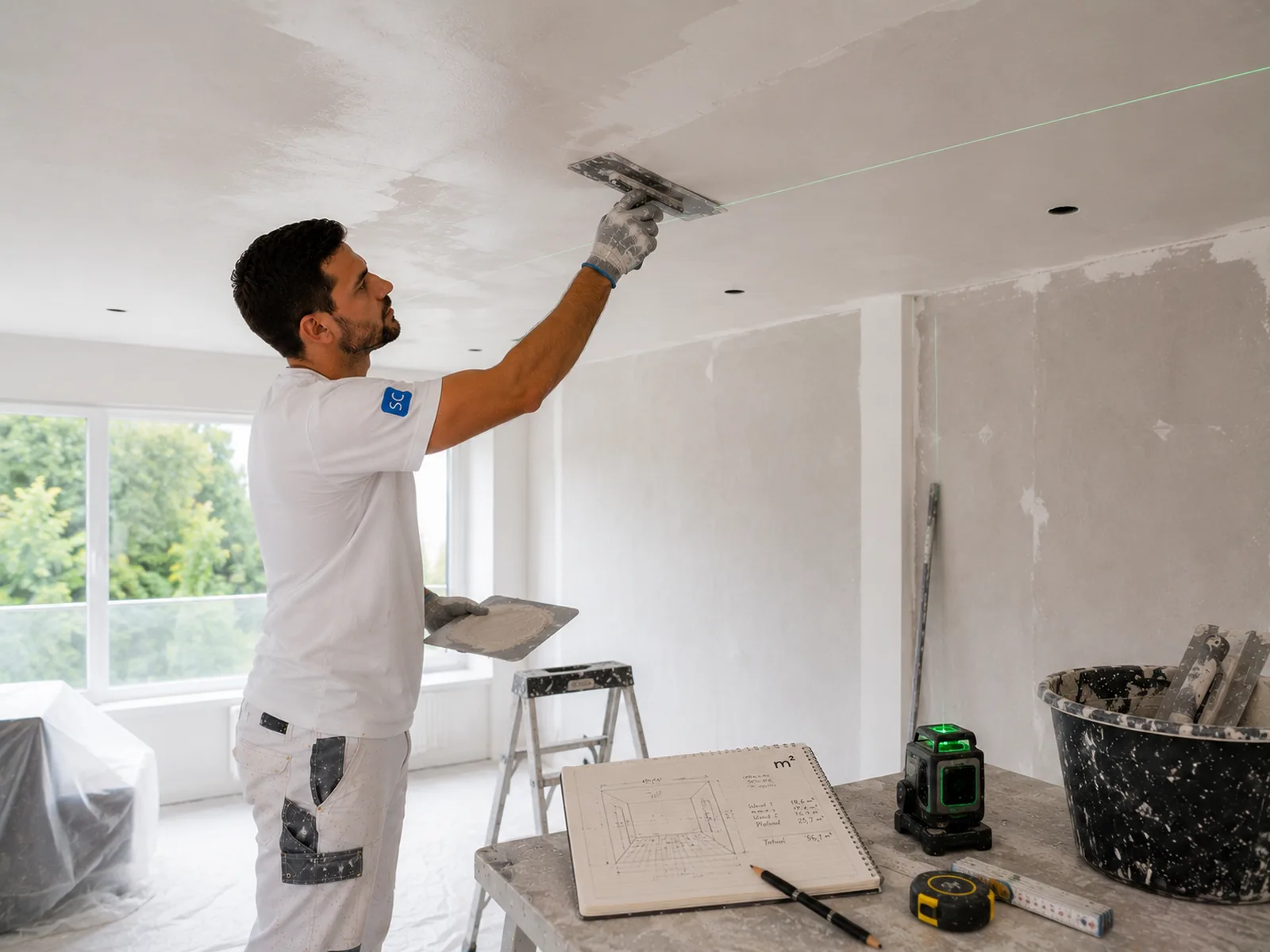
A plasterer works above shoulder height. Wet material must be held against gravity. The room needs broad cover from splashes. Light from windows and lamps can show waves or trowel marks.
This is why a ceiling can cost more than an open wall with the same area. The wall plastering cost guide covers vertical surfaces separately.
Plastering a ceiling costs more when height or detail slows each pass.
Ceiling plastering cost per square metre (m²)
A price per square metre works best on an open ceiling. The surface must be measured and checked. The rate is less useful when old layers are hidden or weak. Two equal rates can cover different prep and layers.
Light skim coat cost
A skim coat is a thin layer over a sound, even base. It often costs €12 to €20 per m² on a ceiling. The lower end suits a large, open area with little prep.
Skimming involves applying a thin layer of plaster. This makes skimming a ceiling suitable only when the base is firm.
Skimming does not repair active movement, damp or loose plaster. Those faults need attention first. A skim is a finish, not structural repair.
Standard ceiling plaster cost
Standard ceiling plastering often costs €14 to €35 per m². This broad range covers different substrates and finish levels. A simple coat on a prepared base sits lower. Thick levelling and close-detail work sit higher.
The quote should state the expected layer or system. It should also explain whether the existing ceiling stays in place.
A common ceiling typically costs less when it is open and level. The complexity of the job rises around beams, slopes and many lights.
Paint-ready ceiling cost
A smooth paint-ready ceiling often costs €15 to €30 per m². It needs careful levelling and a fine finish. Side light can expose small flaws. The agreed quality level matters.
Paint-ready does not always include sanding, primer or paint. Ask what must happen after the plaster dries. The follow-on interior painting cost guide explains broader decorating costs.
Decorative plaster cost
Decorative plaster or schuurwerk often costs €20 to €35 per m². Grain, colour, pattern and edge detail affect the rate. Polished finishes can cost much more. They need a separate quote.
Choose the texture before work starts. Repairing or changing a pattern later can be difficult.
Spray plaster price comparison
Spray plaster or spack may cost €8 to €16 per m² on a large, empty area. It uses another process. Masking must be thorough. The product can leave a smooth or textured result.
Spray plaster needs a separate cost comparison because the equipment and masking differ. This guide only shows its headline range. Ask quotes to label hand-applied and sprayed plaster clearly.
Price per m² versus an hourly rate
The m² model is clear for repeated surfaces. An hourly price can suit small jobs, uncertain preparation or local work. A plasterer may charge €40 to €65 per hour, plus materials and travel when stated.
Compare the estimated hours, team size and material scope. A low hourly rate does not prove a low total cost.
This rate for plastering is most useful for repair work. Labour costs vary with skill, region and access.
Prices by ceiling type and finish
The ceiling type changes grip, layer depth and crack risk. The plaster system must suit the base. A visual check may not reveal every weak area.
Existing plaster ceiling
An existing plaster ceiling can take a new skim when it is dry and firm. Hollow or dusty areas need removal or repair. A contractor may tap the surface. A bond test may also be needed.
Skimming over a sound base is often the cheapest route. Full removal costs more and creates more waste and dust.
Concrete ceiling or channel slabs
A concrete ceiling can be smooth, dense or uneven. Joints between channel slabs may move or show through. The system may need a bond primer. Local levelling or mesh may also be needed.
Ask whether visible joints will be filled, reinforced or left as designed. A guarantee against every future hairline crack is not realistic when the structure can move.
Existing plasterboard ceiling
A stable plasterboard ceiling may need joint work and a thin finish. Screw heads, board joints and torn tape must be checked. Poor fixing or movement needs a fix before plastering.
Installing new boards, noggins or a suspended frame is a separate building task. Keep those items on another quote line. Dutch VAT rules may also treat board installation differently from plastering.
Old textured ceiling
An old textured ceiling can sometimes be bonded and skimmed. It must be firm, clean and suited to the new system. Thick peaks may need local removal. Another base may be safer.
Do not sand or scrape an unknown old coating. If asbestos is suspected, follow the Dutch government advice on asbestos. A laboratory can test the material. Certified removal may be needed.
Gypsum plaster and wet plaster
Gypsum plaster is common in dry indoor rooms. Wet plaster is mixed on site. The plasterer may use a base coat, a finish coat or a thin skim. The ceiling sets the right system.
The plaster type must match the base and room. Product choice alone does not set the price. Prep and finish often have more impact.
Ask the contractor to name the type of plaster used. This also helps the painter choose a later primer.
Different types of plaster have different limits. Do not choose a product from price alone.
Lime or specialist plaster
Lime plaster can suit some old or vapour-open buildings. Special systems need the right skills. They may also dry and cure in another way.
Do not apply a standard modern system by default to an old ceiling. Ask the contractor to explain compatibility and sample the finish when needed.
Terms used in foreign ceiling guides
Foreign pages often use Artex as a general name for an old textured coat. Plastering over Artex needs the same checks for grip, damage and unknown material. Plastering over an Artex ceiling does not create a safe asbestos test.
A ceiling in the UK may be priced in pounds. Some guides also discuss old lath and plaster, which is a separate base system. These foreign prices do not set Dutch market rates.
Perforated plaster tape may appear in a repair method. The right mesh or tape depends on the joint. The contractor must choose a system that helps plaster adhere. A test can show how the new plaster adheres.
Cost to plaster one ceiling, a room or a whole home
The ceiling area is often close to floor area. This makes a first budget simple. Small rooms still face the project minimum. Large clear areas may get a better m² rate.
| Example ceiling project | Indicative area | Simple cost guide |
|---|---|---|
| Small hall or box room | 6–10 m² | €290–€350 minimum often applies |
| Standard bedroom ceiling | 12–16 m² | €290–€560 |
| Living-room ceiling | 20–30 m² | €300–€1,050 |
| Open ground-floor ceiling | 35–55 m² | €490–€1,925 |
| Several home ceilings | 60–100 m² | €840–€3,500 |
| 100 m² ceiling package | 100 m² | €1,400–€3,500 |
These examples use standard plastering rates. Removal, deep repair, access equipment and special finishes can sit outside the total.
The table shows how standard plastering jobs cost more as the area grows. It does not price a new board ceiling.
Small ceiling cost
A 6 to 10 m² ceiling often triggers the minimum fee. The plasterer still travels, protects the room, mixes material and cleans tools. That fixed time is spread over very few metres.
Combining a hall and bedroom can improve value. The surfaces should need the same system and be ready at the same time.
Bedroom ceiling cost
A 12 to 16 m² bedroom ceiling may cost about €290 to €560. A clean, open room sits lower. Heavy texture, fitted wardrobes or many light points add time.
Agree who moves furniture and removes shades. The plasterer needs safe floor space and clear access to all edges.
A standard-sized room may still use the minimum charge. Ask whether the room plastered must be fully empty.
The size of the room is only a first clue. Measure the ceiling itself.
Living-room ceiling cost
A 20 to 30 m² living-room ceiling may cost about €300 to €1,050. A stable open surface with a normal finish sits near the lower half. Cracks, beams or a premium smooth result move the price upward.
Large windows can create strong side light. State the expected finish before comparing the rate.
Open ground-floor ceiling cost
A connected ceiling of 35 to 55 m² may cost about €490 to €1,925. A large continuous area can be efficient. Yet door openings, level changes and kitchen units may increase masking.
Plan plastering before the final floor and fitted items when possible. The contractor must still protect every installed surface.
Whole-home ceiling cost
Several ceilings with a total of 60 to 100 m² may cost €840 to €3,500. The low end assumes sound surfaces. It also assumes one simple finish. Thick layers, high areas and damage raise the total.
If walls are also needed, request a separate wall line and a package total. The plasterer cost guide helps compare the wider project without mixing the two rates.
A package can reduce setup time across plastering projects. Keep the ceiling plastered area separate from wall area in the quote.
How to calculate ceiling area and budget
Measure in metres. For a flat rectangular ceiling, multiply length by width. Add separate shapes when the room is not rectangular.
Step 1: measure length and width
Use the longest clear dimensions of each ceiling section:
Ceiling length × ceiling width = ceiling area
A room that is 4 metres long and 3 metres wide has a 12 m² ceiling.
Step 2: split an irregular ceiling
Divide an L-shaped room into blocks. Work out each block and add the results. Measure a slope on its surface. Do not use only the floor plan.
Do not subtract small light fittings. They usually add detail rather than save meaningful material.
Step 3: choose the correct rate
Use €12 to €20 per m² only for a light skim on a sound base. Use €14 to €35 per m² for standard ceiling plastering. Add separate allowances for removal, repair and access.
Do not use a wall rate for overhead work. Do not use a foreign price per square foot for a Dutch quote.
Some Dutch quotes write the unit as m2. It means the same area as m².
Step 4: apply the project minimum
Multiply the area by the chosen rate. Then compare that sum with €290 to €350. A small job will often use the higher minimum figure.
For 12 m² at €20 per m², the simple sum is €240. A final price around the base charge can still be normal.
Step 5: add known extras
List primer, removal and crack work. Add access gear, travel, parking and waste. Add VAT only when the quote excludes it. Avoid one vague sum for every unknown task.
A useful budget keeps base plaster and extra work separate. This makes later quote changes easier to check.
Worked example: 24 m² ceiling
Assume a 24 m² living-room ceiling needs smooth plaster at €20 to €28 per m²:
- base plaster: €480–€672;
- primer at €3–€5 per m²: €72–€120, if separate;
- indicative subtotal: €552–€792 before other extras.
This is a planning example, not a quote. The contractor must inspect the base and confirm VAT.
Record these inputs before requesting prices:
- length and width of each ceiling;
- ceiling height and slope;
- current substrate and coating;
- cracks, loose areas or stains;
- chosen finish;
- number of lights, beams and details;
- room access and furniture;
- home age for VAT.
The same inputs help each plastering company price the same job.
What affects the cost of plastering a ceiling?
The area sets the starting point. The condition, access and finish explain most price differences. Ask the plasterer to show these items in the quote.
These points affect the cost in different ways. No single average can cover every ceiling.
Size of the ceiling
Larger open ceilings often have a lower rate per m². Setup and travel are spread over more work. Several small rooms can be slower than one clear area of the same total size.
Condition of the existing ceiling
The condition of the existing ceiling affects prep. A dry and firm surface needs less work. Loose plaster or a weak coat must be treated. Hidden faults can change the scope later.
Ask if the ceiling can be skimmed or must be fully replastered. A ceiling replastered in two layers needs more time.
Ask how extra work will be approved. Photos and unit rates can reduce disputes.
Finish level
A basic level finish costs less than a very smooth ceiling made for strong light. Decorative plaster adds another process. The quote should name the finish and later decoration.
If the surface will be painted, agree whether the plasterer or painter handles final sanding and primer.
Ceiling height and access
Normal room height is simpler. High ceilings, stairwells and sloped areas may need a tower or scaffold. Repeated setup also adds time.
Tell the contractor about stairs, lifts, narrow doors and parking before the visit. Safe access is part of the real cost.
Lights, beams and details
Spotlights, alarms, coving, roses and beams create edges. They slow masking and trowel work. A skilled trade may need to isolate or refit electrical items.
Ask whether fittings stay, move or get removed. Do not let wet plaster cover access points.
Occupied or empty room
An empty room is faster to cover. Furniture, floors and kitchens need more care. An occupied home may also need daily cleanup.
Agree who clears the room. Moving heavy items after arrival can become extra labour.
Region, travel and parking
Local demand, travel time and paid parking affect the total. A distant plasterer may have a good m² rate but higher travel costs.
Compare the complete price, not only the headline rate.
Preparation, cracks, texture and moisture
Preparation is the main risk area in ceiling work. A new coat can only perform as well as the base below it. The cause of damage must be addressed before it is hidden.
Before plastering your ceiling, stop leaks and remove unsafe loose material. It may be possible to plaster over an existing firm coat.
Primer and bonding coat
Dense concrete and absorbent plaster need different primers. A separate basic primer line may be about €3 to €5 per m². The correct product and coverage matter more than the cheapest litre price.
Ask the contractor to name the substrate and primer system. Poor bonding can lead to later failure.
Loose or blown plaster
Blown plaster has lost its bond and can sound hollow. It should not be covered with a thin layer. The loose section may need careful removal and rebuilding.
This work can move a project from skimming to full plastering. The quote should state how removed areas are measured and priced.
Hairline and repeated cracks
A small stable crack may need opening, filling or local reinforcement. A repeated crack can point to movement at a joint or in the structure. New plaster alone may not stop it returning.
If point repairs are the main task, ask for a separate repair quote. This guide explains how cracks affect a full ceiling plastering price.
Water stains and damp
Find and stop the water source before plastering. The base must be dry enough for the chosen system. A stain blocker may be needed later before paint.
Plaster does not solve a leaking roof, pipe or ventilation problem. Bathroom ceilings also need a room-specific moisture plan and a separate wet-room scope.
Old paint and texture
Paint must be clean, firm and compatible with the bonding system. Flaking coats need removal. Thick or unknown texture needs an inspection before sanding or scraping.
Suspected asbestos is a stop condition. Do not disturb the layer until it has been assessed under Dutch guidance.
Removing old plaster
Removing loose old plaster may cost about €10 to €22 per m², based on the area and disposal. Full removal creates dust, waste and more drying time. It may also reveal a base that needs further work.
Ask whether the removal rate includes bags, transport and disposal.
The removal of existing plaster should be measured on its own. Do not hide it inside one vague extra.
New plasterboard and structural faults
Sagging boards, failed fixings or structural movement need repair before finishing. Installing a new ceiling is not ceiling plastering. It can involve framing, boards, insulation, wiring and fire details.
Keep this scope separate from the plaster finish. The plastering service page can help you describe the surface work when posting the job.
Labour, materials, time and VAT
Labour is a major part of ceiling plastering. The work is overhead and time-sensitive. Material and labour should still be clear. Ask for an all-in total and a breakdown.
Plastering companies may use a team for a large ceiling. Ask how team size changes the labour costs and timing.
Plasterer hourly rate
A plasterer may charge €40 to €65 per hour for small or uncertain work. An eight-hour labour guide would be €320 to €520 before materials or extras. This is not a guaranteed day rate.
The quote should show team size and working hours. Two workers may finish faster but do not cost the same as one worker.
Material and labour split
Many ceiling jobs use one all-in price per m². It may cover plaster and normal labour. Primer, mesh, beads, floor covers or removal can still be separate.
Ask whether the rate includes every coat. A quote for one thin finishing coat is not equal to a quote for a base coat and finish.
These additional costs must be approved in writing. This is vital when the old coat of plaster hides weak areas.
How long does plastering take?
A simple ceiling can often be applied in one working day. Preparation may need another visit. Several rooms or thick layers take longer.
Application time is not the same as drying time. The plasterer should give product-based guidance for ventilation, heating and decoration.
Allow the plaster to dry before the next trade starts. Do not book paint from the application date alone.
When can fresh plaster be painted?
Fresh plaster must dry evenly before primer and paint. Dark or cool patches can show moisture. The wait varies with depth, heat, airflow and product.
Do not force drying with intense local heat. Confirm the paint system with the plasterer and painter. The ceiling painting cost guide covers the next stage.
When does 9% VAT apply?
Plastering an eligible Dutch home that is more than two years old can fall under 9% VAT. The reduced rate can cover the plastering, preparation, pre-treatment and materials used in that work. This follows the official Belastingdienst plastering rules.
The home must meet the age and residential-use rules. The Belastingdienst guidance for homes older than two years explains the test. You can check building data in the Kadaster BAG Viewer.
When can 21% VAT apply?
The standard 21% rate can apply to a newer home or work too far removed from plastering. The tax authority gives installing plasterboard walls as one example of separate work. A new board ceiling may therefore need another VAT line.
Ask the contractor to show the VAT rate and taxable amount on the quote and invoice. Do not assume every renovation line uses 9%.
How to compare quotes and hire a ceiling plasterer
Give each contractor the same photos, sizes and finish brief. Invite a site visit when the old ceiling is unclear. Compare the written scope before the price.
When you hire a plasterer, ask who will inspect the base. If you hire a professional for a high ceiling, access gear must also be agreed.
Request the same scope
Each quote should state:
- measured ceiling area;
- substrate and current coating;
- preparation and removal;
- primer, mesh and joint treatment;
- plaster system and number of coats;
- finish level;
- protection and cleanup;
- access gear, travel and parking;
- timing and drying guidance;
- VAT and extra-work process.
The ACM ConsuWijzer quote checklist advises consumers to compare the work description, price terms, timing and conditions. Put agreements in writing.
Ask about the inspection
A useful site visit checks the bond, cracks and damp. It also checks height and access. Ask what could not be tested. Agree how hidden faults will be recorded.
Do not accept a firm smooth-finish price based only on floor area when the ceiling condition is unknown.
Compare the complete total
One quote may include primer, plaster, covers and VAT. Another may show only labour. Rebuild both quotes into the same list before choosing.
Check the start tariff too. A low m² price can still lead to the same minimum bill.
Check experience and practical fit
Ask for examples of similar indoor ceilings. Ask for the named plaster system. Confirm insurance, timing and who will do the work. In an old home, ask about lime or fragile bases.
Experienced plastering professionals should explain the limits of a skim. They should also state when a ceiling needs to be replastered.
The cheapest quote is not always the best value. A clear scope reduces the risk of costly changes.
Plan other trades
Leaks, wiring and new boards must be complete before the finish coat. Painting starts only after drying. Plan lights so holes and fittings do not damage fresh plaster.
Use the plasterer cost guide for the wider cluster. Exterior rendering has its own exterior plastering cost guide. This keeps each quote and job scope clear.
Prepare the room
Follow the contractor's written request. Clear movable furniture and provide access to water and power when agreed. Do not remove electrical fittings unless the work is safe and authorised.
Photograph existing cracks and finished surfaces before work. This creates a shared record.
Frequently asked questions
Answers to common questions.
What is the average cost of plastering a ceiling?
Standard ceiling plastering in the Netherlands often costs €14 to €35 per m². A small ceiling may use a €290 to €350 project minimum. Preparation, height and finish set the final price.
How much does it cost to skim a ceiling?
A light skim over a sound ceiling may cost €12 to €20 per m². Loose plaster, damp or major unevenness needs more than a thin skim.
How much does it cost to plaster a 20 m² ceiling?
At €14 to €35 per m², the simple guide is €280 to €700. A normal quote may sit around €300 to €700 after the small-job minimum. Extras can raise the total.
How much does it cost to plaster 100 m² of ceiling?
At €14 to €35 per m², the basic range is €1,400 to €3,500. Confirm whether the price includes primer, repairs, covers, materials and VAT.
Is skimming cheaper than full plastering?
Yes, when the existing ceiling is stable and fairly even. A thin finishing coat uses less material and time. Full levelling costs more but may be necessary on a poor base.
Can you plaster over an old ceiling?
Often yes, if the old layer is dry, stable and bonded. Loose, hollow or unknown coatings need assessment first. Suspected asbestos must not be disturbed.
Can you plaster over a textured ceiling?
Sometimes. The texture must be firm, clean and compatible with the bonding system. Thick peaks, loose paint or unknown old material can require testing or removal.
How long does it take to plaster a ceiling?
A simple room ceiling may be applied in one day, but preparation can add time. Drying takes longer and depends on the product, thickness and room conditions.
How many coats of plaster does a ceiling need?
It depends on the substrate and finish. A stable base may need a thin skim. An uneven ceiling may need a base coat and finishing coat. The quote should state the system.
Does ceiling plastering include painting?
Usually not. Plaster must dry before primer and paint. Ask whether sanding or primer is part of either quote.
Does the 9% VAT rate include plaster materials?
For eligible plastering in a home older than two years, 9% VAT can cover preparation, pre-treatment and materials used in the plastering work. Separate building work may use 21%.
Can I plaster a ceiling myself?
It is possible, but overhead plastering is tiring and time-sensitive. A full visible ceiling is hard to finish evenly. DIY is more suitable for someone with real plastering experience.
Why do ceiling plastering quotes vary so much?
They may cover different finish levels, layers, repairs, protection and VAT. The existing ceiling and access also change labour. Compare itemised written scopes, not only m² rates.
Is a new plasterboard ceiling included?
No. Framing and installing boards are separate building tasks. Joint treatment and the plaster finish can be priced after the board system is stable and ready.
Should walls and ceilings be priced together?
They can share one project, but keep separate m² rates and scope lines. Ceiling work is slower. A package total is useful only when each surface and finish is clear.
Related guides
- Plaster Repair Cost: 2026 Wall and Ceiling Price Guide for the Netherlands
- Wall Plastering Cost: 2026 Plasterer Price Guide for the Netherlands
- Bathroom Plastering Cost: 2026 Price Guide for the Netherlands
- Exterior Plastering Cost in the Netherlands: 2026 Price Guide
- Spray Plastering Cost: 2026 Price Guide for the Netherlands
Compare plastering quotes?
Post your job for free and compare plasterers.