Ceiling Painting Cost in the Netherlands: 2026 Paint Price Guide
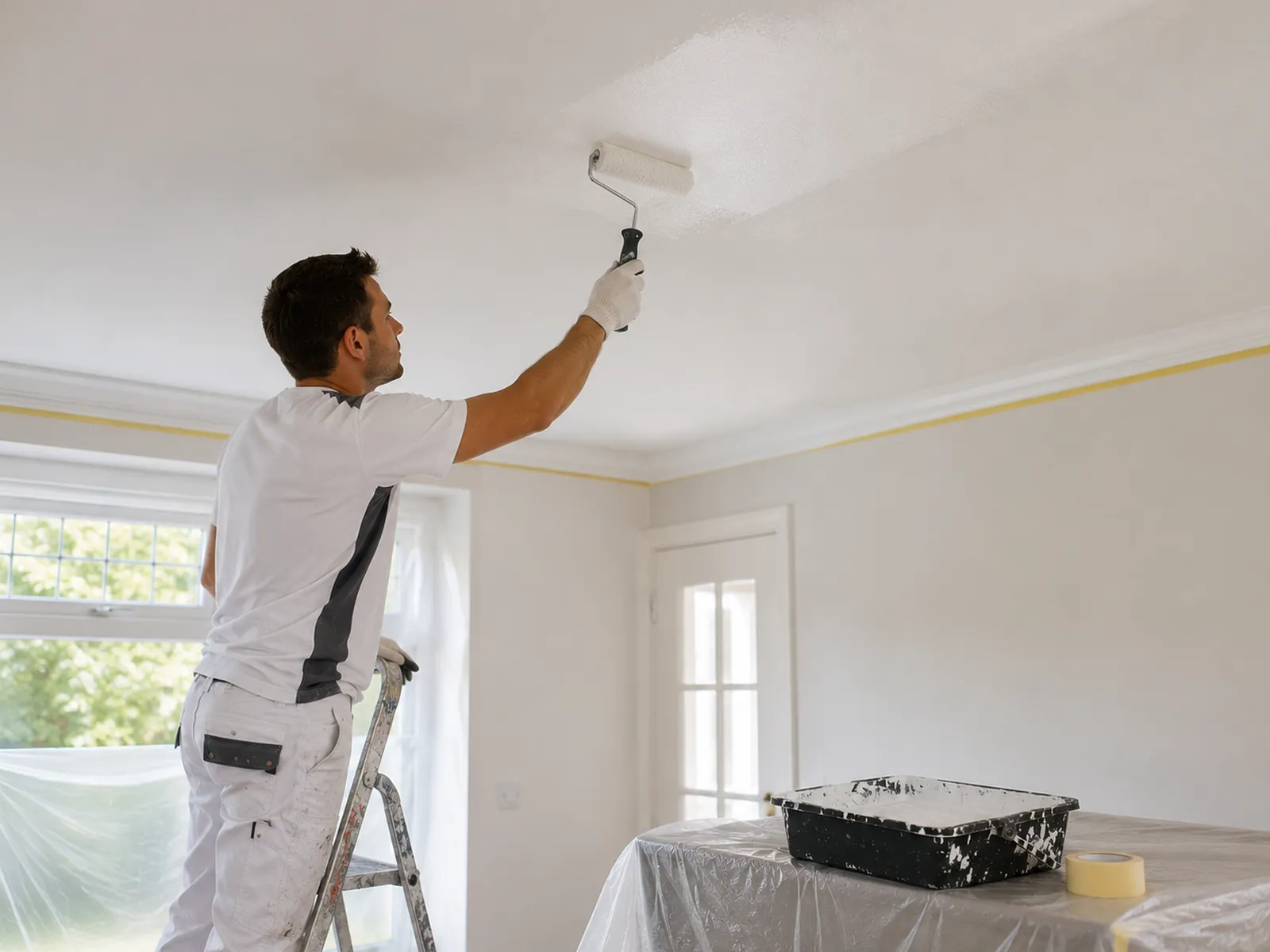
The ceiling painting cost in the Netherlands is usually €9 to €15 per m² for a straightforward roller repaint. Ceiling spraying often costs €5 to €10 per m² when the room is empty and fully masked. An interior painter commonly charges €35 to €55 per hour. Small projects can cost more per m² because setup, protection and travel still apply.

By Arek
Updated October 16, 2026 · 21 min read
Ceiling paint cost and price overview
Use the table below for an early budget. A standard flat ceiling in good condition is usually at the lower end. Cracks, water stains, old texture, extra coats or difficult access increase the cost to paint a ceiling.
| Ceiling painting work | Indicative Dutch price | Typical scope |
|---|---|---|
| Interior painter | €35–€55 per hour | Small, detailed or uncertain work |
| Straightforward ceiling repaint | €9–€15 per m² | Roller, stable surface and normal preparation |
| Ceiling spraying | €5–€10 per m² | Large or empty space with full masking |
| Primer or fixative | €2–€4 per m² extra | Porous areas, bare repairs or uneven absorption |
What do ceiling painting prices include?
Dutch market price checks show overlapping ranges because the scope differs. Labour, materials, primer, application method, decorative details and coat count all affect ceiling prices.
Compare the written work, not only the headline price per square metre. One professional painter may include paint, protection, primer and two coats. Another ceiling painting price may cover labour and one coat only. The costs to paint the same surface are comparable only when both offers cover the same work.
A straightforward ceiling repaint
A simple repaint starts with a sound, dry and previously painted surface. It has no active leak, loose plaster or major cracks. The room is accessible and the colour change is limited. Flat ceilings in good condition need the least preparation.
This work often falls between €9 and €15 per square metre when rolled. A larger open ceiling may have a lower unit price than one small room. The fixed setup cost is spread across more surface.
Roller or spray application
Rolling is practical in occupied homes and smaller rooms. It still needs floor protection, edge masking and careful cutting-in. A roller can also suit repair areas that need local control.
Spraying can be faster across large, empty and uniform ceilings. The application rate may be €5 to €10 per m², but masking can be substantial. Windows, walls, floors, lights and adjoining spaces must be protected from overspray. Ask whether that work is inside the spray price.
Ceiling whitewashing and sauzen
Dutch quotes may use the terms plafond witten or plafond sauzen. In practice, this normally means applying a white or light water-based interior coating with a roller or spray system. It is still ceiling painting, not plastering.
The paint used, preparation and number of layers matter more than the label. Request the product, sheen, colour code and coat count in writing.
Dutch square metres versus foreign calculators
Painters in the Netherlands normally quote per m², per hour or per room. Foreign pages often calculate costs per square foot. One square metre is about 10.76 square feet, but converting the unit does not convert foreign labour, material or tax rates.
Use metres for an accurate local estimate. For a flat ceiling, multiply room length by room width. A 4 m by 3 m room has a ceiling size of 12 m². A foreign 12x12-foot room is about 13.4 m², but its quoted price still needs Dutch rates. Do not use the full ceiling and wall area for a ceiling-only quote.
What affects the cost of painting a ceiling?
Ceiling condition, preparation and access drive most price differences. The paint cost also depends on coverage and product quality. Room size matters, but the same 20 m² surface can need a very different amount of labour.
Ceiling size and room layout
A painter measures the actual surface. A simple rectangle is quick to calculate. Alcoves, slopes, exposed beams, skylights and several light fittings slow the paint job.
Large continuous ceilings can be efficient to roll or spray. Small rooms can cost more per m² because each room needs separate masking, access and cleanup.
Ceiling height and access
Ceilings at standard room height are easier to reach. High ceilings, stairwells, galleries and vaulted or cathedral ceilings need more setup. A stable work platform, indoor scaffold or specialist access equipment may be required.
Access affects safety and speed. Ask whether scaffolding, assembly, rental and additional labour are included. A two-storey ceiling should not be priced like a standard flat ceiling.
Surface condition
Stable paint needs less preparation. Flaking paint, hairline cracks, damaged filler, nicotine residue, grease or an old rough texture adds work. A textured ceiling also uses more paint than a smooth surface.
Paint does not repair loose plaster or a moving crack. Major plastering, drywall replacement and structural repair need a separate assessment. This price guide does not price those trades.
Water stains and moisture
A water stain must be dry and its cause fixed before repainting. Paint alone cannot stop a roof, pipe or bathroom leak. Trapped moisture can make the new finish fail.
Once the cause is solved, the painter may clean the area and apply a suitable stain-blocking primer. Active mould or recurring damp requires investigation before ceiling paint is applied.
Cleaning, filling and sanding
Dust, cobwebs and loose particles are removed first. Kitchens may need degreasing. Small holes and stable cracks can be filled, sanded and spot-primed.
Ask how much repair is included. “Normal preparation” can mean different things. Photos help with an early estimate, but close inspection can reveal weak old layers.
Primer and adhesion
Primer can be needed on bare filler, porous plaster, stains or areas with uneven absorption. It helps paint adhere and can prevent patchy results. A sound existing coating may not need full primer.
The professional ceiling system should match the substrate. A quote should state whether primer is local or full-surface and whether it is an extra cost.
One or two coats of paint
One coat may refresh a clean white ceiling in good condition. A second coat of paint is common when coverage, colour or repaired areas require a uniform finish. Dark-to-light changes can need another coat.
The painter should record the planned coat count. Ask how additional layers will be approved and priced. Fewer coats are not a saving if the finish remains patchy.
Paint type, quality and colour
Standard matt interior paint is common because it reduces glare and can hide small surface variations. A bathroom ceiling needs a product suitable for humidity and good ventilation. Kitchens may benefit from a more cleanable finish. Wall paint is not automatically the right ceiling paint for every substrate or room.
Paint quality affects material cost, coverage and durability. The right ceiling paint also depends on the old layer. Dark colours and higher sheen can reveal defects and application marks more easily than flat white ceiling paint. Ask which type of paint is specified and why it suits the surface.
Texture, beams and cornices
A textured ceiling has more surface area and needs careful coating. Different ceiling textures can absorb paint at different rates. Exposed beams, cornices, roses and decorative edges require cutting-in. They can add roughly €5 to €10 per m² where detailed work applies.
Older decorative or popcorn ceilings should not be scraped without knowing what they contain and how stable they are. Ask for specialist assessment if the coating is suspect. Removal is outside a normal ceiling repaint.
Furniture and masking
An empty room is quicker to protect. Heavy furniture, fixed cabinets, curtains and valuable items can increase setup time. Spraying needs far more masking than rolling.
Agree who clears the room and removes shades or loose fittings. Electrical fixtures should be isolated or handled safely by a competent person.
Painter labor: hourly rate, price per m² or project cost?
Ceiling painters use hourly rates, unit prices and fixed totals. The best pricing model depends on how clearly the work can be measured before it starts.
Hourly rate
An interior painter often charges €35 to €55 per hour. Dutch quotes usually call this labour; international calculators may label it labor or labor costs. Hourly pricing can suit touch-ups, one small ceiling or uncertain repair work.
Ask for expected hours and any minimum fee. Confirm whether labour costs include paint, filler, tape, protective film, travel, parking, waste and VAT. A low hourly rate can still produce a higher total if preparation takes longer.
Price per square metre
Per-m² pricing works well for measurable, repeatable surfaces. Straightforward roller work is often €9 to €15 per m². Spraying can be €5 to €10 per m² in a suitable empty space.
Confirm the measured area, preparation, primer, number of coats, paint and VAT. A ready-to-paint application rate is not comparable with a complete ceiling repaint. Ask for the cost per m² and the total price in the same offer.
Fixed project or per-room price
A fixed price can be clearest for one room or several ceilings. It should list every room, surface, colour, paint type, repair allowance, application method and coat count.
The fixed price should also explain exclusions. Hidden damage may create additional work, but the provider should describe the issue and agree a price before proceeding.
Guide price and extra work
A Dutch guide price is an estimate rather than a fixed amount. ACM ConsuWijzer explains that a final bill should generally not exceed a guide price by more than 10% without a timely warning and customer consent.
Keep changes in writing. This matters when loose paint, deep stains or damaged plaster becomes visible during preparation.
How to estimate ceiling painting
Multiply room length by width to estimate a flat ceiling. Then multiply the area by the relevant rate. For example, 4 m × 3 m = 12 m². At €9 to €15 per m², the basic calculation is €108 to €180.
That calculation is not a final quote. A small project minimum, masking, repair, primer, materials and VAT can bring the real total higher. For a vaulted ceiling, the sloped surface must be measured rather than using floor area alone.
To estimate how much paint is needed, divide the ceiling area by the product coverage per litre. Multiply by the planned coats and allow for texture or waste. Follow the technical data for the chosen product rather than a generic paint calculator.
Example ceiling painting costs by room size and ceiling type
These room costs are indicative cost estimates, not offers. They show why the surface and scope must be clear before comparing ceiling painting estimates. The result depends on room size as well as preparation.
Small bedroom ceiling
A 10 to 15 m² bedroom ceiling gives €90 to €225 at the reference rate of €9 to €15 per m². The real total can be higher, because a painter still has to travel, mask, prepare, apply paint and clean up.
A sound white ceiling in an empty bedroom is near the lower end. Stains, repairs, a strong colour change or several fittings push it upward.
Living-room ceiling
A 25 to 35 m² living-room ceiling gives €225 to €525 at the reference rate, before setup and extra preparation. One open surface is often efficient. Beams, fixed lighting, large furniture and decorative edges add labour. The living room and kitchen can share setup when their coating systems are compatible.
The price should state whether walls are only protected or painted too. For combined surfaces, compare the separate wall painting cost guide.
Open-plan ceiling
Painting a 40 to 50 m² open-plan ceiling gives €360 to €750 at the reference rate. Spraying can be efficient before the home is occupied. Rolling may be easier when floors, walls and fittings are already finished.
Ask for both methods only when the preparation and finish are comparable. A cheap spray application price can exclude extensive masking.
Several ceilings in one home
A group of ceilings covering about 60 to 100 m² gives €540 to €1,500 at the reference rate. The price per m² can improve because setup is shared across the project.
Different rooms may still need different products. A humid bathroom ceiling, greasy kitchen surface and dry bedroom should not automatically receive one coating system.
High or vaulted ceiling
A high or vaulted ceiling has no reliable flat-room rate. Vaulted and cathedral ceilings need sloped measurements. Extra access, slower cutting-in and safe equipment can increase the total cost. Two-story ceilings can also need indoor scaffolding.
Ask for the ceiling height, platform or scaffolding and labour to be separate lines. This makes the higher ceiling painting cost easier to compare.
Bathroom ceiling
A small bathroom ceiling may have a high price per m² because the area is small and preparation is detailed. The cost to paint a bathroom surface also depends on stain treatment. A suitable moisture-resistant paint system and ventilation are important.
Existing mould or water damage must be assessed first. Painting a bathroom ceiling does not correct a ventilation or leak problem.
New plaster ceiling
New plaster must be sufficiently dry, stable and prepared for its first coating. It may need a compatible primer or mist coat before the finish. Drying time depends on thickness, ventilation and conditions, so a fixed waiting period is not safe for every project.
This page covers painting once the surface is ready. Plastering, skimming and repair are separate costs. Ask the plasterer and painter to agree who declares the ceiling ready.
DIY ceiling painting
DIY ceiling painting can reduce labour costs on one accessible, sound surface. Include ceiling paint, primer, filler, rollers, extension poles, trays, tape, covers, safe access equipment and your time.
Overhead work is tiring and missed edges or lap marks can need repainting. Hiring a professional can be worthwhile for high ceilings, stains, weak coatings, spraying or several rooms.
What is included in professional ceiling painting?
A standard ceiling painting service may include:
- inspection and measurement of the agreed ceiling;
- protection of floors, walls, furniture and nearby fittings;
- light cleaning or degreasing where stated;
- filling small stable holes and cracks;
- light sanding and dust removal;
- spot primer or full primer where specified;
- the agreed paint and normal supplies when listed;
- brush, roller or spray application;
- the agreed number of finish coats;
- normal touch-ups and cleanup of the work area.
Check the paint specification
The quote should name the ceiling paint or an equivalent quality level. It should also state the sheen, colour code, estimated quantity and planned coats. Quality paint matters, but preparation decides whether the paint adheres.
Ask whether materials are included. Confirm the method for bare filler, old stains and weak edges. The prepared surface must let the paint adhere correctly.
Check masking and room protection
Rolling needs floor, wall and fixture protection. Spray painting requires full containment because fine droplets can travel. Confirm protection for windows, sockets, ventilation grilles, cabinets and adjoining rooms.
Furniture movement may be limited by insurance or safety rules. Agree what the customer must remove before the start date.
Check the schedule
One standard room can often be painted within a working day when little preparation is needed. Repairs, primer, two coats and drying can extend the work. A whole-home project takes several days.
Dry-to-touch time is not full cure time. Follow the paint data before cleaning the surface or exposing a bathroom to heavy humidity.
Check handover
Inspect the finish in normal daylight after it has dried. Review coverage, edges and agreed repairs. Record any follow-up item under the painter's written terms.
SkilledContractors does not guarantee timing, workmanship, product durability or aftercare. Those matters belong in the agreement with the chosen provider.
A basic ceiling painting cost may exclude:
- plastering, skimming or ceiling straightening;
- replacement of plasterboard or structural repair;
- repair of roof, pipe or bathroom leaks;
- treatment of active damp or mould causes;
- extensive removal of peeling paint or texture;
- specialist treatment of hazardous old coatings;
- painting walls, doors, window frames or skirting boards;
- removal or rewiring of light fittings;
- heavy furniture removal or storage;
- scaffolding and specialist access equipment;
- parking, travel or waste charges not listed;
- decorative murals, metallic coatings or specialist effects.
Keep ceiling and plastering intent separate
Ceiling paint changes the colour and protects a prepared surface. It does not make an uneven ceiling flat. Deep cracks, loose layers or widespread damage may need plastering before any painting project begins.
Ask for preparation, repair and painting as separate items. This avoids comparing a paint-only offer with a complete repair system.
Keep neighbouring painting costs separate
This guide answers the standalone cost of painting a ceiling. It does not replace the broader painter cost guide or the complete interior painting cost guide.
Walls, doors, window frames and exterior work have different measurements and preparation. Weather-exposed surfaces belong in the exterior painting cost guide.
Stop the cause before coating
Do not hide a fresh water stain, active crack or mould source under new paint. The underlying issue can return and damage the finish. Ask for the cause to be assessed and resolved first.
Saving tips from a painting contractor
Real savings come from reducing avoidable setup and comparing the same scope. Removing necessary primer, repair or protection can create a cheaper quote but a weaker result.
Combine several ceilings
A painting contractor can spread travel, tools and cleanup across several rooms. Combining compatible ceilings may reduce the unit price. Every ceiling should still be inspected before one system is chosen.
Keep optional walls and woodwork as separate lines. You can then compare the saving from bundling with each standalone cost.
Clear the room
Remove small furniture, pictures, curtains and personal items as agreed. Move remaining furniture to give safe access. Do not disconnect electrical fixtures unless you are competent to do so.
An empty room can reduce masking time. This matters most for spraying.
Use one colour and compatible paint
One flat ceiling colour across several dry rooms reduces product changes and leftovers. Finalise the colour before work starts.
Do not force one product onto every room. Bathrooms and kitchens may need a different system.
Fix leaks early
Resolve moisture before the painting date. A dry, stable stain can then receive the correct preparation. Last-minute discovery of an active leak delays the project and wastes setup time.
Share measurements and clear photos
Send the room length, width and ceiling height. Add full-ceiling photos plus close-ups of cracks, stains, texture, fittings and access limits. Photos improve an early estimate but do not replace inspection.
Compare like-for-like quotes
Compare area, preparation, repair allowance, primer, paint type, coat count, application method, masking, labour, materials, access, VAT and cleanup. A low price with many exclusions may cost more in the end.
ACM ConsuWijzer's quote checklist recommends checking company details, total price, work description, planning and conditions before accepting an offer.
Local costs per m², VAT and additional charges
The indicative ranges on this page apply across the Netherlands. The final price still varies by location, access and tax treatment.
Amsterdam, Rotterdam, The Hague and Utrecht
Painters in dense cities may face parking fees, permits, loading limits and longer travel. Narrow stairs and occupied apartments can also slow setup. A provider based nearby may have lower travel costs, but availability and scope matter more than distance alone. The homeowner should mention access limits when requesting prices per room.
Ask for parking, travel and access charges as separate lines. Do not assume that a city surcharge is included in the hourly rate.
9% or 21% VAT
The Dutch Tax Administration states that the 9% VAT rate can apply to painting a qualifying home that is more than two years old. It can cover the painting materials and preparation closely connected to the work. Activities too far removed from painting can remain at 21%.
Check the current conditions on the Belastingdienst painting page. Ask the provider to confirm the rate on the quotation and invoice. SkilledContractors does not determine tax eligibility.
Minimum charges, parking and waste
A painter may charge a minimum half-day or project fee. Travel, paid parking, access equipment and disposal can be separate. Small ceiling jobs are most affected because these fixed costs are divided by fewer square metres.
Request one total including VAT. Ask which items remain provisional and how changes will be approved.
Owner-occupied and rented homes
In a rented home, interior wall and ceiling painting can fall under the tenant's minor maintenance duties. Major defects and the cause of damage may remain the landlord's responsibility. The lease and condition at handover also matter.
Check the official Rijksoverheid maintenance overview and contact the landlord before ordering work that may be their responsibility.
Source and update note
The ranges were checked in August 2026 against Dutch consumer price guides and service platforms. They combine overlapping public examples into budgeting bands. They are not a price list from one painter.
Products, labour, energy and local availability can change. Use current written quotes for a final decision.
Frequently asked questions
Answers to common questions.
How much does it cost to paint a ceiling in the Netherlands?
A straightforward roller repaint is often €9 to €15 per m². Spraying can be €5 to €10 per m² in a suitable room. Small projects can cost more per m² because setup and travel apply.
How much do painters charge per ceiling?
A small bedroom ceiling or a normal living-room ceiling costs its measured area at €9 to €15 per m². The condition, height, masking, coats and materials determine the real total.
What is the average cost to paint a ceiling per m²?
Use €9 to €15 per m² as an indicative Dutch range for normal roller work. A simple spray application may be lower, while repair-heavy or high work can be higher. There is no fixed national average cost.
Is it cheaper to roll or spray a ceiling?
Spraying often has a lower application rate on large, empty surfaces. Full masking can remove part of that saving in an occupied home. Compare the total price for the same preparation and finish.
How long does it take to paint a ceiling?
One accessible room may take about a working day with limited preparation. Repairs, primer, two coats and drying can extend the schedule. Several rooms or high ceilings take longer.
Do ceilings need two coats?
Not always. One coat can refresh a sound, similar white coating. Two coats are common for uniform coverage, colour changes, repairs or porous areas. The quote should state the plan.
Can a painter cover a water stain?
Only after the source is fixed and the ceiling is dry. The painter may need cleaning and a stain-blocking primer. Coating an active leak or damp area is not a durable repair.
How much does a new ceiling cost to paint?
The paint cost depends on area and the required first-coat system. New plaster must be dry and stable before primer or a mist coat. Plastering itself is outside a ceiling painting quote.
Does a textured or popcorn ceiling cost more?
It can. Texture uses more paint and slows application. Old or suspect coatings may need specialist assessment before disturbance. Removal and remediation are not part of a normal repaint.
What raises the cost of a high ceiling?
Extra surface, slow cutting-in, safe access equipment and more setup raise the price. Measure sloped areas and ask for scaffolding or platforms to be itemised.
Can walls and the ceiling be painted together?
Yes. A combined project may share setup and protection. Keep the wall and ceiling prices visible so you can compare coat counts, products and savings.
Should the ceiling be painted before the walls?
Painters often coat the ceiling first because any small splashes can be covered during wall work. The best sequence depends on spraying, masking, trim and room condition. Agree the method in the work plan.
Is professional ceiling painting worth it?
It can be worthwhile for high spaces, stains, damaged coatings, spraying or several rooms. DIY can suit one safe, stable ceiling. Compare tools, protection, time, finish and correction risk as well as labour.
How do I find reliable ceiling painters?
Describe the ceiling area, height, condition, paint colour and preferred method. Compare business details, scope, price, VAT, schedule and terms. Use the painting services page to explore the relevant service category.
Related guides
- Exterior House Painting Cost in the Netherlands: 2026 Prices
- Wallpaper Installation Cost 2026: How Much Does Wallpaper Cost?
- Interior Wall Painting Cost in the Netherlands: 2026 Prices
- Stair Painting Cost 2026: How Much to Paint a Staircase?
- Window Frame Painting Cost: 2026 Paint Price Guide for the Netherlands
- Door Painting Cost: 2026 Interior and Exterior Price Guide for the Netherlands
- Interior House Painting Cost in the Netherlands: 2026 Prices
Find ceiling painters and compare quotes
A clear request produces more useful estimates. Give every provider the same information and ask them to price the same scope. This is the best way to find ceiling painters whose offers can be compared fairly. Include: property postcode and home type;, room length, width and ceiling height;, number of ceilings and total estimated m²;, flat, sloped, vaulted or textured ceiling type;, photos of the full surface and close-ups;, cracks, stains, peeling paint or repaired areas;, current and desired colour;, roller or spray preference, if any;, whether the room is empty or occupied;, light fittings, beams, cornices and access limits;, preferred timing and whether the home is over two years old. Ask each painter to state: measured ceiling area;, cleaning, filling, sanding and primer;, paint product, sheen and colour;, application method and number of coats;, labour and material cost;, masking, furniture movement and cleanup;, access equipment, travel and parking;, fixed price, guide price or hourly basis;, VAT rate and total including VAT;, schedule, payment terms and handling of additional work. Compare at least two or three written offers when practical. A complete quote may be better value than the lowest rate. If your project includes walls or a complete room, review the interior painting service and keep every optional surface itemised. SkilledContractors is a comparison platform, not the painter carrying out the work. Prices are indicative. The agreement, payment, execution and aftercare are between you and the selected provider.