Plastering repair guide
Plaster falling off walls or a ceiling: loose plaster repair steps
Plaster coming off a wall is a sign that the finish is no longer firmly bonded to the surface beneath it. It may look like flaking paint, a hollow patch, cracks, crumbling edges or a bulge. The cause can be local and repairable, but loose plaster can also fall. Keep clear of any unstable area and find the cause before you arrange a cosmetic patch.
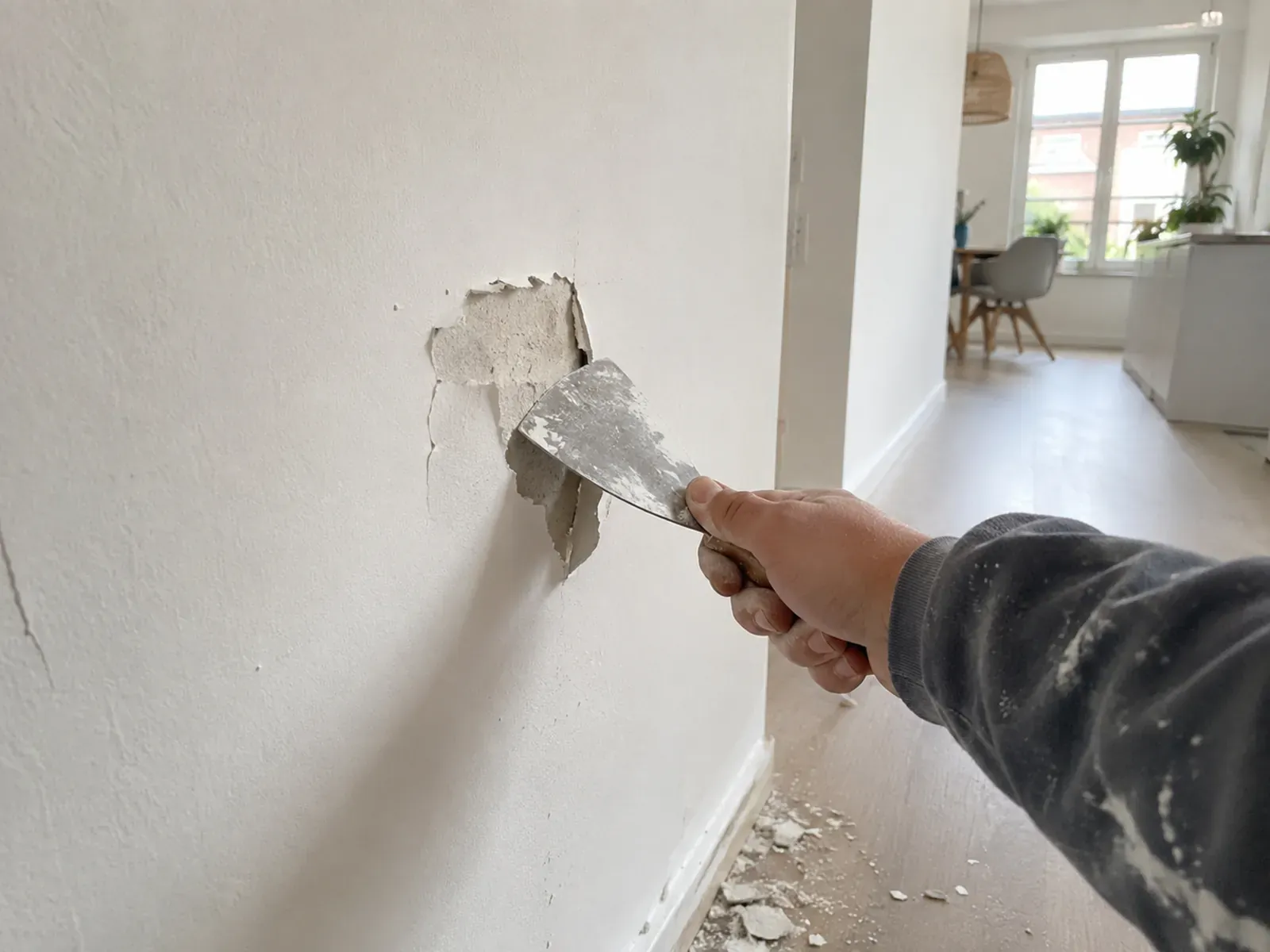
If plaster is falling from a wall or ceiling, or the surface is visibly bulging, do not try to pull it off. Keep people away from the area and arrange a professional inspection.
Why is plaster coming away from the wall?
Plaster may become detached from the wall when the bond between the plaster and its background fails. This is often called blown plaster. A patch can sound hollow, sit proud of the wall, crack around the edge or move slightly when touched. It can occur on solid walls, plasterboard, old lath and plaster, or a previously repaired surface.
Common causes include:
- Damp or a leak. Water behind or within the wall can weaken plaster and paint. Rising damp, a plumbing leak, rain penetration or condensation need different solutions.
- Poor adhesion. The background may have been dusty, too smooth, too dry, contaminated, or not prepared for the type of plaster used. A bonding agent or primer is part of a system, not a universal fix.
- Movement. The wall, ceiling or substrate may have moved. Repeated movement can make plaster crack and separate from the wall.
- Age and previous repairs. Old plaster may no longer be sound, and a patch over weak existing plaster may not last.
- An unsuitable finish for the location. A bathroom, cold external wall or another damp-prone area may need the moisture problem resolved before new plaster can stick.
The visible patch does not reliably identify the cause. For example, peeling paint might be a paint failure, condensation or moisture behind the wall. A hollow sound can suggest detached plaster, but it does not tell you why the bond failed.
Loose plaster on walls and ceilings: why it falls and when it is dangerous
It can be. Small loose bits at low level may only create a local mess, but detached plaster above head height or on a ceiling can fall without much warning. Treat a bulging, sagging, cracking or large hollow area as unsafe.
Do not stand beneath loose ceiling plaster, tap it hard, pry at it, or cover it with wallpaper, a skim coat or another coat of paint.
Move furniture and people away where possible without disturbing the surface. If a leak is actively wetting the wall, avoid nearby electrical outlets and call the appropriate professional. If you rent the home, take dated photos and report the defect and any moisture issue to the landlord or property manager promptly.
Safe checks you can make
You do not need to remove plaster to make the first decision. A short visual record is enough.
- Look for moisture. Check for a water mark, peeling paint, mould, salt-like marks, a musty smell or a nearby leak.
- Look for movement. Notice new cracks, a gap around doors or windows, and whether the crack crosses into the surrounding wall or brickwork.
- Check the position. Note whether the affected plaster is on a wall or ceiling, in a bathroom or kitchen, near an outside wall, or near a pipe.
- Photograph the whole area. Take one close photo and one that shows the wall, room and height of the damaged plaster.
- Record the history. Note when it started, whether it followed new plaster, painting, a leak or building work, and whether the patch has changed.
Do not use a hammer, scraper, chisel or sandpaper to test a loose area. Do not drill through damaged plaster to investigate a wall. In older buildings, unknown coatings and materials need extra care; do not create dust just to inspect a patch.
Can I ignore blown plaster?
No. You may be able to monitor a very small, stable and low-level patch briefly while arranging advice, but do not ignore a patch that is expanding, hollow over a large area, damp, cracked or detached from the wall. Leaving the cause in place can turn a small repair job into a larger replastering project.
Paint, filler and a new skim coat can make an area look better for a short time, but they will not restore a failed bond between the plaster and the wall. They can also trap moisture or hide the extent of the damage.
Why is plaster peeling off my wall when I paint?
Paint can pull away because the coating underneath is weak, damp or poorly bonded. Sometimes the paint is only revealing a problem in the existing plaster. If fresh plaster or old paint comes away with the roller, stop painting. Let the wall dry, identify whether the surface is sound, and seek advice before applying another coat.
Do not assume that a coat of PVA, a bonding agent or a thicker paint will solve it. Those products have specific uses and can be wrong for a damp wall, the wrong plaster type or a surface that is already detached. A professional will first prepare the surface back to solid material and address the root cause.
How a professional approaches plaster repair
A competent plasterer will assess the damaged plaster, the surrounding plaster and the background before recommending a repair. The work may include removing only unstable material, checking whether the wall is dry and sound, preparing the surface, applying new plaster in a compatible system, and allowing it to dry before the final finish.
The scope differs for gypsum plaster, lime plaster, plasterboard, a wall patch and a ceiling. In older homes, lath and plaster or an original plaster finish may need a more careful approach. If the defect is caused by a leak, condensation, rising damp or structural movement, the repair should wait until that issue is dealt with.
This is why a quote should describe the cause it assumes, the area to be repaired and any work that sits outside the plaster repair. It avoids comparing a simple small patch with a job that needs drying, leak work or a larger re-skim.
What does detached plaster look like in older buildings?
In older homes, original plaster may be lime plaster over solid walls or lath and plaster fixed to timber lath. These systems can need a different repair from a modern plasterboard wall. A plasterer checks whether the surrounding plaster is still sound, whether it is detached from the wall, and how much of the area is back to solid material.
The aim is not to fill the hole quickly. It is to prepare the surface, remove only the loose stuff that is unsafe, and apply new plaster only when the background, moisture conditions and existing plaster are suitable. A repair may need to sit flush with the surrounding plaster, but a flat-looking patch is not enough if damp problems or movement remain.
Why a quick patch may fail
Trying to patch over loose plaster, a damp wall or a failed coat of PVA can make a short repair job fail again. New plaster needs a compatible, stable surface to stick to. If plaster is still wet behind paint, if the wall has a moisture issue, or if the bond between the plaster has already failed, another skim may not solve it.
Allow the repaired area to dry in line with the system guidance. If the plaster continues to fall away, sounds hollow, or starts to crack after re-skimming, get it checked. A decent plasterer can assess the problem, but a tradesman should not be expected to solve a leak, rising damp or structural change with a finish coat alone.
A short decision guide for loose plaster
First, make sure it’s safe. Do not tap the plaster to see whether it is hollow, and do not pull loose material from walls and ceilings. Plaster walls, wall plaster and plasterboard can look similar after paint, but they may need different plaster products and a different repair. In an older building, a patch may be separated from the wall while the surrounding surface is still sound; in another, the whole house may have a wider moisture or movement issue.
You may need to call a plasterer when the damaged area is dry and stable enough to assess. You may need to prepare information rather than the wall: photos, the location, moisture signs and the history of the patch. A good plasterer can explain whether re-plastering, a small repair, or a larger area needs to be replastered. They will allow it to dry and choose a breathable finish where that suits the wall. They should not promise that simply waiting for adhesive to dry, adding another coat, or making a fast re-skimmed patch will create a smooth finish that stays sound for years to come.
This approach helps you avoid a repeat repair. It also recognises that a common issue can cause plaster to crack as materials expand and contract, and that a patch could be condensation rather than a simple adhesion problem. Do not expect new plaster to stick to a damp or weak background. Do not let it dry under paint and hope for the best; find the root cause first.
When should I call a plasterer?
Call a plastering professional when the plaster is dry but damaged, loose, hollow, cracked or failing to provide a smooth finish. Tell them whether you believe it is plaster coming away, a crack, a damp problem or an unsuccessful earlier repair. Mention the size, room and height of the area.
Call a different professional first when there is active water, a suspected pipe leak, a roof or external-wall water issue, electrical risk, or signs of structural movement. A plasterer can repair the finish, but a finish repair cannot fix the source of water or building movement.
Use the plaster repair cost guide to understand the factors that affect repair scope. You can also compare plastering services once the underlying issue is clear. If the damaged area has visible cracks but is still stable, see cracks in plaster for a safe way to record the pattern before repair.
How can future plaster failure be prevented?
Prevention begins with the root cause. Keep bathrooms and other humid rooms ventilated, investigate leaks, and allow suitable drying time before decorating. When plaster is applied, the surface must be compatible, sound and properly prepared for that product system.
Do not try to make fresh plaster dry with extreme heat or by sealing a damp wall with paint. Gentle normal ventilation and the specific product or installer instructions matter more than a universal time rule. If the same spot keeps failing, get it checked rather than trying to patch it again.
Sources
Related content
Frequently asked questions
Answers to common questions.
How do you fix plaster falling off walls?
First make sure it is safe and identify why the plaster is falling. A small, dry, stable patch may be a repair plaster task, but loose, damp, widespread or ceiling plaster should be assessed before work starts. Do not fill the hole until the surrounding plaster and the wall beneath are sound.
Does blown plaster mean damp?
Not always, but damp is an important possibility. Blown plaster can also be linked to poor adhesion, movement or aged materials. Look for moisture signs and deal with any leak or damp problem before repair.
Can I skim over flaking paint or loose plaster?
No. A skim coat needs a sound, correctly prepared background. Skimming over loose material can make the damage return and may hide the need for a bigger repair.
Why does plaster crumble?
Plaster can crumble after moisture damage, repeated movement, old age, a poor mix or a weak surface. The cause should be assessed rather than assumed from the crumbling alone.
How long should repaired plaster dry before painting?
There is no single answer for every product, thickness and room. Follow the product or installer guidance and wait until the plaster is fully dry. Read how long plaster takes to dry before planning paint or another finish.