EV Charger Installation in Rotterdam
Explore this service, describe your job and compare any responses you receive.
Tell us what you need. Continue the conversation in WhatsApp.
Latest jobs
Rotterdam
Compare quotes
About EV Charger Installation Rotterdam
In Rotterdam, EV charger installation conditions vary between modern new-build homes with dedicated parking and older terraced houses where the parking situation is less straightforward. Many newer developments already have pre-installed cable conduits or a three-phase connection, making charger installation relatively quick. In older neighbourhoods, the fuse box may need upgrading and the cable route from the meter cupboard to the car's parking spot may be longer, increasing installation time and cost. Rotterdam residents with street-side parking should check the municipality's policy on public charging and cable routing across pavements. Compare EV charger installers in Rotterdam on SkilledContractors to find a certified professional who understands the local conditions.
A straightforward EV charger installation with a short cable run takes half a day. More complex installations — involving fuse box modification, long cable routing, or groundwork — typically take a full day.
When and Why to Install an EV Charger at Home
Installing an EV charger at home is the most convenient and cost-effective way to charge your electric car. Rather than depending on public charging points — which are not always available and often charge higher rates — a home charger lets you plug in overnight and wake up to a full battery every morning. A home EV charger, also called a wallbox, connects to your home's electrical installation via a dedicated circuit in the fuse box. Before installation, a qualified installer assesses the meter cupboard and fuse box to determine whether the existing connection can handle the charger or whether adjustments are needed — such as adding a dedicated circuit, fitting a residual current device, or upgrading the connection. If you have solar panels, combining them with a smart charger allows you to charge your electric car with self-generated energy, reducing both costs and environmental impact. Homes with their own driveway or parking spot are ideal candidates, but even apartment owners with a dedicated parking space can often arrange a charging point. The first step is always a site assessment by a certified installer who advises on the best solution for your situation. On SkilledContractors, you can compare verified professionals and request quotes to choose the right installer for your home.
What Is Involved in Installing an EV Charger
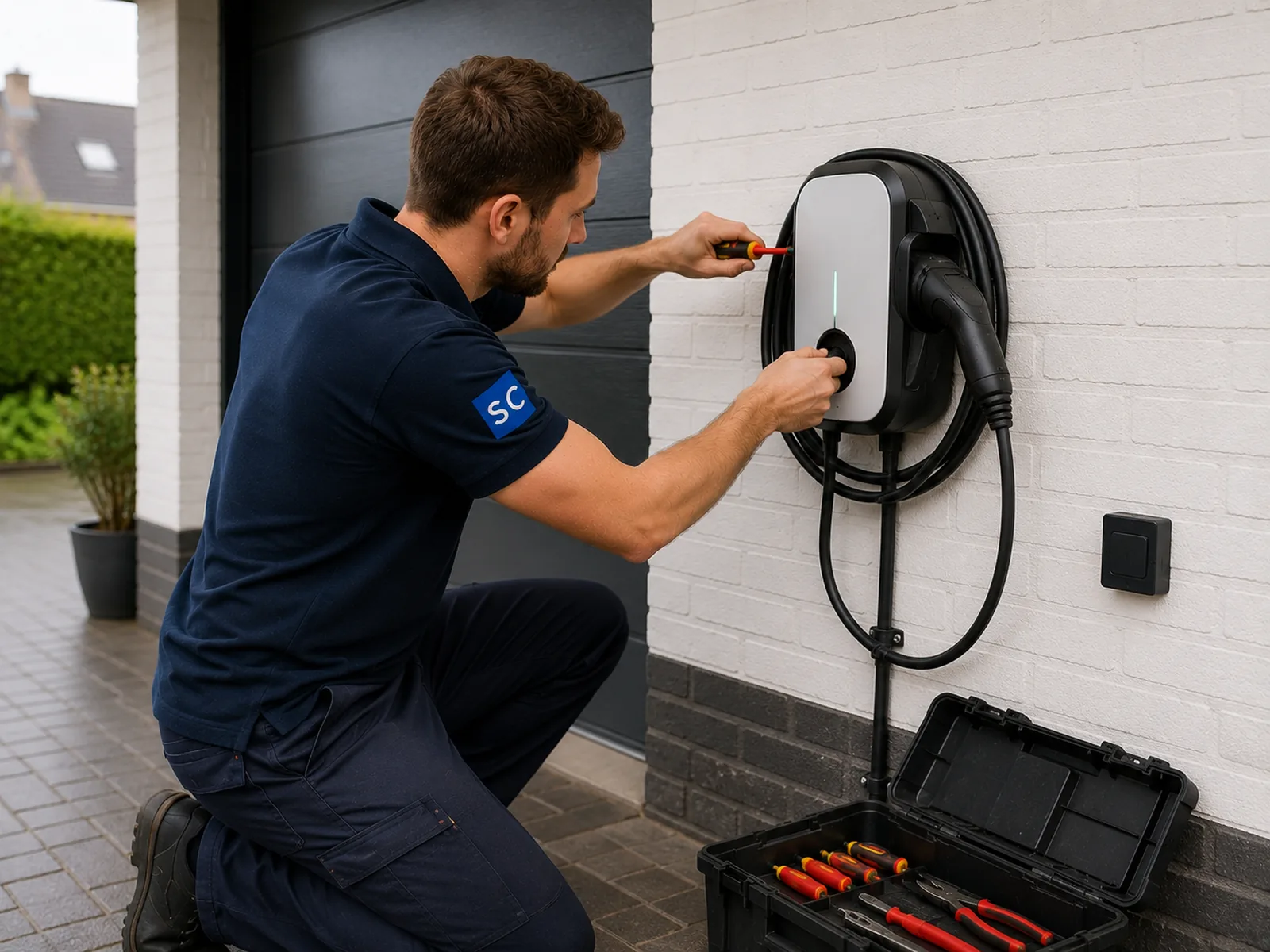
The installation of an EV charger starts with a site visit where the installer inspects the meter cupboard, the fuse box, and the planned cable route from the fuse box to the charging location. If the fuse box needs adjustment — adding a dedicated circuit, fitting a residual current device, or making room for the charger's connection — this is done first. The installer then routes the cable from the fuse box to the mounting point, which may involve drilling through walls, running cable along ceilings or facades, or trenching across a driveway. The charger is mounted, connected, and configured — including setting up dynamic load balancing if the home's electrical connection needs to be shared with other heavy consumers like an induction cooktop or heat pump. After connecting and configuring the charger, the installer performs a safety check to verify that the circuit, residual current protection, and the charger itself all function correctly. A professional installation typically takes half a day to a full day, depending on the cable distance and whether the fuse box needs modification. The result is a safe, fully operational charging point where you can charge your electric car at home.
Single-Phase or Three-Phase EV Charger — Which Fits Your Situation?
Choosing between a single-phase and a three-phase EV charger depends on your home's electrical connection, your car's charging capacity, and how fast you want to charge. A single-phase charger typically delivers up to 3.7 kW of charging power and is sufficient for most plug-in hybrids and electric cars that are plugged in overnight — a full charge takes roughly eight to ten hours. A three-phase charger delivers up to 11 kW or even 22 kW, charging the battery significantly faster — ideal if you drive many kilometres daily, have a large battery, or want the flexibility to top up quickly. However, a three-phase charger requires a three-phase electrical connection to the home; if your property currently has a single-phase connection, the grid operator — Liander, Stedin, or Enexis — needs to upgrade it, which is arranged and invoiced separately. A qualified installer measures the current capacity, checks the fuse box, and advises whether a single-phase or three-phase charger is the right choice for your car and your home. If you plan to add solar panels or other heavy consumers in the future, choosing a three-phase setup now can save a second upgrade later.
Recent ev charger installation jobs in Rotterdam
No recent ev charger installation jobs in Rotterdam
Post your jobWhat's typically included with EV Charger Installation?
- Site assessment — inspecting the meter cupboard, fuse box, and electrical installation to determine what preparation is needed
- Fuse box or meter cupboard adjustment — adding a dedicated circuit and residual current device (aardlekautomaat) for the charger
- Cable routing from the fuse box to the charging location — including through walls, ceilings, or along external facades
- Mounting and connecting the EV charger (wallbox or charging pole) at the agreed location
- Configuring load balancing to prevent overloading the home's electrical connection
- Post-installation safety check and verification that the charger, circuit, and residual current protection function correctly
- Guidance on any grid operator or municipality notification steps where required
- Purchase of the EV charger itself (usually client-supplied or quoted separately by the installer)
- Grid connection upgrade by the network operator — Liander, Stedin, or Enexis (arranged separately if a heavier connection is needed)
- Civil groundwork for a driveway cable trench (usually quoted separately if required)
- Solar panel installation on the roof (separate specialist — combining the charger with solar panels IS covered in the electrical setup)
- Energy contract advice or subsidy application (the installer can advise, but this is the homeowner's responsibility)
- Structural modifications to walls or facades beyond standard cable routing
How ev charger installation in Rotterdam works
Post your job and compare any responses you receive.
Describe your job
Share what ev charger installation work you need in Rotterdam, including timeline and details.
Compare the responses
Review only real responses and compare scope, pricing and timing.
Choose for yourself
Decide who to continue with and record scope, price and timing before work starts.
Why SkilledContractors?
Compare professionals, quotes and job details before you choose.
Compare responses
Compare scope, pricing and timing before you choose.
Multiple quotes
Ask for several quotes and compare what is included.
You stay in control
Posting a job is free. You decide who to contact.
Clear job details
Add photos, timing and access details for better proposals.
What affects EV Charger Installation quotes?
Cable distance from the fuse box to the charging location — longer runs cost more
Fuse box or meter cupboard adjustment — adding a dedicated circuit, residual current device, or expanding the box
Single-phase vs three-phase connection — three-phase requires a grid operator upgrade if not already available
Whether dynamic load balancing needs to be configured to share capacity with other heavy consumers
Groundwork or trenching across a driveway for the cable route
Type of charger — basic wallbox vs smart charger with energy management and solar integration
Compare quotes by scope, timing and access details.
How to choose a ev charger installation specialist
Check before hiring
- Request a detailed quote that separates installation work, materials, fuse box modification, and grid operator costs
- Confirm KVK registration and liability insurance before the installation starts
- Ask whether a site visit before quoting is included — an accurate quote requires inspecting the meter cupboard and cable route
- Verify the installer has experience with your type of charger and your home's electrical setup
- Clarify who handles the grid operator notification and any municipality steps
- Ask whether load balancing is included in the installation or quoted separately
Warning signs
- Offers only a lump sum with no breakdown of installation, materials, and fuse box work
- Does not ask to inspect the meter cupboard and cable route before quoting
- Cannot explain whether load balancing is needed or how it will be configured
- Pushes for full payment upfront before materials are ordered
- Has no experience with your charger type or cannot confirm certification
Related electrician services in Rotterdam
- Fuse Box Installation
- Lighting Installation
- Outlets & Switches
- Perilex / Cooking Group
- EV Charger Installation
- Wiring & Cabling
- Solar Inverter
Electrician costs in Rotterdam
Compare typical price ranges before requesting quotes.
See pricing guide →Frequently asked questions
Answers to common questions.
How much does it cost to install an EV charger at home?
The cost of installing an EV charger at home depends on the cable distance from the fuse box to the charging location, whether the fuse box or meter cupboard needs adjustment, whether a single-phase or three-phase connection is required, and the type of charger chosen. Installation costs vary between a straightforward setup with a short cable run and a complex installation involving fuse box modification, groundwork, and a three-phase upgrade. Request a detailed quote that separates the installation, materials, fuse box work, and any grid operator fees so you can compare installation quotes fairly.
Do I need a single-phase or three-phase connection for an EV charger?
A single-phase connection is sufficient for most home chargers that deliver up to 3.7 kW — enough to fully charge a standard electric car overnight. A three-phase connection is needed for chargers that deliver 11 kW or more, which charge significantly faster. Whether you need single-phase or three-phase depends on your car's charging capacity, your daily driving distance, and whether you have or plan other heavy electrical consumers. A professional installer measures the current electrical installation and advises which option fits your situation.
Does the meter cupboard or fuse box need to be modified?
In most cases, yes. Installing an EV charger requires a dedicated circuit in the fuse box with its own residual current device. If the fuse box has no room for an additional circuit or is too old, it may need to be expanded or replaced. The installer also checks whether the meter cupboard connection is strong enough for the added load — if not, the grid operator may need to upgrade it. A site assessment before quoting ensures no surprises during installation.
What is load balancing and do I need it?
Dynamic load balancing automatically adjusts the charging speed of your EV charger based on how much electricity the rest of the home is using at that moment. If you turn on the oven, induction cooktop, or other heavy appliances, the charger temporarily reduces its power to prevent the main fuse from tripping. This is especially important for homes with a standard single-phase connection or where multiple heavy consumers share the same electrical capacity. Most smart chargers support load balancing, and a qualified installer configures it during the installation of the charger.
Can I install an EV charger myself?
Installing an EV charger involves working with high-voltage electrical circuits, modifying the fuse box, and ensuring the installation meets safety standards — this is specialist work that should be done by a certified installer. A DIY installation risks incorrect wiring, missing residual current protection, or an overloaded connection, which can cause short circuits, fire, or electric shock. Insurance companies may also refuse claims for damage if the installation was not performed by a professional. For a safe and hassle-free result, let a qualified installer handle the installation of your EV charger from start to finish.
Can I combine an EV charger with solar panels?
Yes — combining an EV charger with solar panels is one of the most effective ways to reduce the cost of charging your electric car at home. A smart charger can be configured to prioritise solar energy: when the panels produce more than the home uses, the surplus flows directly into your car's battery instead of being exported to the grid. This maximises the return on your solar investment and reduces your electricity bill. The installer sets up the connection between the charger and the solar system during the installation, often via a smart energy meter or the charger's built-in energy management. If you are planning both solar panels and a charger, discuss the combined setup with the installer so the fuse box and cable routing are prepared for both.
How do I find a qualified EV charger installer in Rotterdam?
Start by comparing verified installer profiles on SkilledContractors and request quotes from multiple EV charger installers in Rotterdam. A reliable installer provides a detailed written quote that separates the charger installation, fuse box work, cable routing, materials, and any grid operator fees. Confirm KVK registration and liability insurance before the work starts. Ask whether a site visit is included before quoting — an installer who inspects the meter cupboard and cable route in person delivers a more accurate and reliable quote. Check reviews from other homeowners in Rotterdam who had an EV charger installed and ask the installer about experience with your type of charger and your home's electrical setup.
What should I check before hiring a electrician professional in Rotterdam?
Check the written scope first. Then compare reviews, VAT details and KVK information. Ask what is included. Confirm timing, access and follow-up terms before you choose.
What are warning signs when hiring a electrician professional in Rotterdam?
Watch for vague prices, missing scope and unclear extras. Ask for VAT details and a clear work order. If the quote is unclear, compare another provider.
More ev charger installation links around Rotterdam
Browse the same service in other priority cities and related services in this city.
This service in other cities
Related services in this city
Ready to get started?
Post your ev charger installation job in Rotterdam today and compare quotes.
Post a job — it's free