Boiler Replacement Costin the Netherlands: 2026 Prices

Replacing a standard HR combi boiler on the same spot usually costs €1,600 to €2,600 in 2026, boiler and installation together. Installation labour on its own runs €350 to €900, and the appliance alone is €900 to €2,100. Amounts exclude VAT. Whether VAT is added depends on the contractor: one using the small-business scheme (KOR) charges none.

Price per m²
Compare quotes
Across the Netherlands
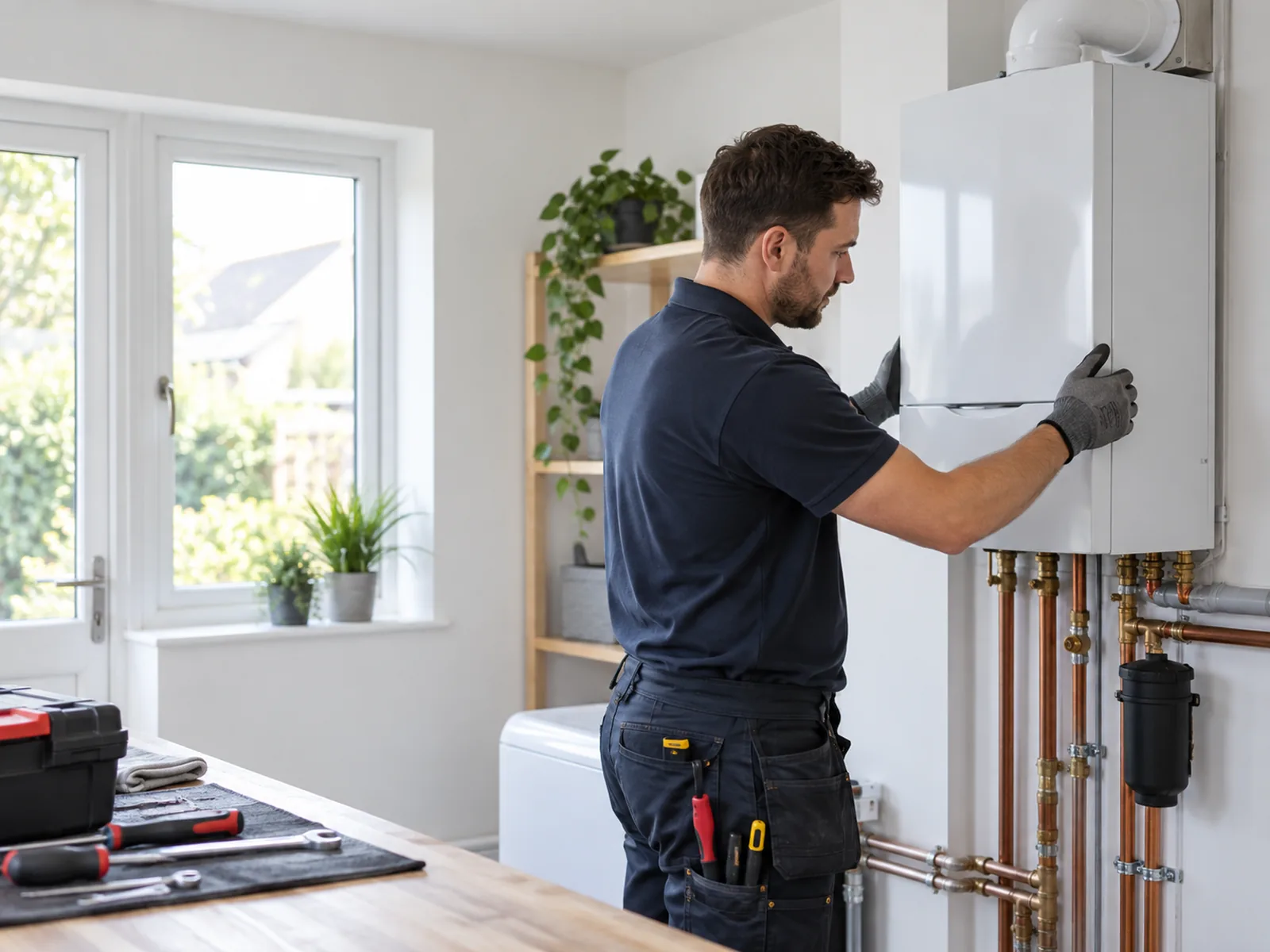
Installer fitting a new HR combi boiler in a Dutch home
Portrait photo of Arek

By Arek

Updated September 10, 2026 · 19 min read

What a boiler replacement costs in 2026

The first three rows below are reference prices excluding VAT for a like-for-like replacement on the same spot. Amounts exclude VAT. Whether VAT is added depends on the contractor: one using the small-business scheme (KOR) charges none. The rows underneath have no reference range: they are quoted per project, and the amounts shown are what installers publish as add-on prices, not a price you can hold anyone to.

ItemReference priceWhat it covers
Standard HR combi boiler, supplied and installed€1,600 – €2,600 per jobBoiler, installation on the same spot, small materials, commissioning
Installation only (you buy the boiler)€350 – €900 per jobLabour on the same spot; call-out and small materials per provider
Appliance only (standard HR combi, CW4)€900 – €2,100 per itemThe boiler itself, entry-level to premium
Flue or roof terminal replacementQuoted per projectOnly where the existing flue is not suitable; published add-ons cluster near €185 – €190
Smart or modulating thermostatQuoted per projectAppliance plus fitting; published add-ons cluster near €200 – €300
Expansion vessel replacementQuoted per projectOften done at the same visit while the system is drained
Moving the boiler to another spotQuoted per projectExtra pipework, a new condensate drain and a different flue route

Hot-water class drives most of the appliance price. A CW4 boiler suits a home with one bathroom and a normal shower. CW5 and CW6 deliver more hot water at once, for a rain shower or two bathrooms in use together, and Dutch consumer guides put those at roughly €2,100 to €2,800 supplied and installed. Consumer prices published by national installers already have VAT added, so they are not directly comparable with the ranges above.

For context on the completed-job figure: the homeowners' association Vereniging Eigen Huis and Milieu Centraal both put an average like-for-like replacement around €2,100 with installation, which sits in the upper half of the €1,600 to €2,600 band.

Same spot or a new position

The €1,600 to €2,600 range assumes a one-for-one swap: the new boiler goes back where the old one hung, onto connections that already exist. Anything that breaks that assumption is a second piece of work, quoted per project rather than taken from a range.

Back on the same bracket

The bracket is adapted to the new appliance, the existing gas, water and central-heating pipes are reconnected and the condensate drain is reused. Expect a little pipework even so: boilers made today are more compact than a model from fifteen years ago, so the connections rarely line up and a few short lengths are needed to meet them. That is small materials on a normal quote, not extra work.

Moving the boiler elsewhere

A relocation is not a surcharge; it is a second job. New gas, water and heating pipework has to be run, the condensate has to reach a waste point, and a new opening for the flue has to be made through the roof or the facade. Distance and route decide almost everything, so ask for the move as its own line. Seeing it priced separately is what lets you decide it is not worth it and leave the boiler where it hangs.

Coming from an old open-flued water heater (a geiser) or a non-condensing VR boiler is a bigger change again: an HR appliance condenses and draws its combustion air from outside, so the flue and air supply usually have to be adapted too. Have those items named at the survey.

Does the flue have to be replaced too?

Not automatically, and this is the single most common misunderstanding in Dutch boiler quotes. The flue is the rookgasafvoer on your paperwork, and the air-supply duct that runs beside or around it is the luchttoevoer. There is no rule that a new boiler forces a new flue. What is required is that the certified installer assesses the existing flue and air-supply system and confirms it is suitable for the specific appliance being fitted — and that they may not commission an installation that does not comply. If the existing flue does comply, it stays.

The flue gets replaced when the assessment fails, and there are only a handful of reasons why it would:

  • The new boiler needs a different diameter or a different concentric configuration than the old one.
  • The existing material is not rated for the new appliance's flue-gas temperature or condensate.
  • The manufacturer does not approve the existing flue as part of a certified appliance-and-flue combination.
  • The duct, seals or roof terminal are visibly degraded, leaking or blocked.
  • A shared flue in an apartment block is not suitable for the appliance you have chosen.

So ask for the assessment result before you accept a flue line on a quote. "A new boiler always needs a new flue" is not a rule; "this flue is not approved for this boiler, here is why" is a reason. Where a replacement genuinely is needed, national installers publish add-on prices in the region of €185 to €190, but the real number depends on the route, the roof and the length.

Condensate drain, expansion vessel and hydraulic balancing

Three items sit just outside most basic replacement prices, and each is far cheaper while the system is drained and the boiler is off the wall.

The condensate drain (condensafvoer)

An HR boiler condenses its flue gases, and the mildly acidic water that results has to run to a waste point. On a same-spot swap the existing drain is normally reused. It becomes a cost when no waste point is within reach and a pipe run or a small condensate pump is needed, or when the drain passes outside the insulated envelope, where a hard frost can freeze it and shut the boiler down.

The expansion vessel (expansievat)

The vessel absorbs the expansion of the water as the system heats up, and it quietly loses its pre-charge pressure over ten or fifteen years. The symptom is a system that keeps needing topping up, or a gauge that swings between very low and very high. Ask whether testing it, and replacing it if it has failed, is inside the quoted price.

Hydraulic balancing (waterzijdig inregelen)

Balancing sets the flow through each radiator so every room gets the heat it needs and no more, which lets the boiler run at a lower flow temperature. That is where a condensing boiler's efficiency comes from: one returning water at 60°C is barely condensing. It is rarely included by default, so ask for it as its own line. If some rooms never warm up, the radiator replacement cost guide covers the other half of that problem.

Thermostat compatibility with a new boiler

Whether your existing thermostat carries over is one of the most commonly forgotten lines on a boiler quote, and one of the easiest to settle in advance. Give the make and model when you request the price.

Type of controlHow it worksWhat to check
On/off thermostatSwitches the boiler on and off; the boiler picks its own outputAlmost always carries over, but it cannot ask the boiler to run gently, so part of the efficiency is lost
Modulating over OpenThermThermostat and boiler exchange data, so the boiler runs continuously at a low outputBoiler and thermostat must support the same protocol; some brands use their own instead of OpenTherm
Manufacturer's own controlA thermostat from the same brand as the boiler, on a proprietary linkChange the brand of boiler and the old thermostat usually stops working
Smart thermostat with an appModulating or on/off, with scheduling and remote controlCheck the compatibility list for the exact new boiler; support is per model, not per brand

If a new thermostat is needed it is the appliance plus roughly half an hour of work, and it belongs on the quote as its own line rather than appearing as extra work on the day. Where the wiring to the hallway will not carry the control you want, a wireless model with a receiver at the boiler is the usual way around it. A modulating control only repays the difference if the rest of the system can run cooler.

Who is allowed to replace a gas boiler in the Netherlands

Since 1 April 2023 this is not a matter of preference. Under the Dutch Gasketelwet, only a company holding the carbon-monoxide certificate may install, convert, repair or service a gas-fired appliance. In practice you will see it advertised as CO-vrij or as a CO-gecertificeerd bedrijf. A handyman, a general plumber without the certificate, or a neighbour with tools may not legally do the work, however competent they are.

This matters to you for three practical reasons, beyond the law itself:

  1. Ask for the certificate number and check the company in the register before you sign.
  2. Boiler manufacturers generally tie the appliance warranty to installation and commissioning by a certified company.
  3. Home insurers ask who did the work after a carbon-monoxide incident or a water-damage claim traced to the installation.

How the certification works in practice

Two separate things are certified, and a quote may name either:

  • The company holds the certificate. The schemes named on Dutch quotes are BRL 6000-25 (through InstallQ), BRL K25000 (through Kiwa) and NHK 2021.
  • The engineer holds a personal *Bewijs van Vakmanschap CO*, valid for five years.
  • Certified companies appear in the Register gasverbrandingsinstallaties, the public register anyone can search.
  • The scope covers the flue and the combustion-air ducts, not only the appliance.
  • Doing the work yourself on gas-fired equipment is not permitted, however competent you are.

There is no legal yearly inspection for a home boiler

A separate rule is often quoted at homeowners as if it applied to them. Dutch building rules impose a periodic inspection duty on heating systems with a rated output above 70 kW. A domestic HR combi boiler is typically 24 to 40 kW, comfortably below that line, so the inspection obligation does not apply to a normal house or apartment. Servicing your boiler is still sensible and is often a warranty condition, but it is a manufacturer and contract matter, not a legal inspection you can be fined for skipping.

The figure people repeat is 20 kW, and no inspection duty starts there. What is true is that the national government advises having a gas boiler inspected at least once every two years, and that manufacturers require servicing at a stated interval as a warranty condition. Both are good reasons to service it; neither is a legal inspection.

Do you have to fit a heat pump instead in 2026?

No. The obligation that was announced for 2026 — that a boiler being replaced would have to be swapped for a hybrid heat pump — was withdrawn before it took effect. You may replace an HR boiler with an HR boiler. If someone tells you that a straight boiler swap is no longer allowed, that is out of date.

A hybrid heat pump remains a genuine option, not a requirement. The financial picture is different in one important way: the Dutch ISDE subsidy applies to (hybrid) heat pumps and to insulation measures. There is no subsidy for a gas boiler, however efficient it is. If you are weighing the two, ask for both quotes at once and compare the net cost after subsidy, not the list prices.

One practical note for anyone renting or in a VvE apartment: a switch of heating system is usually not a decision an occupier can make alone, whereas a like-for-like boiler replacement normally is.

Repair, replace, or rent?

A Dutch cv-ketel lasts roughly fifteen to eighteen years. The decision point is usually a specific expensive part — a heat exchanger, a fan, a gas block — on an appliance that is already past twelve.

SituationUsually the sensible call
Boiler under 10 years, part failureRepair; the appliance has years left
Boiler 10–15 years, cheap partRepair, and start budgeting for replacement
Boiler 10–15 years, expensive partGet both prices; replacement often wins on the second failure
Boiler over 15 years, any major failureReplace; parts availability also starts to bite
Repeated faults, no single causeHave a certified engineer assess and quote both routes

Renting a boiler (a huurketel) is a third route, common in the Netherlands and rare elsewhere. You pay a monthly amount, maintenance and breakdowns are covered and there is no capital outlay. Over the life of the appliance it generally costs more than buying; what it buys is predictability. Read the term, the notice period and what happens if you sell the house before you sign, because that is where the cost sits.

If you are a tenant, replacing a failed boiler is normally the landlord's responsibility, not yours. Report it and follow the landlord's procedure rather than commissioning the work yourself and hoping to be reimbursed.

What happens on installation day

A straightforward like-for-like swap in the same position takes about four to six hours for one or two engineers. You are without heating and hot water for that window, not for days. A relocation, a new flue route or a system that has to be flushed will run longer, and the installer should tell you that in advance rather than on the day.

  1. The system is drained and the old boiler is disconnected and taken off the wall.
  2. The bracket, pipework, gas connection and condensate drain are adapted to the new appliance.
  3. The flue is reused if the assessment approved it, or replaced if it did not.
  4. The new boiler is hung, connected, filled and vented.
  5. The engineer commissions it: gas pressure, flue-gas readings, hot-water temperature, controls.
  6. You get the commissioning record, the warranty registration and a walk-through of the thermostat.

Two things to arrange before the day: clear access to the boiler cupboard and to the roof terminal if it needs work, and somewhere for the old appliance to go if disposal is not in the price.

Commissioning and handover

The word on your paperwork is inbedrijfstelling — commissioning. It is the formal end of the job rather than a courtesy, and it is the part an uncertified fitter may not do. A proper handover covers:

  • A gas-tightness check and a measurement of the gas pressure at the appliance.
  • A combustion measurement in the flue gases, with the appliance set to the manufacturer's values.
  • System pressure set, radiators vented and the filling hose removed rather than left connected.
  • The flow temperature set for your radiators, not left at the factory maximum.

Ask for the commissioning report on paper or by email before the engineer leaves; without it you have little to show in a later argument about warranty. Ask as well to be shown the filling point and the pressure the system should read when cold, because topping up is the one piece of maintenance a resident does themselves.

Questions to ask before you accept a quote

Send every installer the same information and you get quotes you can actually compare: the make, model and age of the current boiler, photos of the appliance, its data plate and where the flue leaves the building, the make of your thermostat, whether it is a house or an apartment, and how many showers are ever in use at once.

Then check that each quote answers all of this in writing:

  • Make, model and CW class of the appliance, priced as its own line.
  • Installation labour, priced as its own line, so the split is visible.
  • Whether the flue and air supply were assessed, and what the assessment concluded.
  • Whether the expansion vessel and the inlet combination valve are included.
  • Whether your thermostat stays, or a new one is supplied and fitted.
  • Whether removing and disposing of the old boiler is in the price.
  • Whether the system will be hydraulically balanced, and at what cost.
  • Call-out and parking charges, and whether amounts are stated with or without VAT.
  • The manufacturer's warranty on the appliance and, separately, the warranty on the workmanship.
  • The certificate number of the company doing the work.
  • That you will receive a commissioning report at handover.
  • Whether the figure is a fixed price or a guide price, and that extra work stops for your written approval.

Compare coverage before you compare totals. The cheapest quote stops being cheapest once a flue, a thermostat and disposal of the old appliance are added afterwards. Ask as well who will be on site and whether that engineer holds the personal certificate. For the wider picture, see the Plumber Cost Guide.

Frequently asked questions

Answers to common questions.

How much does a boiler replacement cost in the Netherlands?

For a standard HR combi boiler replaced on the same spot, expect €1,600 to €2,600 in 2026, covering the appliance, the installation, small materials and commissioning. Amounts exclude VAT. Whether VAT is added depends on the contractor: one using the small-business scheme (KOR) charges none. A larger hot-water class, a new flue or moving the boiler adds to that.

What does installation alone cost if I buy the boiler myself?

€350 to €900 for a same-spot fit, excluding VAT, with the appliance itself around €900 to €2,100. Ask beforehand whether the installer will fit a boiler bought elsewhere, whether call-out and small materials are included, and what warranty they give on their own work — all three vary by provider.

What is a cv-ketel, and what does CO-vrij mean on a quote?

A cv-ketel is the central heating boiler (centrale verwarming plus ketel); an HR-combiketel is the high-efficiency version that also heats your tap water. CO-vrij is the Dutch carbon-monoxide certification mark. Since 1 April 2023 only a company holding that certificate may install, repair or service a gas-fired boiler, so it is the first thing to check on any quote.

Does the flue always have to be replaced with a new boiler?

No, and this is a widespread misconception. The installer must assess whether the existing flue (rookgasafvoer) and air-supply system are suitable and approved for the specific new appliance, and may not commission an installation that does not comply. If the existing flue does comply, it stays. It is replaced when the diameter or configuration no longer matches, the material is not rated for the new appliance, the manufacturer does not approve the combination, or the duct and terminal are degraded. Ask which of those applies before accepting a flue line on the quote.

Do I have to fit a hybrid heat pump when I replace my boiler in 2026?

No. The obligation announced for 2026 was withdrawn before it took effect, and you may replace an HR boiler with an HR boiler. A hybrid heat pump stays an option: the ISDE subsidy applies to the heat pump and to insulation, never to a gas boiler, so compare the two quotes net of subsidy if you are considering the switch.

Is my boiler legally required to be inspected every year?

Not a domestic one. The Dutch periodic inspection duty applies to heating systems rated above 70 kW; a household HR combi boiler is typically 24 to 40 kW and falls well below that. Regular servicing is still worth doing and is often a condition of the manufacturer's warranty, but it is a contract and warranty matter rather than a legal inspection.

How long does the swap take, and will I be without heating?

A like-for-like replacement on the same spot takes roughly four to six hours for one or two engineers, so you are without heating and hot water for part of a day, not for days. Relocating the boiler, rerouting a flue or flushing the system takes longer, and the installer should say so when quoting rather than on the morning itself.

Should I repair my old boiler or replace it?

Under about ten years old, repair is usually right. Between ten and fifteen, it turns on the cost of the part: a cheap fix is worth doing, an expensive one often is not, especially on a second failure. Past fifteen years, replacement generally wins and parts get harder to source. Have a certified engineer quote both routes before you decide.

Can I replace a gas boiler myself?

No. Since 1 April 2023 the installation, maintenance, repair and commissioning of gas-fired equipment has to be done by a certified company, and the requirement covers the flue and the combustion-air ducts as well as the appliance. Being handy is not the test; certification is. You can do the work around it — clearing the cupboard, decorating afterwards — but not the appliance.

Will my current thermostat work with a new boiler?

A simple on/off thermostat usually carries over. A modulating control only works if the boiler and the thermostat support the same protocol, whether that is OpenTherm or a manufacturer's own, so switching to a different brand of boiler often means a new thermostat as well. Give the make and model when you ask for the quote and have any replacement priced as its own line.

Is the old boiler taken away?

Usually, but not always, and it is one of the most common quiet exclusions. Ask explicitly whether removing and disposing of the old appliance is in the price. If it is not, you are left with a heavy object that a municipal recycling centre will accept but that you have to get there yourself.

What is the condensafvoer, and does it need work?

It is the condensate drain. An HR boiler condenses its flue gases and the water that results has to run to a waste point. On a same-spot replacement the existing drain is normally reused; it becomes a cost when no waste point is within reach, or when the run passes outside where it can freeze. Any such work is quoted per project.

How much VAT is charged on replacing a boiler?

Plumbing, heating and installation work falls under the general Dutch rate of 21%. The reduced 9% rate covers a specific list of work on homes older than two years — insulating, painting, plastering and wallpapering — and boiler work is not on it. A contractor registered under the small-business scheme (KOR) charges no VAT at all. Ask which applies before you compare two quotes.

Compare quotes

Describe the job once and compare responses from independent contractors. Useful detail to include: the make, model and age of the current boiler, its position in the house, whether the property is a house or an apartment, the number of bathrooms and showers, and a photo of the boiler with its data plate and of the flue where it exits. Say whether you want a supplied-and-installed price or installation only. For the wider picture, read the Plumber Cost Guide. For yearly servicing rather than replacement, see the Boiler Maintenance Cost Guide. SkilledContractors is a comparison platform. It does not carry out the work, set the final price, or guarantee availability, response times or workmanship. Always confirm the CO certificate, the scope and the price in writing before the work starts.

Post your job